
Pest Control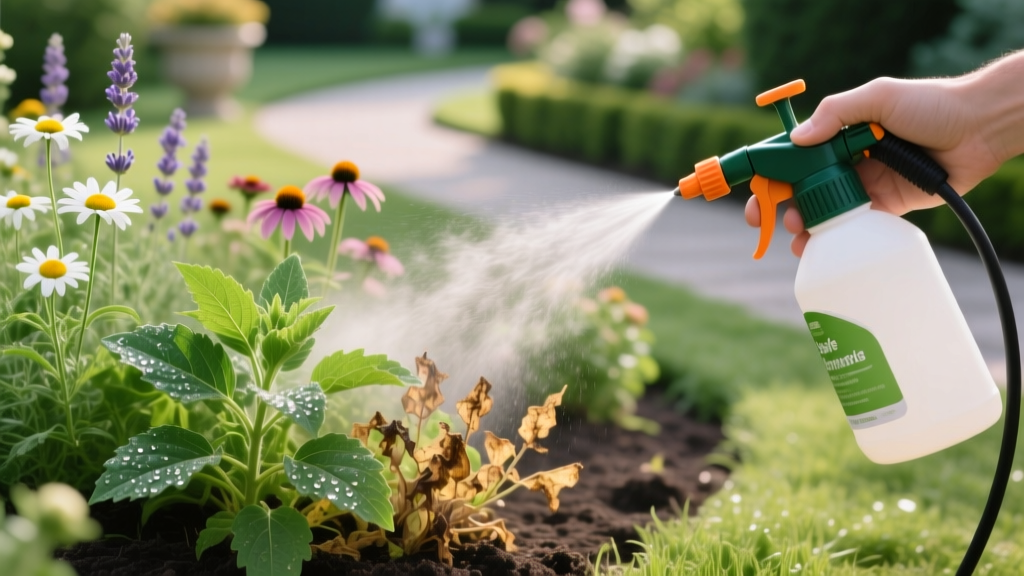
Safe Weed Killer for Flower Beds That Won't Kill Flowers: Spot Guide
The Selectivity Paradox: Why Standard Herbicides Fail
Finding a reliable weed killer for flower beds that won't kill flowers requires understanding a fundamental botanical hurdle: most ornamental flowers are broadleaf plants, and so are the most aggressive weeds. Standard selective lawn herbicides containing 2,4-D or dicamba are engineered to kill broadleaf weeds while sparing narrow-leaf turfgrass. If you apply these in a garden bed, they will systematically destroy your petunias, hostas, and roses alongside the dandelions.
To maintain pristine flower beds without resorting to endless hours of hand-pulling, professional landscapers rely on a tripartite strategy: pre-emergent barriers, grass-selective post-emergents, and shielded non-selective spot treatments. This guide details the exact active ingredients, application rates, and physical techniques required to eradicate weeds while keeping your ornamentals thriving.
Strategy 1: Pre-Emergent Barriers (The First Line of Defense)
The most effective "weed killer" is one that prevents weeds from ever seeing the sunlight. Pre-emergent herbicides create a chemical barrier in the top half-inch of soil that disrupts cell division in germinating seeds. They are completely safe for established flowers with deeper root systems.
Pro Tip: The Watering Rule
Pre-emergents like Trifluralin (found in Preen Garden Weed Preventer) are completely ineffective if left on the soil surface. They must be mechanically incorporated or watered in with exactly 0.5 inches of irrigation within 48 hours of application to activate the chemical barrier. A standard oscillating sprinkler running for 45 minutes typically delivers this volume.
Top Pre-Emergent Recommendations for Flower Beds
- Trifluralin (Preen Garden Weed Preventer): The industry standard for home gardeners. Costs approximately $18 for a 5.6 lb shaker jug, treating up to 280 square feet. Apply at a rate of 5 lbs per 250 sq ft. Safe for over 200 established ornamental species.
- Dithiopyr (Dimension 2EW): A professional-grade liquid pre-emergent that offers early post-emergent control of crabgrass up to the tillering stage. Priced around $85 per 2.5-gallon jug (yielding dozens of applications at 0.5 oz per gallon). Requires a backpack sprayer for precise soil application.
Strategy 2: Selective Post-Emergents for Grassy Weeds
Grassy weeds like crabgrass, bermudagrass, and annual bluegrass frequently invade flower beds, choking out shallow-rooted annuals. Because grasses are botanically distinct from broadleaf flowers, you can use grass-selective herbicides safely over the top of your ornamentals.
The active ingredient to look for is Fluazifop-p-butyl or Sethoxydim. Products like Ortho Grass-B-Gon (Fluazifop) cost roughly $12 for a 32 oz ready-to-use sprayer. When applied according to label rates, these chemicals are absorbed by the grassy weed foliage, translocate to the roots, and cause the weed to necrotize within 7 to 14 days, all while leaving broadleaf flowers completely unharmed.
Strategy 3: Spot-Treating Broadleaf Weeds Among Flowers
When a broadleaf weed (like chickweed, spurge, or dandelion) sprouts directly in the center of a broadleaf flower cluster, chemical selectivity is impossible. You must rely on non-selective contact herbicides combined with physical application barriers. According to the UC Statewide IPM Program, physical shielding and targeted wick applications are the safest methods for managing these isolated incursions.
The Cardboard Shield Method
Use a fast-acting, non-systemic contact herbicide like Pelargonic acid (Scythe) or a 20% horticultural vinegar solution. These EPA-recognized minimum risk pesticides burn down foliage on contact within 15 minutes but do not translocate to the roots of nearby plants if accidental overspray occurs.
- Cut a 12x12 inch piece of rigid corrugated cardboard.
- Slide the cardboard under the target weed, physically blocking the surrounding flower foliage.
- Spray the weed with your contact herbicide until the leaves are uniformly wet.
- Leave the shield in place until the spray droplets have completely dried to prevent bounce-back onto flower stems.
The Rope Wick Applicator Technique
For deeply entrenched perennial weeds like bindweed growing up through lilies or peonies, a rope wick applicator is indispensable. This device consists of a hollow handle filled with a systemic herbicide (like a 2% glyphosate solution) connected to a cotton rope. You physically wipe the rope over the weed's leaves. The herbicide transfers only to the plant you touch, eliminating drift entirely. This method takes longer but guarantees zero collateral damage to intertwined flower canopies.
Weed-to-Treatment Decision Matrix
Use this matrix to instantly identify the correct chemical and application protocol based on the specific weed species invading your beds.
| Weed Category | Common Species | Active Ingredient | Application Method | Flower Safety |
|---|---|---|---|---|
| Grassy Weeds | Crabgrass, Nutsedge, Bermudagrass | Fluazifop-p-butyl | Broadcast over-the-top spray | Safe for broadleafs; will kill ornamental grasses |
| Annual Broadleaf | Chickweed, Spurge, Pigweed | Pelargonic Acid / 20% Vinegar | Shielded spot spray | Safe if shielded; contact burn if drifted |
| Perennial Broadleaf | Dandelion, Bindweed, Thistle | Glyphosate (2% solution) | Rope wick or sponge dab | 100% safe if no physical contact with flowers |
| Germinating Seeds | All annual weed species | Trifluralin / Dithiopyr | Soil surface granular + water | Safe for established ornamentals; harms new seeds |
Common Mistakes That Cause Herbicide Drift
"The most frequent cause of ornamental injury in landscape beds isn't the wrong chemical; it's temperature inversion drift. Applying non-selective herbicides on a still, humid morning when temperature inversions trap spray droplets in the air can result in chemical settling on flower leaves hours after application. Always spray when there is a light, steady breeze (3-7 mph) blowing away from desirable plants."
Avoid These Application Errors:
- Using Hose-End Sprayers: Never use a hose-end sprayer for spot treatments in flower beds. The high water volume and coarse droplets cause massive splash-back onto lower flower leaves. Always use a pump sprayer with a flat-fan nozzle calibrated to 25 PSI.
- Ignoring Mulch Depth: Pre-emergents fail if the underlying soil is exposed. Maintain a 2-to-3-inch layer of shredded hardwood mulch over the pre-emergent barrier. This blocks the UV light that triggers weed seed germination and slows the microbial breakdown of the herbicide.
- Treating Stressed Weeds: Systemic herbicides require the weed to be actively growing to pull the chemical down to the roots. If a broadleaf weed is drought-stressed and wilted, it will not translocate the herbicide. Water the bed lightly 24 hours before treatment to ensure active sap flow.
Frequently Asked Questions
Can I use corn gluten meal as a natural pre-emergent in flower beds?
Yes, corn gluten meal (CGM) is an organic pre-emergent that inhibits root formation in germinating seeds. However, it requires a massive application rate of 20 lbs per 1,000 square feet to be effective, which can introduce excess nitrogen into the soil and burn shallow-rooted flowers if not watered in properly. Trifluralin remains far more cost-effective and reliable for targeted bed protection.
Will landscape fabric replace the need for weed killers?
Landscape fabric is largely counterproductive in established flower beds. While it blocks initial weed growth, organic matter quickly accumulates on top of the fabric, creating a perfect seedbed for wind-blown weeds. Furthermore, it restricts gas exchange and water penetration to the root zones of your flowers, leading to long-term plant decline. A combination of pre-emergent herbicides and organic mulch is the agronomic standard for bed management.

