
Pest Control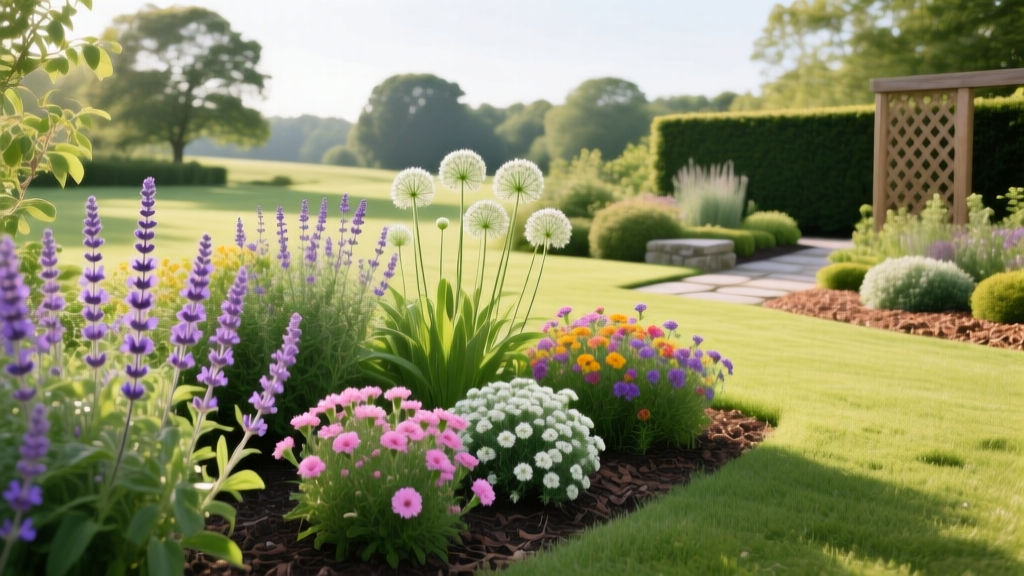
Best Flowers That Deer Will Not Eat to Protect Your Garden
The Biological Reality of Deer Browsing
White-tailed deer cause over $1 billion in agricultural and residential landscape damage annually. A single adult deer consumes between 6 to 10 pounds of forage daily, making unprotected ornamental beds an easy target. When homeowners search for flowers that deer will not eat, they are essentially looking for passive biological deterrence. Rather than relying solely on expensive fencing or daily chemical applications, integrating specific deer-resistant flora into your landscape design creates a natural, low-maintenance barrier that exploits the deer's highly developed olfactory and gustatory aversions.
The Science of Deer Aversion: Why They Avoid Certain Blooms
Deer do not randomly select plants; they forage based on caloric density, moisture content, and sensory feedback. According to research from the Rutgers University NJAES Deer Resistant Plant Database, plants that successfully deter mammals typically possess one or more of the following traits:
- High Volatile Oil Concentrations: Plants in the Lamiaceae (mint) and Asteraceae families produce terpenes and camphor compounds that overwhelm a deer's sensitive nasal passages.
- Physical Textural Barriers: Leaves coated in dense trichomes (fine hairs), waxy cuticles, or rigid prickles cause oral discomfort and impede chewing.
- Alkaloid Toxicity: Species containing isoquinoline alkaloids or cardiac glycosides trigger an immediate bitter taste response and mild gastrointestinal distress, conditioning the deer to avoid the plant in the future.
Comparison Matrix: Top Deer-Resistant Perennials
Not all resistant flowers perform equally across different hardiness zones and light conditions. The following matrix categorizes the most reliable flowers that deer will not eat, utilizing the standard A-D resistance rating scale (where A is rarely damaged and D is frequently severely damaged).
| Botanical Name | Common Name | Resistance Rating | Sun Requirement | Mature Height | Bloom Season |
|---|---|---|---|---|---|
| Perovskia atriplicifolia | Russian Sage | A (Rarely Damaged) | Full Sun | 36-48 inches | Mid-Summer to Fall |
| Dicentra spectabilis | Bleeding Heart | A (Rarely Damaged) | Part to Full Shade | 24-36 inches | Spring |
| Nepeta racemosa | Catmint | A (Rarely Damaged) | Full Sun to Part Shade | 12-18 inches | Late Spring to Fall |
| Allium giganteum | Giant Allium | A (Rarely Damaged) | Full Sun | 36-48 inches | Late Spring |
| Echinacea purpurea | Purple Coneflower | B (Seldom Damaged) | Full Sun | 24-36 inches | Summer |
Deep Dive: Cultivar Selection and Pricing
To maximize deterrence, you must select specific cultivars bred for high essential oil production or robust physical structures. Here are the top-performing varieties available at most commercial nurseries in 2026:
1. Russian Sage (Perovskia atriplicifolia 'Denim 'n Lace')
This cultivar features intensely silvery, finely dissected foliage that feels like sandpaper to a deer's tongue. The camphor-like scent is released when brushed against, masking the aroma of more vulnerable plants nearby. Expect to pay $15 to $22 per 1-gallon container. Plant in well-draining, alkaline soil; root rot in heavy clay will compromise the plant's natural defenses.
2. Bleeding Heart (Dicentra spectabilis)
For shaded understory plantings where deer often bed down, Bleeding Heart is indispensable. It contains toxic isoquinoline alkaloids that make it highly unpalatable. Bare-root crowns typically cost $12 to $18. Note that foliage dies back by mid-summer, so interplant with deer-resistant ferns like the Ostrich Fern (Matteuccia struthiopteris) to maintain continuous ground cover.
3. Giant Allium (Allium giganteum 'Globemaster')
Members of the Alliaceae family produce thiosulfinates, the sulfur compounds responsible for the pungent onion and garlic odors that mammals instinctively avoid. 'Globemaster' produces massive 8-inch violet umbels. Bulbs cost $8 to $12 each and should be planted 8 inches deep in the fall. Penn State Extension highly recommends Alliums as a primary perimeter defense for vegetable and ornamental gardens.
Strategic Planting: The 'Aromatic Perimeter' Framework
Simply scattering deer-resistant flowers randomly through your beds is an ineffective deterrence strategy. Instead, utilize the Aromatic Perimeter framework to manipulate deer behavior:
- Identify Entry Vectors: Map the trails deer use to enter your property, usually at the lowest points of your fence line or near wooded edges.
- Establish a Scent Barrier: Plant a dense, 3-foot-wide border of highly aromatic flowers like 'Walker's Low' Catmint and English Lavender (Lavandula angustifolia) along these vectors. The concentrated terpenes will obscure the scent of the hostas and daylilies deeper in your yard.
- Texture Layering: Behind the scent barrier, plant texturally abrasive species like Globe Thistle (Echinops ritro) and Sea Holly (Eryngium planum).
- Protect the Core: Reserve the center of your garden beds for slightly more vulnerable, but still resistant, plants like Coneflowers and Black-eyed Susans.
⚠️ Critical Warning: The Starvation Caveat
No botanical list is absolute. As noted by the University of Maryland Extension, a starving deer in late February will consume toxic yew, prickly barberry, and highly aromatic sage. Deer resistance is a spectrum, not a guarantee. During periods of deep snow cover or extreme drought, you must supplement your botanical defenses with physical or chemical deterrents.
When Flowers Aren't Enough: Chemical and Physical Supplements
If local deer populations are overabundant (exceeding 30 deer per square mile), even the most resistant flowers may suffer exploratory browsing. In these scenarios, integrate targeted repellents:
- Putrescent Egg Solids (e.g., Liquid Fence): Mimics the scent of predator decay. A 133 oz Ready-To-Use (RTU) bottle costs approximately $24.99. Apply every 3-4 weeks during the growing season. Do not apply directly to flower blooms, as it can cause petal burn; spray the foliage only.
- Blood Meal Granules (e.g., Plantskydd): A 2.2 lb bag of granular Plantskydd costs around $35. Broadcast this around the base of your alliums and bleeding hearts in early spring before the shoots emerge. It provides a dual-action deterrent via both scent and taste.
- Tension-Wire Fencing: For high-value perennial beds, install a 36-inch tension wire at 18 inches off the ground. Deer cannot judge low-lying horizontal obstacles and will avoid crossing the wire to reach the flowers.
Frequently Asked Questions
Will deer eat daffodils if they are starving?
Daffodils (Narcissus) contain lycorine, a highly toxic alkaloid. Even in starvation conditions, deer will generally avoid daffodils unless forced to consume them, at which point the toxicity usually causes severe illness, reinforcing the avoidance behavior for the rest of the herd.
Are there any deer-resistant flowers that bloom in the winter?
Yes. Lenten Rose (Helleborus orientalis) is highly deer-resistant due to its toxic sap and tough, leathery leaves. It blooms from late winter to early spring (zones 4-9) and costs about $18 to $25 per gallon pot, providing critical color when deer pressure is often at its highest.
Do deer repellent sprays wash off the flowers in the rain?
Most modern commercial repellents use polymer-based sticker agents (like acrylic polymers) that bind the active ingredients to the leaf cuticle. Once dried for 24 hours, they are highly rain-resistant and will only require reapplication after new foliage growth emerges or after approximately 1.5 inches of cumulative rainfall.

