
Pest Control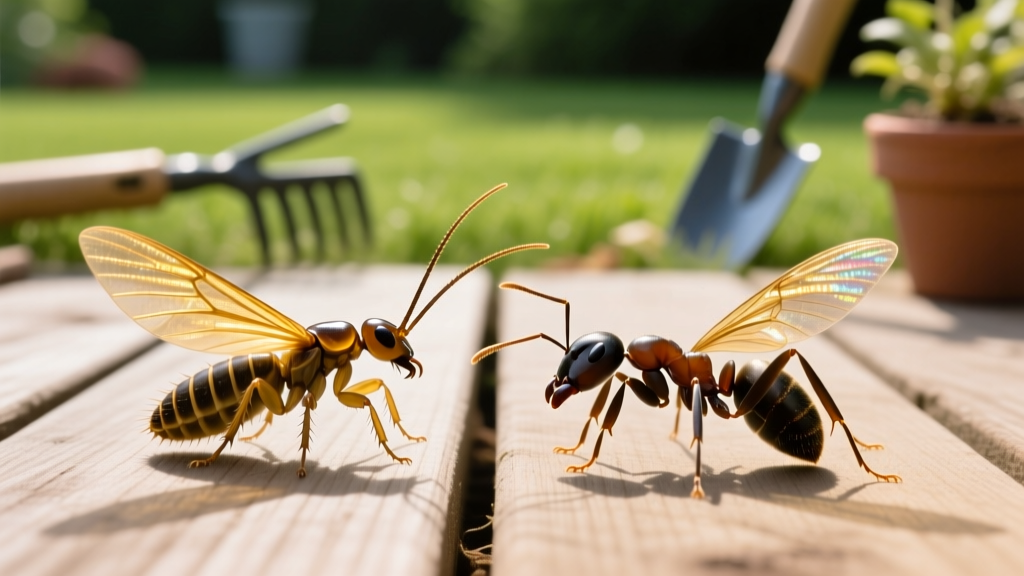
Flying Bug That Looks Like an Ant: Termite vs Ant ID Guide
The Great Impersonator: Why Identification Dictates Your Response
When homeowners spot a flying bug that looks like an ant swarming near their foundation or window sills, panic often sets in. The immediate fear is a termite infestation. However, not every winged insect invading your space is a wood-destroying organism. Many are simply reproductive carpenter ants (alates) or even solitary wasps. Misidentifying these swarmers can lead to unnecessary chemical applications or, worse, ignoring a catastrophic structural threat.
The term 'flying ant' is a biological misnomer. Ants do not belong to the same order as termites (Isoptera, now classified under Blattodea), yet their reproductive stages share a superficial resemblance. When a colony matures, it releases winged reproductives—known as alates in ants and swarmers in termites—to mate and establish new colonies. Distinguishing between a carpenter ant alate and a subterranean termite swarmer requires examining three critical morphological features: the waist, the wings, and the antennae.
Termite Swarmers vs. Flying Ants: The Definitive Comparison Matrix
Use this diagnostic matrix to accurately identify the specimen you have captured or photographed.
| Morphological Trait | Termite Swarmer | Carpenter Ant Alate (Flying Ant) |
|---|---|---|
| Waist Structure | Broad, thick waist; thorax and abdomen are roughly the same width. | Pinched, narrow waist (petiole) separating the thorax and abdomen. |
| Wing Proportions | Two pairs of equal-length wings; milky white or translucent. | Two pairs of unequal wings; front wings are longer and darker than hind wings. |
| Antennae Shape | Straight, bead-like (moniliform) antennae. | Elbowed (geniculate) antennae with a distinct bend. |
| Wing Shedding | Wings break off easily; often found scattered on sills and floors. | Wings are firmly attached; rarely shed indoors unless crushed. |
Decoding the Physical Traits in the Field
If you cannot get a macro photograph, focus on the discarded wings. According to the EPA's Safe Pest Control guidelines, finding piles of identical, milky-white wings near window frames is a primary indicator of subterranean termites. Carpenter ants typically retain their wings during the initial swarming flight and only shed them after finding a suitable nesting site, often deep within damp wood.
Less Common Suspects: Velvet Ants and Thatch Ant Swarms
If the flying bug that looks like an ant is fuzzy, brightly colored (red and black), and solitary, you are likely looking at a velvet ant. Despite the name, velvet ants are actually wingless female wasps (family Mutillidae). Males have wings but lack stingers. Females possess a notoriously painful sting, earning them the nickname 'cow killer.' They do not swarm, damage wood, or invade pantries; they are solitary parasitoids of ground-nesting bees and wasps. No treatment is necessary.
Conversely, if you see massive swarms of small, reddish-brown flying insects in your lawn during late summer, these are likely thatch ants (Lasius neoniger) or field ants. These are harmless outdoor nuptial flights. The males die shortly after mating, and the queens burrow into the soil. They pose zero structural threat to your home.
Strategic Treatment Protocols and Cost Breakdown
Once you have confirmed the identity of the swarmer, your treatment strategy must be precise. Blanket spraying with generic aerosol pyrethrins is entirely ineffective against established colonies.
Scenario A: Confirmed Subterranean Termite Swarmers
Termites require immediate, aggressive intervention. The industry gold standard for DIY perimeter defense is a non-repellent liquid termiticide like Termidor SC (active ingredient: Fipronil 9.1%).
- Application Method: Dig a trench 6 inches wide and 6 inches deep around the entire foundation.
- Dosage: Apply 4 gallons of finished solution per 10 linear feet of trench.
- Cost Estimate: A standard 200-linear-foot perimeter requires about 80 gallons of solution, costing roughly $85 to $120 for the concentrate.
- Professional Alternative: If the infestation is active inside the walls, professional baiting systems (like Sentricon) or liquid treatments cost between $1,200 and $2,500.
Scenario B: Confirmed Carpenter Ant Alates
Carpenter ants do not eat wood; they excavate it to build galleries in moisture-damaged timber. Finding swarmers indoors indicates a mature satellite colony inside your walls.
- Locate the Moisture Source: Check for roof leaks, plumbing condensation, or wood-to-soil contact. The University of Florida IFAS Extension emphasizes that carpenter ants rarely infest dry, sound wood.
- Deploy Protein/Sugar Baits: Use Advance Carpenter Ant Bait (Abamectin 0.011%) or Maxforce Quantum (Imidacloprid). Place 2-gram dots near foraging trails. Cost: $35-$50 per tube.
- Dust the Galleries: If you locate the nest void, inject DeltaDust (Deltamethrin) using a bellows hand duster. Avoid liquid sprays inside wall voids, as they can short-circuit electrical wiring and fail to transfer between colony members.
Warning: Never use over-the-counter 'bug bombs' or total-release foggers for flying ant or termite swarms. These products only kill the exposed alates, which are merely the reproductive caste. The primary colony, containing thousands of workers and the queen, remains untouched and will simply produce another swarm next season.
Preventative Landscaping and Exclusion Tactics
Stopping the next generation of swarmers from targeting your property requires altering the microclimate around your foundation. Both termites and carpenter ants thrive in high-moisture environments.
- The 18-Inch Mulch Rule: Maintain an 18-inch gap of bare soil or gravel between your foundation and any organic mulch. Mulch retains moisture and provides a hidden highway for foraging termites. If you must use mulch, opt for inorganic options like crushed stone or rubber mulch near the perimeter.
- Canopy Pruning: Trim tree branches and shrubs so they are at least 3 feet away from your roofline and siding. Carpenter ants frequently use overlapping branches as aerial bridges to bypass ground-level chemical barriers and access attic vents or soffits.
- Grade Correction: Ensure the soil slopes away from your foundation at a minimum drop of 6 inches over the first 10 feet. Pooling water saturates the sill plate and rim joists, creating the exact decaying wood environment that carpenter ant queens seek out to establish primary colonies.
- Ventilation Upgrades: Install heavy-duty mesh screens (1/16 inch hardware cloth) over all crawlspace and attic vents. This physically blocks alates from entering the structure during nuptial flights while maintaining necessary airflow to keep structural timber dry.
Frequently Asked Questions
Do flying ants bite or sting?
Carpenter ant alates possess mandibles and can deliver a mild pinch if handled roughly, but they lack stingers. They are not aggressive toward humans and are entirely focused on mating and finding a nesting site.
How long does a swarming event last?
Nuptial flights are highly synchronized with environmental triggers—usually occurring on warm, humid days following heavy spring rains. The actual emergence typically lasts only 30 to 60 minutes. If you are seeing swarmers continuously over several days, you likely have an active indoor colony emerging from a wall void.
Can I just vacuum up the swarmers?
Yes, vacuuming is the most effective immediate cleanup method for indoor swarmers. Dispose of the vacuum bag or empty the canister into an outdoor trash receptacle immediately to prevent escape. However, vacuuming is a cleanup tactic, not a treatment; you must still address the parent colony.

