
Pest Control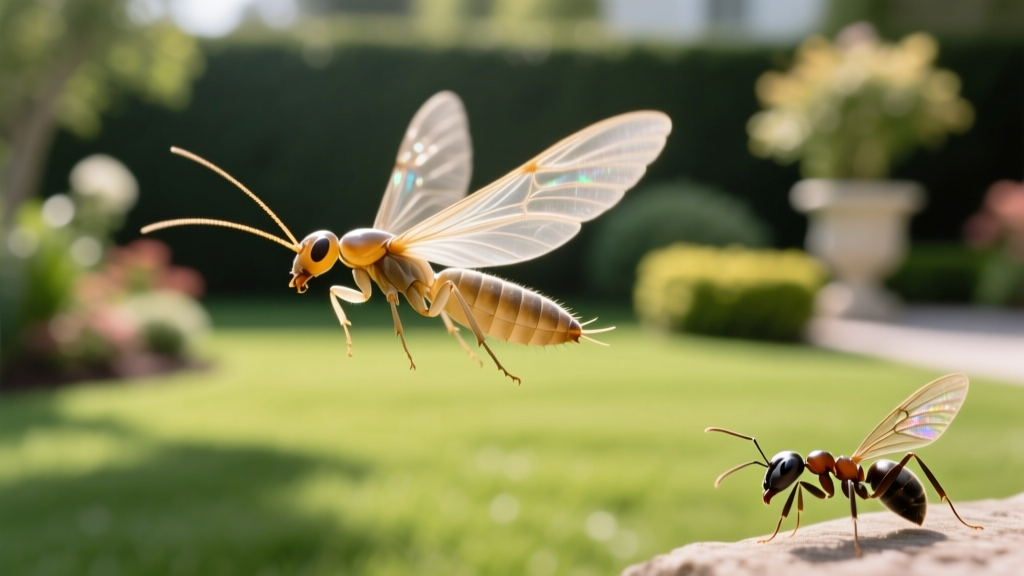
What Does a Flying Termite Look Like? Visual ID & Ant Comparison
The Anatomy of a Termite Swarmer: Key Identification Traits
When homeowners ask, "what does a flying termite look like," they are usually observing the reproductive caste of the colony, known as alates or swarmers. Unlike the pale, blind worker termites that stay hidden inside wood and soil, swarmers are fully pigmented and possess wings designed for a single purpose: mating and establishing new colonies. Identifying them correctly is the first line of defense in protecting your property from structural damage.
A flying termite typically measures between 3/8 and 1/2 inch in length, including its wings. The body is uniform in width from head to abdomen, lacking the distinct pinched waist found in flying ants. Their coloration ranges from dark brown to black, depending on the species, though some drywood varieties exhibit a reddish-brown hue. The most defining physical characteristic is their wings: termites possess two pairs of wings that are exactly equal in length, often extending twice the length of their body. These wings are translucent, milky-white, or slightly smoky, and feature a distinct network of veins that help entomologists differentiate between subterranean and drywood species.
Furthermore, termite antennae are straight and bead-like (moniliform), resembling a string of tiny pearls. This is a critical diagnostic feature when examining a specimen up close, as ant antennae are distinctly elbowed or bent at a sharp angle.
Flying Termites vs. Flying Ants: The Ultimate Comparison Matrix
Misidentifying a carpenter ant swarmer as a termite is the most common error in residential pest control. While both insects swarm in the spring to reproduce, their physical morphology and the type of damage they cause are vastly different. Carpenter ants excavate wood to build nests but do not consume it, whereas termites digest cellulose, causing severe structural compromise. Use the matrix below to accurately identify the insect in your yard.
| Physical Trait | Flying Termite (Alate) | Flying Ant (Carpenter Ant) |
|---|---|---|
| Waist | Broad, uniform, and thick | Pinched, narrow, and distinct |
| Antennae | Straight and bead-like | Elbowed (bent at a 90-degree angle) |
| Wings | Two pairs, equal in length, milky/translucent | Two pairs, front wings longer than hind wings, clear |
| Body Color | Dark brown, black, or reddish-brown | Black, red, or a combination of both |
| Wood Interaction | Consumes wood (causes structural damage) | Hollows out wood for nesting (cosmetic/minor damage) |
Environmental Triggers: Why Are They Swarming in My Yard?
Termite swarms are not random events; they are highly synchronized responses to specific microclimatic conditions. Subterranean termites require precise soil temperatures and moisture levels before the colony releases its alates. According to University of Kentucky Entomology, Eastern subterranean termites typically initiate swarming when the soil temperature at a 2-inch depth reaches 65°F to 70°F, usually following a significant spring rainfall.
The rain softens the soil, making it easier for the swarmers to exit their subterranean mud tubes and for the newly mated pairs to excavate their initial royal chambers. If you notice dozens of flying termites emerging from a specific patch of mulch or near your foundation after a heavy April or May rainstorm, it strongly indicates an active, mature colony located directly beneath the surface. Mature subterranean colonies typically contain 60,000 to over a million workers, and the emergence of swarmers means the colony has been established in your yard for at least three to five years.
The "Discarded Wings" Indicator
Termite wings are fragile and designed to break off after the mating flight. If you do not see the live insects but find piles of identical, translucent wings on your windowsills, patio, or near foundation vents, you have a swarmer event. The wings will all be the exact same size, unlike the shed wings of ants which vary in length. This is a primary red flag requiring immediate professional inspection.
Species Breakdown: Subterranean vs. Drywood Swarmers
Knowing exactly what a flying termite looks like requires understanding regional species variations. The physical dimensions and swarming schedules differ significantly between the two most destructive categories in North America.
Eastern Subterranean Termites (Reticulitermes flavipes)
The most widespread termite in the United States. Swarmers are dark brown to almost black, measuring about 3/8 inch long. They swarm primarily in the spring (March through May) during daylight hours, usually between 10:00 AM and 2:00 PM. Their wings lack cross-veins near the tips, a key microscopic identification trait.
Formosan Subterranean Termites (Coptotermes formosanus)
A highly aggressive invasive species prevalent in the Gulf Coast and Southeast. Formosan swarmers are larger, measuring 1/2 inch, with a distinct yellowish-brown body. They swarm in massive numbers during the early summer (May and June), typically at dusk or in the evening, and are heavily attracted to exterior lighting. According to EPA pest control guidelines, Formosan colonies can consume wood at a significantly faster rate than native species, making rapid identification critical.
Drywood Termites (Incisitermes spp.)
Common in California, Florida, and the Southwest. These swarmers are larger and reddish-brown. Unlike subterranean species, they do not require soil contact and infest dry structural timber directly. They swarm in the late summer and fall, often in the late afternoon. Their wings feature a complex network of heavy, dark veins along the leading edge.
Action Plan: What to Do When You Spot Swarmers
Discovering flying termites in your home or yard is a definitive indicator of a nearby mature colony. Follow this precise protocol to mitigate the threat and secure your property.
- Collect Specimens Safely: Do not spray the swarmers with over-the-counter aerosol insecticides like Raid. Contact sprays only kill the visible alates, which are already dying naturally within hours. More importantly, spraying the area can alert the hidden worker colony, causing them to relocate their foraging tunnels deeper into your foundation and evade detection. Instead, sweep them into a ziplock bag or jar for the pest control technician to identify.
- Document the Emergence Point: Note exactly where the swarmers are originating. Are they coming from a crack in the foundation, a basement window frame, or a specific patch of mulch? Take photos of the emergence point and any discarded wings.
- Schedule a WDI Inspection: Contact a licensed pest control operator for a Wood Destroying Insect (WDI) inspection. A thorough inspection should take 45 to 90 minutes and cost between $75 and $150, though many companies waive the fee if you proceed with treatment. The technician will probe accessible wood, check for mud tubes (which are 1/4 to 1 inch wide), and use moisture meters to locate hidden galleries.
Professional Treatment Options and Costs
If an active infestation is confirmed, DIY treatments are insufficient for structural protection. You will need to choose between two primary professional methodologies:
- Liquid Soil Barrier (Fipronil-based): Products like Termidor SC are the industry standard. Technicians dig a trench 6 inches wide and 6 inches deep around the entire foundation, applying 4 gallons of finished solution per 10 linear feet. This creates a continuous chemical barrier that termites cannot detect, allowing them to transfer the lethal dose to the colony via trophallaxis (grooming and feeding). Cost: $1,200 to $2,500 for an average 2,500 sq. ft. home.
- Bait Station Systems (Hexaflumuron/Noviflumuron): Systems like Sentricon involve installing plastic bait stations every 10 feet around the property perimeter. Once workers find the stations, the active ingredient disrupts their molting process, eventually collapsing the colony. Cost: $1,500 to $3,000 for initial installation, plus $300 to $500 annually for mandatory monitoring and bait replenishment.
Accurate identification of the flying termite is the crucial first step in this process. By distinguishing the uniform waist and equal-length wings of a termite swarmer from the pinched waist of a carpenter ant, you can bypass unnecessary panic and deploy the correct, targeted structural defense strategy immediately.

