
Pest Control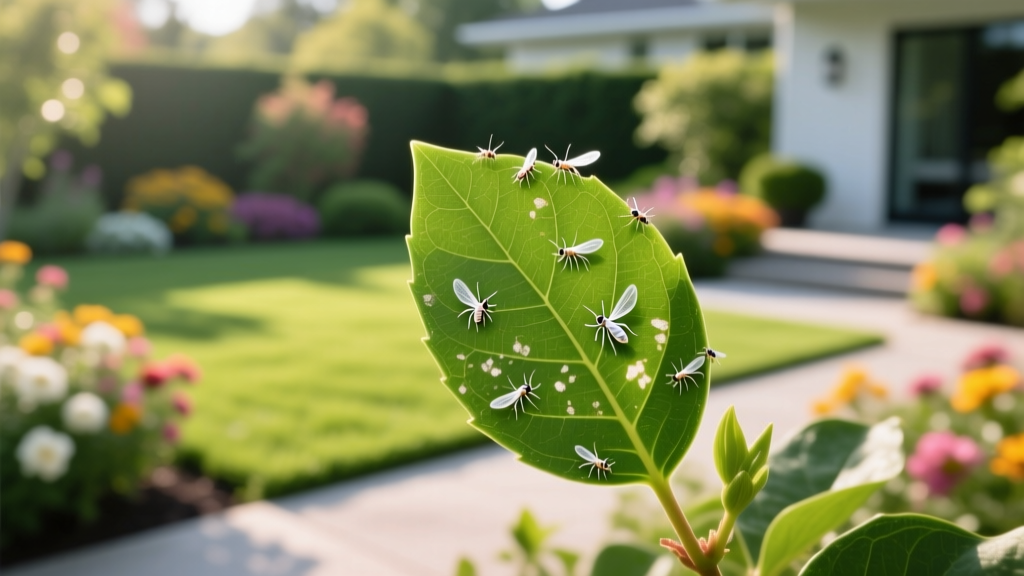
How to Stop Flying White Bugs: Whitefly Yard Defense Guide
Decoding the Swarm: Are They Actually Whiteflies?
When homeowners spot clouds of flying white bugs erupting from their tomatoes, citrus trees, or ornamental shrubs, they are almost always dealing with whiteflies (family Aleyrodidae). However, accurate identification is the critical first step in yard defense. Misidentifying the pest leads to wasted money on ineffective treatments. While the Silverleaf whitefly (Bemisia tabaci biotype B) and the Greenhouse whitefly (Trialeurodes vaporariorum) are the primary culprits, other insects can mimic their appearance.
| Insect Type | Visual Characteristics | Flight Pattern | Primary Yard Targets |
|---|---|---|---|
| Whiteflies | 1-2mm, powdery white wings held roof-like over body | Erratic, short bursts when disturbed | Tomatoes, peppers, citrus, poinsettias |
| Male Mealybugs | Tiny, gnat-like with two long white tail filaments | Weak, fluttering, rarely swarm in large numbers | Citrus, hibiscus, succulents |
| Woolly Aphids | Covered in white, waxy, cotton-like secretions | Sluggish flight, usually found near bark/branches | Apple, elm, hackberry trees |
| Pale Fungus Gnats | Long legs, clear/pale wings, dark or pale bodies | Darting, hovering near soil surface | Potted plants, overwatered seedbeds |
The True Cost of a Whitefly Infestation
Flying white bugs are not just a visual nuisance; they are highly destructive vectors. Both nymphs and adults use piercing-sucking mouthparts to extract phloem sap. A severe infestation of Bemisia tabaci can drain a plant of essential nutrients, leading to severe chlorosis (yellowing), leaf drop, and stunted growth.
Beyond direct feeding damage, whiteflies excrete a sugary waste called honeydew. This honeydew coats the leaves below and serves as a breeding ground for Capnodium species—the fungi responsible for black sooty mold. While sooty mold does not directly infect plant tissue, the thick black layer blocks photosynthesis, reducing your crop yield by up to 30% in severe cases. Furthermore, the Silverleaf whitefly is a known vector for over 100 plant viruses, most notably the devastating Tomato Yellow Leaf Curl Virus (TYLCV), which can wipe out an entire garden season in weeks.
The 4-Tier Whitefly Yard Defense Protocol
Effective pest management requires an Integrated Pest Management (IPM) approach. Relying solely on chemical sprays often results in pesticide-resistant super-bugs. Follow this tiered protocol to reclaim your yard.
Tier 1: Mechanical Disruption and Monitoring
Before reaching for sprays, disrupt the whitefly lifecycle physically. Whiteflies are highly attracted to the color yellow. Deploy 3x5 inch yellow sticky traps (costing roughly $12 for a 20-pack) at the canopy level of your most vulnerable plants. These traps will not eliminate a massive infestation, but they are crucial for monitoring population spikes and trapping adults before they lay eggs.
For prevention in vegetable beds, use reflective UV mulch (silver or aluminum-coated). The reflected UV light disorients flying white bugs, making it difficult for them to locate your plants. Studies show reflective mulch can reduce whitefly landing rates by up to 80% during the early growing season.
Tier 2: Biological Warfare
If you maintain a diverse garden, introduce natural predators. The parasitic wasp Encarsia formosa is the gold standard for greenhouse and enclosed patio whitefly control. You can purchase live cultures online (approximately $35 for 1,000 wasps). Release them at a rate of 3 to 5 per square foot when you first spot adult flying white bugs. The wasps lay their eggs inside whitefly nymphs, turning the nymphs black and killing them from the inside out.
For outdoor yard defense, the predatory beetle Delphastus catalinae is highly effective. Both the adults and larvae consume massive quantities of whitefly eggs and nymphs. Ensure you do not use broad-spectrum pesticides before releasing these beneficial insects, or you will kill your expensive biological army.
Tier 3: Targeted Organic Sprays
When populations exceed the threshold that beneficial insects can handle, escalate to organic foliar sprays. Insecticidal soaps (potassium salts of fatty acids) and Neem oil (containing the active compound Azadirachtin) are highly effective against the soft-bodied nymph stage.
- Neem Oil Recipe: Mix 1.5 tablespoons of pure, cold-pressed neem oil and 1 teaspoon of mild liquid dish soap (as an emulsifier) per gallon of water.
- Application Timing: Spray strictly at dusk. Spraying neem oil in direct sunlight or when temperatures exceed 85°F will cause severe phytotoxicity (leaf burn). Furthermore, dusk application protects foraging honeybees, as the oil must directly contact the soft-bodied pests to work and dries harmless to bees once settled.
- Coverage: You must spray the undersides of the leaves. Whiteflies live and breed on the lower leaf surface; top-spraying is entirely useless.
Tier 4: Systemic Chemical Escalation
For severe, unmanageable infestations on ornamental shrubs and trees (avoid using systemics on edible crops close to harvest), systemic neonicotinoids like Imidacloprid are the most reliable option. Products like Bayer BioAdvanced 12 Month Tree & Shrub Protect & Feed (approx. $25 for 32 oz) are applied as a soil drench.
The plant's roots absorb the chemical and translocate it into the foliage. When whiteflies feed on the sap, they ingest the toxin and die. Because it is applied to the soil and not sprayed on the leaves, it poses a significantly lower risk to flying pollinators like bees and butterflies, provided you do not apply it to blooming plants. According to the UC Statewide IPM Program, soil drenches should be applied in early spring before peak summer populations explode.
⚠️ WARNING: The Pyrethroid Trap
Avoid using broad-spectrum pyrethroids (like Bifenthrin or Cypermethrin) for whitefly control. While they kill adults on contact, they also obliterate natural predators. Furthermore, whiteflies exhibit a phenomenon called hormoligosis—exposure to sub-lethal doses of certain pyrethroids actually stimulates them to reproduce faster, leading to a massive secondary outbreak that is harder to kill than the original.
Seasonal Yard Defense Calendar
Maintaining a whitefly-free yard requires proactive seasonal management. Use this framework to stay ahead of the breeding cycle.
- Early Spring: Clear all winter weeds, especially chickweed and mallow, which serve as overwintering hosts for whiteflies. Apply reflective mulch to new vegetable beds.
- Late Spring: Deploy yellow sticky traps to monitor for the first wave of flying white bugs. Apply Imidacloprid soil drenches to susceptible ornamental shrubs (like gardenias and hibiscus) before they bloom.
- Mid-Summer: Inspect the undersides of leaves weekly. If nymphs are present, begin bi-weekly dusk applications of insecticidal soap or neem oil. Prune heavily infested branches and seal them in a plastic bag before disposing of them in the trash (do not compost).
- Autumn: Remove and destroy all spent vegetable crops (especially tomatoes and peppers) immediately after harvest to break the breeding cycle before winter. As noted by Texas A&M AgriLife Extension, eliminating alternate hosts is critical for long-term population suppression.
Final Diagnostic Checklist
If your plants are declining and you suspect flying white bugs, run through this quick diagnostic checklist before purchasing treatments:
- Tap the foliage gently. Do tiny white insects flutter up in a cloud? (Confirms Whiteflies).
- Check the undersides of the leaves for tiny, scale-like yellow/green bumps. (Confirms Whitefly Nymphs).
- Look for a shiny, sticky residue on lower leaves or the ground below. (Confirms Honeydew).
- Check for black, powdery soot on the sticky leaves. (Confirms Sooty Mold).
By combining mechanical barriers, biological predators, and precisely timed organic or systemic treatments, you can successfully defend your yard against flying white bugs and protect your landscape investment.

