
Pest Control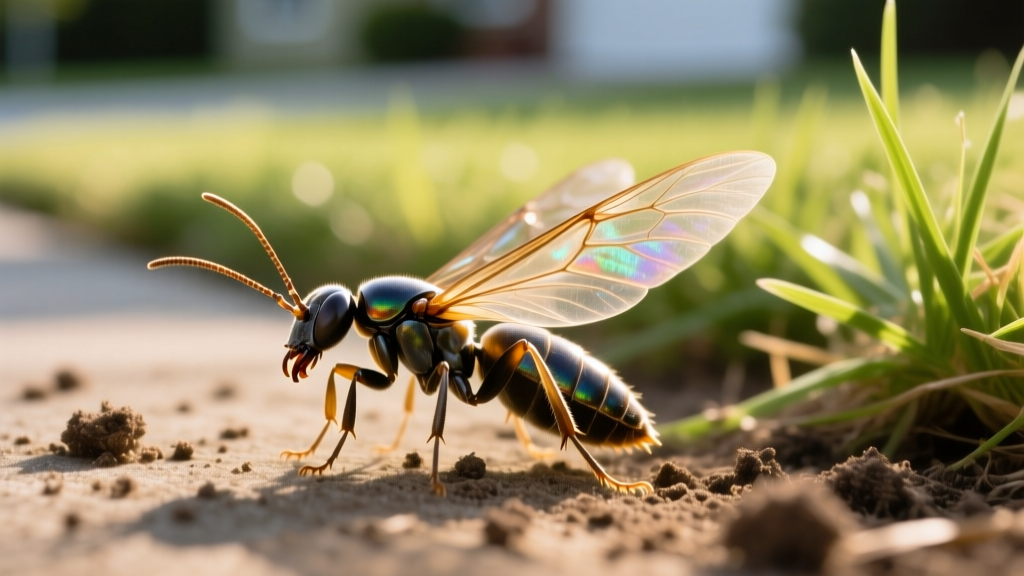
How to Identify and Stop Formosan Termite Swarmers in Your Yard
Formosan subterranean termites (Coptotermes formosanus) are arguably the most destructive wood-destroying insects in the United States, causing over $2 billion in property damage annually. Originating in East Asia, these invasive pests have established massive colonies across the Gulf Coast, Southeast, and parts of Southern California. When you spot Formosan termite swarmers (alates) in your yard, you are not just seeing a nuisance insect; you are witnessing the reproductive phase of a mature, subterranean colony that is likely already feeding on your property's structural timber or fencing.
Defending your yard against Formosan termites requires moving beyond generic pest control. This guide details exact identification metrics, perimeter defense strategies, and professional-grade chemical protocols to neutralize the threat before swarmers can establish satellite colonies.
The Anatomy of a Formosan Termite Swarmer
Accurate identification is the first line of defense. Homeowners frequently confuse Formosan alates with native subterranean termites, flying ants, or drywood termites. Misidentification leads to incorrect treatment protocols, wasting hundreds of dollars on ineffective DIY baits. According to the University of Florida IFAS Entomology Department, Formosan swarmers possess distinct morphological and behavioral traits that separate them from native species.
| Trait | Formosan Subterranean | Native Subterranean (Reticulitermes) | Drywood Termite |
|---|---|---|---|
| Body Color | Yellowish-brown to pale gold | Dark brown to black | Dark red to reddish-brown |
| Wingspan | Approx. 1 inch (wings extend well past abdomen) | Approx. 3/8 inch | Approx. 1/2 inch |
| Swarming Time | Dusk to midnight (May–June) | Daytime (March–May) | Daytime (Late summer/fall) |
| Colony Size | 1 to 10 million workers | 100,000 to 1 million workers | 2,000 to 5,000 workers |
| Carton Nests | Yes (above ground, holds moisture) | No (strictly subterranean) | No (inside dry wood galleries) |
Yard Defense Perimeter: Pre-Swarm Prevention
Formosan termites require high moisture levels to survive and build their signature above-ground 'carton' nests. Your yard defense strategy must focus on moisture deprivation and physical barriers. Implementing these specific measurements will drastically reduce the carrying capacity of your soil for termite colonies.
- Foundation Grading: Ensure the soil slopes away from your foundation at a minimum rate of 6 inches of vertical drop over the first 10 horizontal feet. This prevents hydrostatic pressure and pooling near the slab.
- Mulch Buffer Zones: Maintain a strict 12-inch bare soil or gravel buffer between any organic mulch and the foundation. If mulch is necessary, use inorganic options like crushed granite or rubber mulch within this zone.
- Wood-to-Soil Elimination: Fence posts, deck stairs, and trellis bases must be elevated at least 2 inches above the soil line using galvanized steel post bases. Direct wood-to-soil contact bypasses chemical soil treatments and provides a direct highway into your home.
- AC Condensate Routing: Route HVAC condensate drain lines at least 5 feet away from the foundation using rigid PVC pipe. A single dripping AC line can output 5 to 20 gallons of water daily, creating an ideal Formosan oasis.
Warning: The DIY Bait Station Trap
Purchasing over-the-counter wooden stake 'termite detectors' from big-box stores often creates a false sense of security. These stakes lack the active matrix (like noviflumuron or hexaflumuron) required to disrupt the molting process of the colony. They merely confirm the presence of termites after the damage has already begun, without offering a mechanism for colony elimination.
Purchasing over-the-counter wooden stake 'termite detectors' from big-box stores often creates a false sense of security. These stakes lack the active matrix (like noviflumuron or hexaflumuron) required to disrupt the molting process of the colony. They merely confirm the presence of termites after the damage has already begun, without offering a mechanism for colony elimination.
Professional-Grade Treatment Protocols
When Formosan termite swarmers are present, or if your yard borders a known infestation zone, preventative soil treatment is non-negotiable. The Environmental Protection Agency (EPA) heavily regulates termiticides, and proper application requires precise dilution and trenching techniques to create a continuous chemical barrier.
Liquid Soil Trenching (Non-Repellent Termiticides)
Non-repellent termiticides, specifically those containing Fipronil (9.1% SC) such as Taurus SC or Termidor SC, are the gold standard for Formosan defense. Because the termites cannot detect the chemical, they tunnel through the treated zone, transfer the active ingredient to nestmates via trophallaxis (grooming and feeding), and trigger a colony-wide collapse.
- Trench Dimensions: Dig a continuous trench 6 inches wide and 6 inches deep directly against the foundation footing.
- Dilution Rate: Mix 0.8 fluid ounces of Fipronil 9.1% SC per gallon of water to achieve a 0.06% finished dilution.
- Application Volume: Apply exactly 4 gallons of the finished dilution per 10 linear feet of trench. For a standard 200-linear-foot foundation, you will need 80 gallons of finished solution.
- Backfilling: Treat the backfill soil as it is pushed back into the trench to ensure the barrier extends from the footing to the surface grade.
Cost Analysis: A 20 oz bottle of generic Fipronil 9.1% costs approximately $55 to $75 in 2026 and yields enough concentrate for 60 linear feet of trenching. Professional application for a 2,500 sq. ft. footprint typically ranges from $1,800 to $2,800, factoring in labor, drilling through concrete patios, and warranty coverage.
Cellulose Bait Matrix Systems
For properties with extensive hardscaping, wells, or environmental buffer zones where liquid trenching is prohibited, in-ground baiting systems like Sentricon Always Active are required. These stations utilize Recruit HD bait matrices containing noviflumuron, a chitin synthesis inhibitor.
- Placement: Install stations every 10 linear feet around the perimeter, positioned 2 to 4 inches away from the foundation edge.
- Depth: The station housing must be driven into the soil so the top cap is flush with the grade, placing the bait matrix directly in the primary foraging zone (top 6 inches of soil).
- Monitoring: Unlike older systems that required monthly inspection and bait insertion upon detection, Always Active matrices are pre-loaded and must be replaced annually or when 50% consumed.
What to Do When Swarmers Emerge (The 48-Hour Rule)
If a swarm of Formosan alates erupts from your yard mulch or a crack in your driveway at dusk, panic is the enemy. Swarming indicates the colony is mature, but the swarmers themselves are fragile; less than 3% survive to start a new colony. Your immediate actions dictate the long-term health of your property.
- Do Not Spray the Swarmers: Using over-the-counter aerosol pyrethroids (like bifenthrin or permethrin) on the swarmers will only kill the visible reproductive caste. Worse, it contaminates the soil, repelling the worker termites and preventing them from picking up non-repellent termiticides applied later.
- Document the Emergence Point: Mark the exact location of the swarm tube or exit fissure with landscaping paint. This pinpoints the direct route to the subterranean gallery network.
- Vacuum the Interior: If swarmers enter the home via window gaps, use a HEPA-filter vacuum to remove them. Do not use chemical foggers indoors.
- Schedule a Thermal and Moisture Audit: Within 48 hours, hire a licensed pest control operator to perform an infrared thermal scan and use a protimeter (moisture meter) on your baseboards and drywall. Formosan carton nests retain massive amounts of water, which show up as distinct thermal anomalies on IR cameras.
Expert FAQ
Can Formosan termites build nests entirely above ground?
Yes. Unlike native subterranean termites that must maintain contact with the soil, Formosan termites can construct 'carton nests' above ground. These nests are made of chewed wood, soil, and termite feces, and they act as moisture reservoirs. If your home has a chronic roof leak or a plumbing leak inside a wall void, a Formosan colony can sever its connection to the soil and live entirely within the structure.
Does gravel backfill prevent Formosan termite tunneling?
While a 16-mesh basaltic sand or specific graded gravel barrier (like Termi-Mesh) can physically deter termites, standard decorative pea gravel or river rock used in residential landscaping does not. Formosan workers can easily navigate the interstitial spaces between standard gravel to reach wood sources.
Are swarmers attracted to specific types of outdoor lighting?
Formosan swarmers are highly phototactic (attracted to light) during their nuptial flights. However, they are primarily drawn to the UV and blue light spectrums. Replacing standard cool-white LED porch lights (4000K-5000K) with warm amber LEDs (2200K) or specialized yellow bug lights significantly reduces the volume of swarmers congregating near your home's entry points during peak swarming season.

