
Pest Control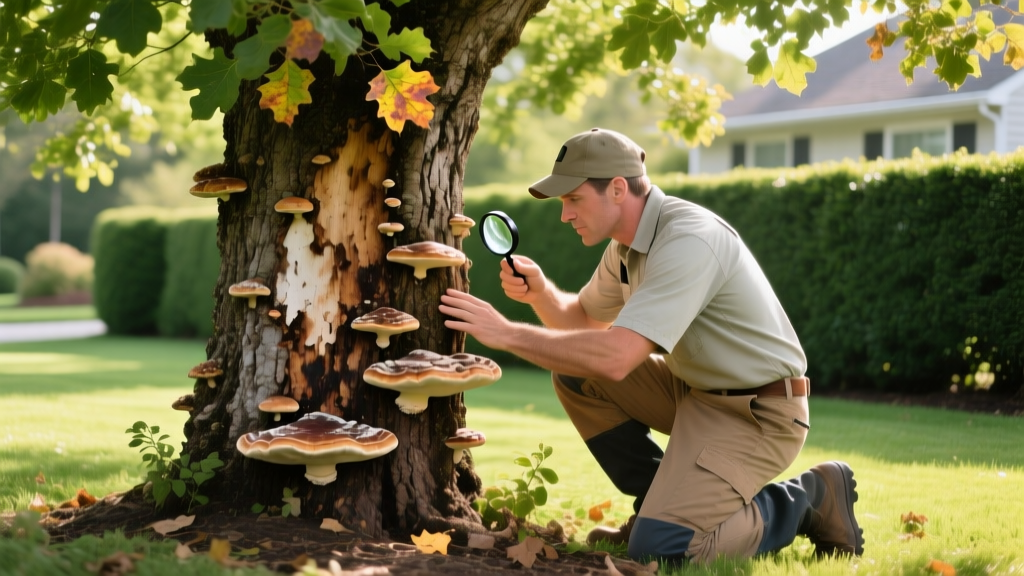
Diagnose and Treat Fungus on Trees: A Symptom Rescue Guide
Finding fungus on trees is rarely just a cosmetic issue; it is a critical distress signal indicating that the tree's internal immune system is compromised. Whether you are dealing with aggressive root rots, vascular wilts, or superficial foliar mildews, the difference between saving a legacy shade tree and paying $2,500 for an emergency removal hinges on rapid, accurate symptom diagnosis. This guide provides a clinical framework for identifying specific fungal pathogens and executing targeted rescue protocols using current, professional-grade methodologies.
The Diagnostic Matrix: Mapping Symptoms to Pathogens
Before purchasing any fungicide, you must categorize the infection. Fungal pathogens attack trees in three primary zones: the root/collar system, the vascular tissue, and the foliar canopy. Misidentifying the zone leads to total treatment failure. For instance, spraying a contact fungicide on the leaves will do absolutely nothing to stop a root-borne Armillaria infection.
| Visible Symptom | Pathogen Class | Primary Location | Rescue Viability |
|---|---|---|---|
| Shelf mushrooms (conks) at the base | White/Brown Rot (Ganoderma) | Root flare / Lower trunk | Low (Removal likely if >20% flare involved) |
| White, powdery coating on new growth | Foliar (Erysiphe / Mildew) | Leaves and tender twigs | High (Fungicide + canopy pruning) |
| One-sided canopy wilting, green leaves | Vascular (Verticillium) | Xylem (water-conducting tissue) | Medium (Phosphite injections + deep watering) |
| V-shaped sunken cankers on branches | Twig/Branch (Nectria) | Branch unions and wounds | High (Surgical excision and tool sterilization) |
| Dark, tar-like spots on leaves | Foliar (Rhytisma / Tar Spot) | Mature leaves | High (Sanitation and dormant copper sprays) |
Trunk and Root Conks: Managing Structural Decay
When you see shelf-like mushrooms (conks) protruding from the lower trunk or root flare, the fungus has already been digesting the tree's structural lignin for years. According to Penn State Extension, by the time Ganoderma applanatum fruits on the outside, at least 30% to 50% of the internal heartwood is decayed.
When to Rescue vs. When to Remove
Perform a sounding test using a rubber mallet on the trunk above the conk. A hollow, dull thud indicates advanced internal rot. If the conk is located on the main trunk above ground level, the tree is a structural hazard and must be removed. If the conks are strictly on the superficial surface roots and the main trunk sounds solid, a rescue attempt is viable.
⚠️ Warning: The Mulch Volcano Effect
Piling mulch against the trunk (a "mulch volcano") traps moisture against the bark, creating an ideal incubator for Phytophthora root rot and buttress fungi. Always maintain a strict 3-inch mulch-free radius around the root flare to allow the bark to dry and breathe.
Chemical Rescue Protocol for Root Rot
For early-stage root and collar rots, systemic fungicides containing Propiconazole are the standard. Homeowners can use products like Bonide INFUSE Systemic Disease Control (approx. $22 per bottle), while professionals use Arborjet Alamo (approx. $160 per gallon in 2026). Apply as a soil drench in early spring before bud break, using 0.5 fluid ounces of product per inch of the tree's Diameter at Breast Height (DBH), diluted in 5 gallons of water to ensure deep soil penetration.
Foliar and Twig Fungi: Anthracnose and Powdery Mildew
Foliar fungi rarely kill mature trees outright but cause severe defoliation, weakening the tree and making it susceptible to secondary borers. Anthracnose (caused by Apiognomonia) thrives in cool, wet springs, presenting as irregular brown blotches along leaf veins.
Targeted Spray Timing and Chemistry
The most common failure mode in treating foliar fungus on trees is applying contact fungicides too late. Once the leaf tissue is necrotic, it cannot be cured. You must apply protectant fungicides at bud swell, just before the leaves unfurl.
- Copper-based sprays: Bonide Liquid Copper Fungicide ($14 for a 32oz ready-to-spray bottle) is highly effective against anthracnose and bacterial leaf spots. Apply at a rate of 1 to 2 tablespoons per gallon of water if using the concentrate.
- Chlorothalonil: Products like Daconil offer broader-spectrum protection for powdery mildew and rusts. Apply every 7 to 14 days during prolonged wet spring weather.
💡 Pro Tip: Canopy Airflow Pruning
Fungi require sustained leaf wetness (usually 12+ hours) to germinate spores. Prune out crossing branches and water sprouts in late winter to open the canopy. Increasing UV penetration and wind airflow naturally reduces leaf wetness duration, breaking the fungal life cycle without chemicals.
Vascular Wilts: The Silent Killers
Verticillium and Fusarium wilts invade the tree's xylem, blocking water transport. The hallmark symptom is "flagging"—where one single branch or one side of the canopy wilts and dies while the rest of the tree looks perfectly healthy. As noted by Michigan State University Extension, maples, ash, and redbuds are highly susceptible.
Rescue Fixes for Vascular Pathogens
You cannot cure Verticillium wilt once it has colonized the main trunk. However, you can halt its progression and help the tree compartmentalize the damage using Phosphite trunk injections (e.g., Arborjet PHOSjet). Phosphites do not kill the fungus directly; instead, they trigger the tree's natural systemic acquired resistance (SAR), prompting it to produce defensive phytoalexins.
- Measure the tree's DBH (circumference divided by 3.14).
- Drill 5/32-inch holes at a slight upward angle into the outer sapwood, spacing them every 4 to 6 inches around the base.
- Inject the phosphite solution at a rate of 0.1 to 0.2 fl oz per inch of DBH.
- Seal the drill holes with a non-asphalt pruning sealant to prevent secondary borer entry.
Surgical Pruning and Tool Sterilization
When excising cankered or diseased branches, the physical act of pruning can spread fungal spores to healthy tissue if tools are not properly sterilized. Do not use bleach. Sodium hypochlorite pits and ruins the cutting edges of high-carbon steel bypass pruners.
"Wound paint and pruning sealants are largely obsolete for fungal prevention. Research from the Texas A&M Forest Service shows that trees compartmentalize decay (CODIT) much faster when wounds are left open to dry, except in specific cases like Oak Wilt where fresh cuts must be painted immediately to prevent beetle transmission."
The Isopropyl Protocol
Keep a spray bottle of 70% isopropyl alcohol on your tool belt. Spray the blades of your loppers and pruning saws, and wipe them with a clean rag between every single cut when moving from a diseased branch to a healthy one. Make your pruning cuts at least 12 inches below the visible margin of the canker into clean, white wood.
Altering the Microclimate: Long-Term Cultural Fixes
Chemical treatments are temporary bandages if the underlying environmental stressors are not resolved. Fungi are opportunistic; they attack trees suffering from abiotic stress.
Soil Decompaction and Drainage
Heavy clay soils suffocate roots, forcing them to the surface where they are prone to fungal collar rot. Use an air spade or a manual digging bar to create vertical mulching holes. Drill 2-inch wide holes, 18 inches deep, in a grid pattern extending from the trunk to the drip line. Backfill these holes with a mix of expanded shale and coarse compost. This permanently improves soil oxygenation and drainage, creating an environment where beneficial aerobic microbes outcompete anaerobic fungal pathogens.
Sanitation and Leaf Litter Management
For trees plagued by recurring foliar fungi like Tar Spot or Apple Scab, the spores overwinter in fallen leaf litter. Raking and destroying (burning or municipal composting) all fallen leaves in November removes up to 80% of the primary inoculum for the following spring. Never compost diseased leaves in a standard backyard pile, as residential compost bins rarely reach the 140°F (60°C) threshold required to kill resilient fungal sclerotia.

