
Pest Control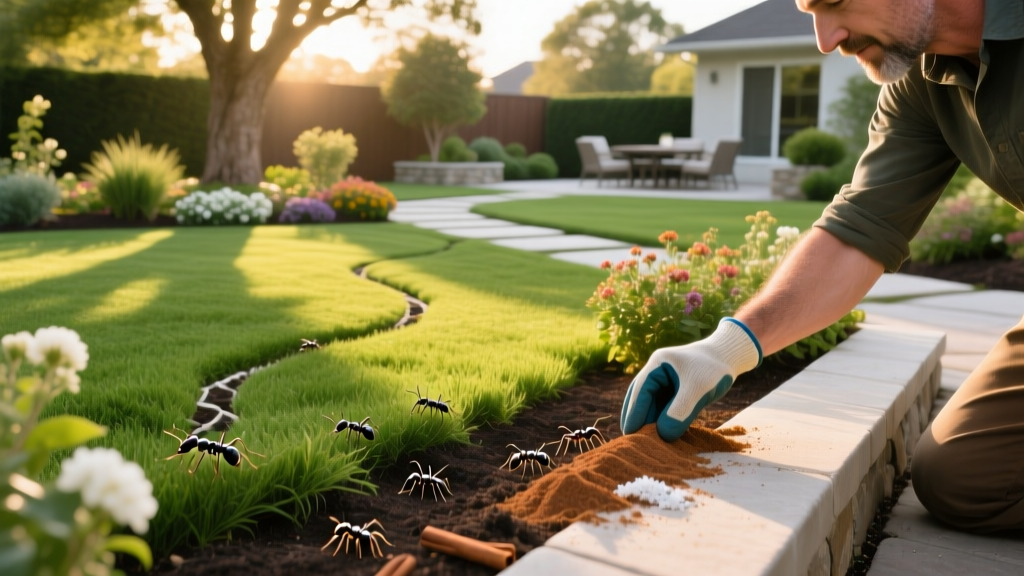
How to Keep Ants Away From Garden Beds: Perimeter Defense Guide
Ants in the garden are rarely eating your vegetables. Unlike caterpillars or beetles, most common yard ants do not consume plant tissue. Instead, they invade garden beds for two primary reasons: to farm sap-sucking insects for honeydew, or to exploit the dry, loose soil of raised beds for nesting. Understanding this distinction is the foundation of effective yard defense. If you want to know how to keep ants away from garden beds long-term, you must target their food sources and disrupt their nesting environment rather than relying on superficial contact sprays.
⚠️ The Aphid Indicator: If you see a heavy trail of ants marching up and down the stems of your tomatoes, peppers, or roses, do not treat the ants first. The ants are farming aphids, scale insects, or whiteflies to harvest their sugary honeydew excretions. Treat the plant with insecticidal soap (2 tablespoons per gallon of water) to eliminate the aphids, and the ant trail will vanish within 48 hours.
Perimeter Defense Matrix: Organic vs. Conventional
Choosing the right barrier depends on your garden's proximity to edible crops, the presence of pets, and the severity of the infestation. Below is a comparative framework for the most effective perimeter treatments available in 2026.
| Method | Active Ingredient | Target Species | Est. Cost | Edible Safe? |
|---|---|---|---|---|
| Food-Grade DE | Amorphous Silicon Dioxide | All crawling insects | $12 / 4 lbs | Yes |
| Liquid Baits | Borax (5.4%) | Sugar ants, Odorous house ants | $7 / 6-pack | Yes (Keep away from roots) |
| Granular Baits | Abamectin B1 (0.011%) | Carpenter ants, Field ants | $24 / 8 oz | No (Ornamentals only) |
| Botanical Oil Spray | d-Limonene (Orange Oil) | Fire ants, Harvester ants | $18 / 32 oz | Yes |
Constructing a Physical Moat: DE and Borax Application
For raised wooden beds or ground-level vegetable plots, a physical barrier prevents foraging workers from crossing into your growing space. Diatomaceous earth (DE) works mechanically, lacerating the ants' exoskeletons and causing fatal dehydration. However, DE is easily neutralized by moisture. To create a resilient barrier, combine it with a structural edge.
- Clear the Perimeter: Remove mulch, dead leaves, and soil buildup within 3 inches of the garden bed's exterior edge. Ants use debris as bridges to bypass ground-level treatments.
- Apply the Borax Base: Mix 1 part Borax powder with 3 parts powdered sugar. Sprinkle this mixture in a 1-inch wide band directly against the base of the garden bed. Foraging ants will carry this back to the nest, disrupting the colony's digestive tract.
- Layer the DE: Using a handheld duster, apply Food-Grade Diatomaceous Earth over the Borax base and extending 2 inches outward. The layer must be exactly 1/4 inch thick. Any thinner, and ants will step over it; any thicker, and wind will scatter it.
- Install a Drip Shield: To protect the DE from rain and irrigation, staple a 4-inch strip of heavy-duty landscaping plastic along the outside rim of the bed, angled slightly downward to shed water away from the barrier.
Strategic Baiting: Exploiting the Colony's Dietary Shifts
When perimeter barriers fail or you are dealing with subterranean nests directly beneath your garden paths, contact sprays are counterproductive. Spraying visible ants only kills the foragers, prompting the colony to splinter and create multiple new queens. According to the UC Statewide IPM Program, slow-acting toxic baits are the only reliable method for colony eradication.
The most common failure point in baiting is ignoring the colony's seasonal dietary shifts. Ant colonies alter their nutritional requirements based on the time of year and the brood cycle:
- Spring to Early Summer: Colonies are in reproductive mode and require high carbohydrates to fuel foraging workers. Deploy sugar-based liquid baits like Terro T300B (5.4% Borax). Place stations near garden hose spigots and along fence lines where moisture and trails intersect.
- Late Summer to Autumn: The colony shifts focus to brood development and overwintering prep, demanding proteins and fats. Sugar baits will be ignored. Switch to granular protein baits like Advance Carpenter Ant Bait (Abamectin B1) or mix a small amount of peanut butter into your DIY Borax traps.
Botanical Deterrents and Soil Moisture Management
Ants prefer dry, undisturbed soil for nesting. Raised garden beds are particularly vulnerable because they drain quickly and are often shielded from heavy rains. Modifying the soil environment is a highly effective, passive defense mechanism.
Deep Watering Protocols
If you discover an ant mound inside your garden bed, do not immediately reach for boiling water or chemical drenches, which will destroy your soil microbiome and harm plant roots. Instead, attach a deep-root watering wand to your hose and inject water directly into the nest galleries at a low flow rate for 45 to 60 minutes. Saturating the soil to a depth of 6 inches forces the colony to relocate without introducing toxins into your edible garden.
Companion Planting for Repulsion
While botanical deterrents will not stop a starving colony, they disrupt the pheromone trails ants use to navigate. Planting strong-scented alliums and herbs around the perimeter of your garden creates an olfactory smokescreen.
Planting Spacing Guide: Plant Allium schoenoprasum (chives) or Allium tuberosum (garlic chives) in a continuous border, spacing bulbs exactly 6 inches apart. Intersperse with Mentha pulegium (pennyroyal). Note: Keep mint confined to pots sunk into the ground, as it is highly invasive and will outcompete your vegetables.
Troubleshooting: Why Your Ant Treatment Failed
Even with professional-grade products, treatments can fail if the underlying mechanics of the colony are misunderstood. Use this decision tree to diagnose persistent ant issues in the yard.
Symptom: Ants are swarming the bait station but the population isn't decreasing.
Cause: The active ingredient is acting too quickly, or the concentration is too high. If workers die before returning to the nest, the colony never receives the toxin. Fix: Dilute liquid baits with an equal part of distilled water to slow the kill time, allowing foragers to reach the queen.
Symptom: Ants are bypassing the DE barrier entirely.
Cause: Structural bridging. A single blade of grass, a stray twig, or a low-hanging tomato branch touching the outside of the bed provides an aerial highway over the DE. Fix: Prune all vegetation back 12 inches from the garden bed perimeter and maintain a strict debris-clearing schedule.
Symptom: Large mounds keep reappearing in the same lawn-adjacent bed.
Cause: You are likely dealing with Harvester ants or Fire ants, which build deep, complex subterranean galleries that extend far beyond the visible mound. Surface treatments only scratch the surface. Fix: According to guidelines from the University of Minnesota Extension, aggressive mound-building species require a two-step approach: broadcast a granular bait over the entire yard to reduce overall foraging pressure, followed by a targeted d-Limonene drench directly into the active mound galleries.
Defending your garden from ants requires a shift from reactive spraying to proactive perimeter management. By combining physical DE moats, strategic seasonal baiting, and strict moisture control, you can protect your root systems and soil structure without resorting to broad-spectrum insecticides that harm vital pollinators.

