
Pest Control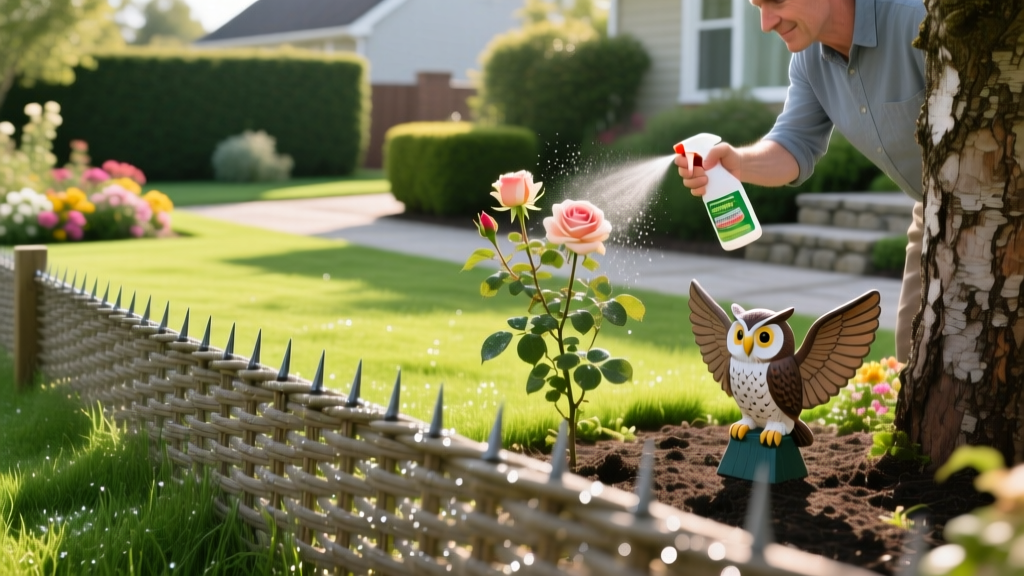
Top Deterrents for Rabbits: Fencing, Repellents & Garden Tactics
Eastern cottontails, desert cottontails, and jackrabbits are voracious foragers capable of decimating a newly planted garden in a single evening. A single adult cottontail can consume up to one-third of its body weight in vegetation daily, targeting tender shoots, young bark, and low-lying vegetables. Relying on generic pest control methods or anecdotal home remedies rarely works against these highly adaptable mammals. Effective rabbit management requires a layered defense strategy combining physical exclusion, targeted chemical repellents, and habitat modification.
Identifying the Culprit: Rabbit Damage vs. Deer and Rodents
Before deploying deterrents for rabbits, confirm they are the actual culprits. Misidentifying the pest leads to wasted money on ineffective barriers. According to the Penn State Extension, rabbits leave distinct forensic evidence in the landscape:
- The 45-Degree Cut: Rabbits lack upper incisors, resulting in clean, sharp, 45-degree angled cuts on stems and twigs. Deer, by contrast, lack lower incisors and leave ragged, torn stem ends.
- Bark Stripping: In winter, rabbits strip bark from young trees and shrubs up to 24 inches above the snow line, exposing the cambium layer.
- Pea-Sized Droppings: Look for distinct, round, brown-to-black pellets scattered near feeding sites, measuring roughly 1/4 inch in diameter.
- Clean Grazing: Unlike groundhogs that leave messy, half-eaten vegetation, rabbits clip plants cleanly down to the soil line.
Physical Deterrents for Rabbits: Fencing Specifications
Physical exclusion remains the only 100% reliable long-term deterrent for rabbits. Standard chicken wire is often too flimsy and easily crushed by larger wildlife or lawnmowers. For permanent garden protection, use 16-gauge galvanized wire netting with a 1-inch hexagonal mesh.
Pro-Tip: The 'L-Footer' Burial Technique
Rabbits are natural diggers. Simply staking a fence to the ground will fail. Dig a 6-inch deep trench along the fence line. Place the wire in the trench and bend the bottom 6 inches outward (away from the garden) to form an 'L' shape. Backfill the trench. When a rabbit digs at the fence base, it hits the wire mesh and stops, rather than digging under it.
Rabbits are natural diggers. Simply staking a fence to the ground will fail. Dig a 6-inch deep trench along the fence line. Place the wire in the trench and bend the bottom 6 inches outward (away from the garden) to form an 'L' shape. Backfill the trench. When a rabbit digs at the fence base, it hits the wire mesh and stops, rather than digging under it.
Fencing Cost and Material Breakdown
For a standard 400-square-foot vegetable garden (approx. 80 linear feet of perimeter), expect the following material costs based on current 2026 hardware pricing:
- 16-Gauge 1-Inch Mesh Wire (36-inch roll): $1.50 to $2.50 per linear foot.
- Steel T-Posts (6-foot length): $8.00 to $12.00 each, spaced every 8 feet.
- Zip Ties / Galvanized Fence Staples: $15.00 per box.
- Total Estimated Cost: $200 to $280 for a fully secured, dig-proof perimeter.
Ensure the fence stands at least 24 inches above the ground level. In regions with heavy winter snowfall, the Internet Center for Wildlife Damage Management recommends increasing the above-ground height to 36 inches to account for snow drifts that rabbits can use as a bridge to hop over lower fences.
Chemical Repellents: Active Ingredients Compared
When fencing individual trees or treating expansive ornamental beds where perimeter fencing is cost-prohibitive, chemical repellents are necessary. Repellents fall into two categories: area repellents (placed on the ground) and contact repellents (applied directly to foliage). Contact repellents are significantly more effective but alter the taste of edible crops.
| Active Ingredient | Product Example | Mechanism of Action | Best Application |
|---|---|---|---|
| Putrescent Egg Solids (2.5%) | Liquid Fence | Olfactory fear response (predator scent mimicry) | Ornamentals, perimeter sprays |
| Thiram | Bonide Rabbit Scat | Bitter taste and mild fungicidal properties | Tree trunks, non-edible shrubs |
| Capsaicin (Hot Pepper) | Bonide Go Away Rabbit | Irritates oral and nasal mucous membranes | Vegetables (requires washing before harvest) |
| Methyl Anthranilate | Bird Shield / Repellex | Grape extract that tastes highly unpalatable | Edible crops, berries, fruit trees |
Reapplication Rules and Weather Resistance
The most common failure point with chemical deterrents for rabbits is improper reapplication. Most liquid repellents degrade under UV exposure and wash off after 1 inch of rainfall. Apply contact repellents to dry foliage in the early evening, allowing 12 hours for the active ingredients to bind to the plant tissue before morning dew or rain. During the spring growth flush, reapply every 14 days to protect new, untreated foliage.
Motion-Activated Deterrents and Scare Tactics
Ultrasonic sound devices are largely ineffective against rabbits. While rabbits have excellent hearing, they quickly habituate to constant or predictable high-frequency noises. Furthermore, many ultrasonic frequencies do not penetrate dense garden foliage. Instead, rely on unpredictable, physical disruptions.
Warning: Predator Urine Limitations
Products containing coyote or fox urine are popular online, but they wash away rapidly and can actually attract neighborhood dogs or feral cats to your garden beds. Stick to synthetic, weather-resistant olfactory repellents instead.
Products containing coyote or fox urine are popular online, but they wash away rapidly and can actually attract neighborhood dogs or feral cats to your garden beds. Stick to synthetic, weather-resistant olfactory repellents instead.
The Orbit Yard Enforcer Solution
Motion-activated sprinklers, such as the Orbit Yard Enforcer, offer an excellent mid-tier physical deterrent. These devices use an infrared sensor to detect body heat and motion up to 40 feet away, triggering a sudden 5-second burst of water. The combination of sudden noise, physical movement, and water spray triggers a rabbit's flight response. Priced around $65 to $85, a single unit can protect a 1,200-square-foot radius. To prevent habituation, move the sprinkler head to a new location every 4 to 5 days.
Strategic Plant Selection: Rabbit-Resistant Varieties
No plant is entirely rabbit-proof if the animal is starving, but rabbits possess highly developed palates and actively avoid plants with high toxicity, fuzzy leaves, or strong aromatic oils. Integrating these plants into your landscape design reduces the overall carrying capacity of your yard for foraging rabbits.
- Highly Resistant (Toxic/Pungent): Daffodils, foxglove, alliums, lavender, and Russian sage.
- Moderately Resistant (Textural defenses): Lamb's ear, yarrow, and ornamental grasses.
- Highly Susceptible (Avoid planting unprotected): Tulips, hostas, beans, peas, and young apple tree bark.
Decision Framework: Building Your Defense Strategy
Use this practical framework to allocate your pest control budget effectively based on your specific garden layout:
- Zone 1 (High-Value Edibles): Erect a 36-inch 16-gauge galvanized fence with an L-footer base. Do not rely on repellents for vegetables you intend to eat, as they alter the flavor profile of the harvest.
- Zone 2 (Ornamental Beds & Perennials): Apply putrescent egg solid repellents every 21 days during the growing season. Supplement with motion-activated sprinklers pointed at primary entry points.
- Zone 3 (Young Trees & Shrubs): Install corrugated plastic tree guards or 1/4-inch hardware cloth cylinders around the base of trunks, extending 24 inches above the expected winter snow line to prevent winter bark girdling.
By combining impenetrable physical barriers in high-risk zones with targeted olfactory and physical scare tactics in ornamental areas, homeowners can reduce rabbit foraging damage by over 90% without resorting to lethal population control methods.

