
Pest Control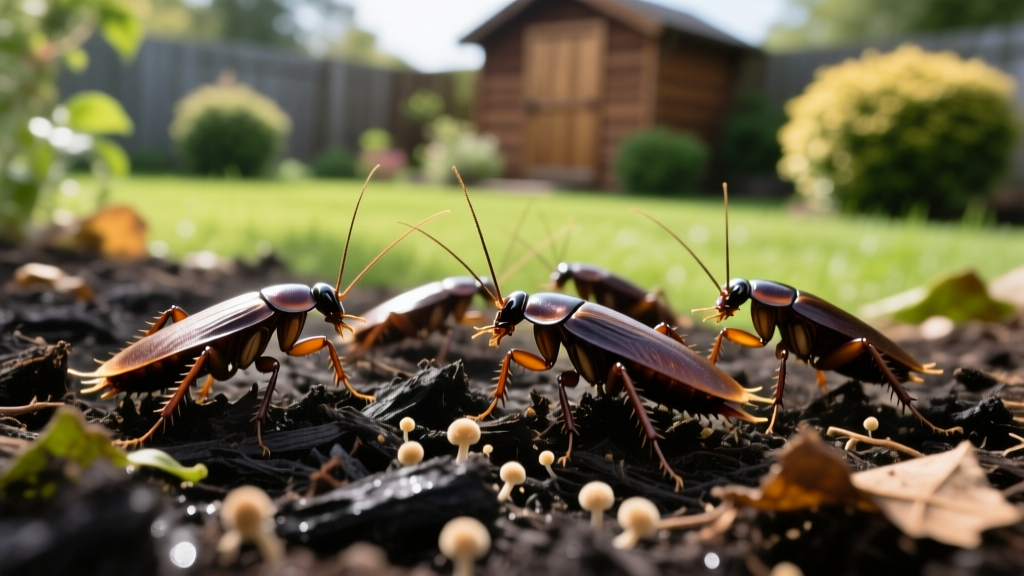
Garden Roaches in Mulch: Identification and Yard Defense Guide
The Truth About Garden Roaches: Accidental Invaders vs. Perimeter Breeders
When homeowners spot a large, dark cockroach scurrying across the patio or wandering into the garage, the immediate assumption is a severe indoor infestation. However, the vast majority of these 'garden roaches' are outdoor-dwelling species that thrive in landscaping beds, leaf litter, and mulch. Unlike the German cockroach (Blattella germanica), which breeds indoors and signals a sanitation issue, garden roaches are primarily nuisance pests that accidentally cross the threshold while foraging or seeking moisture.
Effective yard defense requires accurate identification. Treating a wood roach invasion with indoor gel baits is a waste of money; the focus must be on exterior perimeter management and habitat modification. According to Penn State Extension, wood cockroaches are strongly attracted to light and frequently fly toward porch lights in early summer, making physical exclusion and exterior lighting adjustments critical first steps.
Identification Matrix: Which Garden Roach is in Your Mulch?
Before purchasing any insecticides, identify the specific species inhabiting your landscaping. The three most common outdoor roaches found in North American yards have distinct behavioral profiles.
| Species | Size & Color | Flight Capability | Primary Yard Habitat | Indoor Breeding Risk |
|---|---|---|---|---|
| Wood Roach (Parcoblatta spp.) | 3/4 to 1 inch; Chestnut brown | Males fly well; females cannot | Woodpiles, loose bark, leaf litter | Zero (cannot survive indoors) |
| Smokybrown (Periplaneta fuliginosa) | 1 to 1.5 inches; Uniform dark mahogany | Strong fliers, attracted to light | Tree holes, dense ivy, thick mulch | Low (prefers high humidity outdoors) |
| American (Periplaneta americana) | 1.5 to 2 inches; Reddish-brown with yellow halo | Gliders, rarely sustained flight | Sewer drains, compost bins, damp soil | Moderate (can breed in damp basements) |
The Mulch Microclimate: Why Landscaping Beds Harbor Roaches
Mulch is the primary catalyst for garden roach proliferation. A 4-inch layer of pine bark over damp soil creates an ideal microclimate: it retains moisture, blocks UV light, and provides a steady food source of decaying organic matter. Smokybrown cockroaches, in particular, require high humidity to prevent lethal desiccation, making deep mulch beds adjacent to home foundations a perfect harborage zone.
Warning: The Mulch Depth Trap
Applying mulch deeper than 3 inches compacts the lower layers, creating an anaerobic, highly moist environment that garden roaches prefer. Always maintain a mulch depth of 2 to 2.5 inches, and rake beds monthly to disrupt the compaction and expose the soil to drying sunlight.
Step-by-Step Perimeter Defense Protocol
To reclaim your yard and prevent garden roaches from migrating indoors, implement this three-tiered defense strategy. This protocol focuses on creating an inhospitable zone immediately surrounding your home's foundation.
Step 1: Habitat Modification and the 18-Inch Rule
Establish a strict 18-inch bare-ground buffer between your foundation and any organic landscaping materials. Remove all mulch, ivy, and leaf litter from this zone. Replace it with inorganic materials like crushed gravel or river rock, which drain rapidly and offer no food value. Ensure downspouts discharge at least 4 feet away from the foundation to prevent the gravel buffer from becoming a moisture trap.
Step 2: Liquid Barrier Application
For immediate knockdown and long-lasting residual control, apply a microencapsulated or suspension concentrate insecticide. Bifenthrin 7.9% (commonly sold as Talstar P) is the industry standard for exterior perimeter defense.
- Mixing Rate: 1 fluid ounce per gallon of water.
- Application: Spray a 3-foot wide band on the soil/gravel and a 2-foot high band up the foundation wall.
- Cost: Approximately $45 for a 3/4 gallon jug, which yields roughly 96 gallons of finished solution (enough to treat multiple acres over time).
- Reapplication: Every 60 to 90 days during the active season (May through September).
Step 3: Granular Baiting for Deep Harborage
Liquid sprays only treat the surface. To eliminate roaches hiding deep within remaining mulch beds or compost piles, deploy a granular bait. InTice 10 Perimeter Bait utilizes a boric acid active ingredient combined with a proprietary food matrix that roaches cannot resist.
- Application Rate: 1 to 2 lbs per 1,000 square feet.
- Placement: Broadcast lightly over mulch beds and around the base of large shrubs. Do not pile it; a sparse, even distribution forces roaches to forage and ingest the bait.
- Cost: Roughly $35 for a 25 lb bag.
Organic vs. Conventional Treatment Efficacy
Homeowners seeking non-synthetic options must understand the limitations of organic treatments for outdoor pest pressure. While effective in enclosed spaces, organic options struggle with the sheer volume and environmental degradation of an open yard.
Organic Approach
Food-Grade Diatomaceous Earth (DE): Costs ~$15 for a 4 lb bag. Works by abrading the insect's exoskeleton.
The Catch: DE becomes completely inert the moment it gets wet. In a garden environment with rain, dew, and irrigation, it requires reapplication every 48 hours to remain effective. It is best reserved for dry, covered areas like under porches or inside crawl space vents.
Conventional Approach
Fipronil 9.1% (e.g., Taurus SC): Costs ~$35 for a 9 oz bottle. A non-repellent termiticide/insecticide.
The Advantage: Because it is non-repellent, garden roaches do not detect it and will walk through the treated soil, transferring the active ingredient to others in the harborage via grooming. It binds tightly to soil and remains active for up to 90 days, surviving multiple rain events.
Sealing the Envelope: Physical Exclusion Tactics
According to the EPA's guidelines on safe pest control, physical exclusion is the most permanent solution for preventing outdoor pests from becoming indoor problems. Garden roaches can compress their bodies to fit through gaps as small as 1/16th of an inch.
- Weep Holes: Brick veneer homes feature weep holes every few feet to allow moisture to escape. Do not seal these with caulk. Instead, insert copper mesh wool (Stuf-Fit brand, ~$12 for a 20-foot roll). Copper rusts much slower than steel wool and allows airflow while blocking roaches.
- Door Sweeps: Replace worn vinyl sweeps with heavy-duty aluminum and rubber threshold seals. Ensure the gap between the door and the threshold is less than 1/8 inch.
- Pipe Penetrations: Where HVAC lines, gas pipes, and hose bibbs enter the exterior wall, the builder's sealant often cracks. Purge the old caulk and fill the void with GE Advanced Silicone 2 (~$8 per tube), which remains flexible and waterproof for decades, unlike cheap acrylic latex caulks that shrink and crack within a year.
Frequently Asked Questions
Do garden roaches carry diseases like indoor roaches?
While garden roaches like the American and Smokybrown species can mechanically transmit bacteria if they crawl from a sewer drain onto food preparation surfaces, wood roaches (Parcoblatta) are generally considered clean insects that feed exclusively on decaying wood and leaves. The primary risk they pose is psychological distress and the staining of surfaces from their feces when they die indoors.
Will changing my mulch type get rid of garden roaches?
Switching from pine bark to cedar or cypress mulch can provide a mild deterrent effect due to the natural oils (thujone) present in the wood, which some insects find repellent. However, as cedar mulch ages and breaks down over 6 to 12 months, these oils dissipate, and the mulch becomes just as hospitable as pine. Habitat modification (depth and moisture control) is vastly more effective than relying on mulch type.
Why do I see more garden roaches after heavy rainfall?
Heavy rain floods their subterranean harborage sites and saturated mulch beds, forcing species like the American cockroach to seek higher, drier ground. This often drives them up foundation walls and into garages or basements. Pre-treating your perimeter with a water-resistant suspension concentrate like Fipronil before the rainy season begins is the most effective way to intercept this migration.
For more detailed biological data on specific outdoor cockroach species and their regional distributions, consult the University of Florida IFAS Entomology Department. Implementing these targeted yard defense strategies will break the life cycle of garden roaches and keep your home's interior secure.

