
Pest Control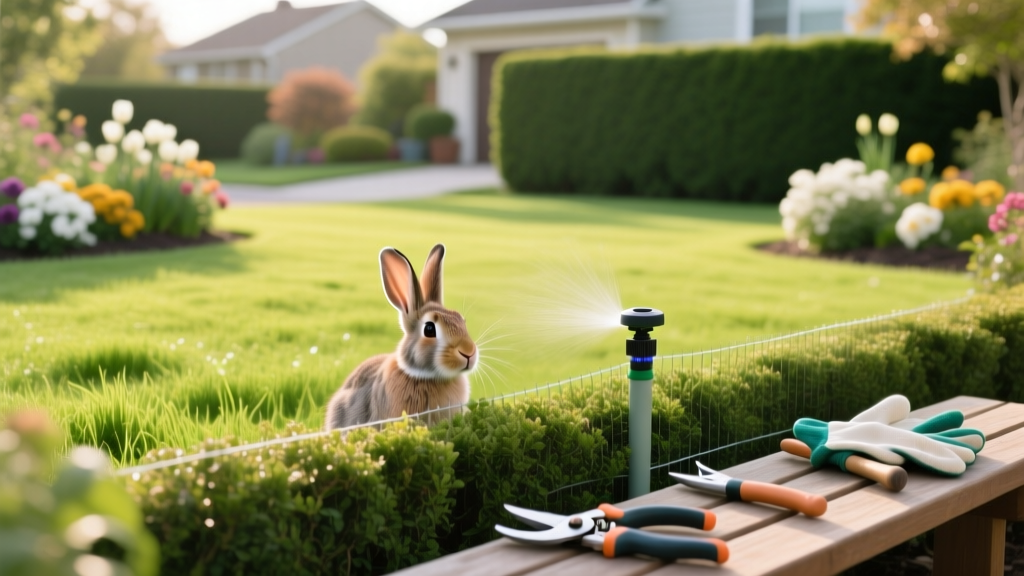
How to Get Rid of Bunny Rabbits: Proven Lawn and Garden Deterrents
Eastern cottontails (Sylvilagus floridanus) and jackrabbits can decimate a carefully curated landscape overnight. They target tender new growth, stripping bark from young trees in winter and decimating spring vegetable transplants. Learning how to get rid of bunny rabbits requires a multi-pronged approach that combines physical exclusion, targeted repellents, and habitat modification. Relying on a single method, such as ultrasonic devices or fake predator statues, will inevitably result in continued crop loss.
Identifying Rabbit Damage vs. Other Pests
Before deploying control measures, confirm that rabbits are the actual culprits. Misidentifying the pest leads to wasted time and ineffective treatments. Rabbit damage has distinct forensic signatures that separate it from deer, woodchucks, or voles.
- The 45-Degree Cut: Rabbits lack upper incisors, causing them to cut stems and twigs at a clean, sharp 45-degree angle. Deer, lacking upper front teeth entirely, tear and crush plant tissue, leaving jagged, ragged edges.
- Browsing Height: Cottontails rarely reach higher than 18 to 24 inches above the ground. Damage above 2 feet is almost certainly caused by deer or woodchucks.
- Bark Stripping: In winter, rabbits gnaw the inner bark (cambium layer) of young trees and shrubs, often girdling the trunk. Look for paired, parallel tooth marks about 1/16 inch wide.
- Fecal Evidence: Look for distinct, pea-sized, spherical brown or green droppings scattered near the damaged plants.
Physical Exclusion: The Only 100% Effective Method
According to the Cornell Wildlife Damage Management program, physical barriers are the most reliable long-term solution for rabbit deterrence. Standard deer fencing will not stop rabbits; you need specific mesh dimensions and installation techniques.
Fencing Specifications and Installation
Use 18-gauge or thicker galvanized chicken wire with a maximum mesh size of 1 inch. Larger mesh (like 2-inch hexagonal poultry netting) allows juvenile rabbits to squeeze through.
- Height: The fence must extend at least 2 feet above the ground or snow line. Cottontails rarely jump higher than 2 feet unless chased.
- The L-Shaped Burial Technique: Rabbits are diggers, but they typically dig straight down when encountering a barrier. To prevent burrowing under the fence, bend the bottom 6 inches of the wire outward (away from the garden) at a 90-degree angle to form an 'L'. Bury this horizontal flap 2 to 4 inches deep, or pin it flush to the soil using landscape staples and cover it with mulch.
- Gate Gaps: Ensure the gap beneath garden gates is less than 1 inch. Install a sweep or threshold if necessary.
Warning: Common Fencing Mistakes
Do not use plastic deer netting or bird netting at the base of your fence. Rabbits will easily chew through lightweight plastic mesh. Furthermore, avoid stapling chicken wire directly to wooden raised beds without a backing strip; the staples will eventually pull out under tension, creating entry gaps.
Chemical and Organic Repellents
When fencing entire acreage is cost-prohibitive, repellents offer a secondary line of defense. Repellents work via two mechanisms: odor (area repellents) and taste (contact repellents). For maximum efficacy, rotate between these two categories every 3 to 4 weeks to prevent rabbits from habituating to a single sensory cue.
| Product | Active Ingredients | Mechanism | Rainfastness | Avg. Cost (2026) |
|---|---|---|---|---|
| Liquid Fence Rabbit & Deer Repellent | Putrescent egg solids, garlic oil | Odor / Taste | High (dries in 24 hrs) | $22 - $28 / 32oz |
| Plantskydd Animal Repellent | Porcine hemoglobin, vegetable oils | Odor (Predator scent) | Very High (3-6 months) | $35 - $45 / 32oz |
| Milorganite Fertilizer | Heat-dried biosolids (microbes) | Odor | N/A (Soil applied) | $18 - $22 / 32lb bag |
| Bonide Rabbit Scat | Capsaicin, piperonyl butoxide | Taste (Irritant) | Low (Reapply after rain) | $15 - $20 / 32oz |
Application Rule: Never apply taste-based repellents containing capsaicin or putrescent egg solids to the edible portions of vegetables or herbs right before harvest. Use odor-based perimeter treatments like Plantskydd or Milorganite around the borders of edible gardens instead.
Habitat Modification and Scare Tactics
Rabbits are prey animals that require immediate access to dense cover. If your yard offers no hiding spots, they will forage elsewhere. The Internet Center for Wildlife Damage Management (ICWDM) emphasizes that removing brush piles, tall grass, and debris is critical to long-term deterrence.
- Clear the Perimeter: Mow a 3-foot buffer zone around the edges of your garden and remove weedy patches where rabbits nest.
- Seal Under-Structure Gaps: Rabbits frequently nest under sheds, decks, and porches. Seal all openings larger than 1/4 inch using heavy-duty 16-gauge hardware cloth. Bury the hardware cloth 12 inches deep and angle it outward to prevent digging.
- The Failure of Scare Devices: Motion-activated sprinklers (like the Orbit Yard Enforcer) can provide temporary relief, but rabbits quickly habituate to them once they realize the water poses no physical threat. Fake owls and rubber snakes are entirely ineffective; rabbits rely on scent and movement, and a stationary plastic owl will be ignored within 48 hours.
Live Trapping and Relocation Protocols
When exclusion and repellents fail, live trapping is the final option. However, relocating wildlife is heavily regulated and often ecologically harmful. Many state Departments of Natural Resources (DNR) prohibit the relocation of cottontails due to the risk of spreading diseases like Rabbit Hemorrhagic Disease Virus (RHDV2) and tularemia.
Step-by-Step Havahart Trapping Guide
If local laws permit trapping, use a single-door live trap sized specifically for rabbits, such as the Havahart 1079 (24 x 7 x 7 inches). Larger traps allow the rabbit to turn around and trigger the release mechanism from the inside without getting caught.
- Pre-Baiting: Leave the trap unset for 2 to 3 days with the doors tied open. Place bait inside to build the rabbit's confidence.
- Optimal Bait Selection: Avoid lettuce. Use high-value, aromatic baits such as sliced apples, brussels sprouts, or carrots lightly dusted with rabbit feces (if available) to mask human scent.
- Placement: Position the trap directly in the rabbit's established runway (a visible, packed-dirt path through the grass). Camouflage the wire floor of the trap by covering it with dirt or leaves, as rabbits dislike walking on metal grating.
- Monitoring: Check traps at least twice daily (morning and evening). Trapped rabbits can die from heat stress or dehydration in under four hours during summer months.
Legal and Ethical Warning
Before trapping, consult your state's wildlife agency. In many jurisdictions, it is illegal to release a trapped wild animal on property you do not own. If relocation is prohibited, humane euthanasia on-site may be the only legal option. Alternatively, contact a licensed Nuisance Wildlife Control Operator (NWCO).
Frequently Asked Questions
Do ultrasonic rabbit repellents work?
No. Independent university trials have consistently shown that ultrasonic devices do not deter rabbits. Cottontails have a hearing range that overlaps with humans, but they do not find high-frequency sounds inherently frightening enough to abandon a prime food source.
What plants are naturally rabbit-resistant?
While no plant is 100% rabbit-proof, rabbits heavily avoid plants with fuzzy leaves, strong aromatic oils, or toxic sap. Incorporate lavender, rosemary, sage, marigolds, alliums, and snapdragons into your landscape borders to create a natural deterrent buffer.
Will mothballs keep rabbits out of my yard?
Mothballs are entirely ineffective for outdoor rabbit control and are highly illegal to use outside of sealed, indoor containers. The active ingredients (naphthalene or paradichlorobenzene) dissipate rapidly in open air, contaminate soil and groundwater, and pose severe toxicity risks to children, pets, and local wildlife.

