
Pest Control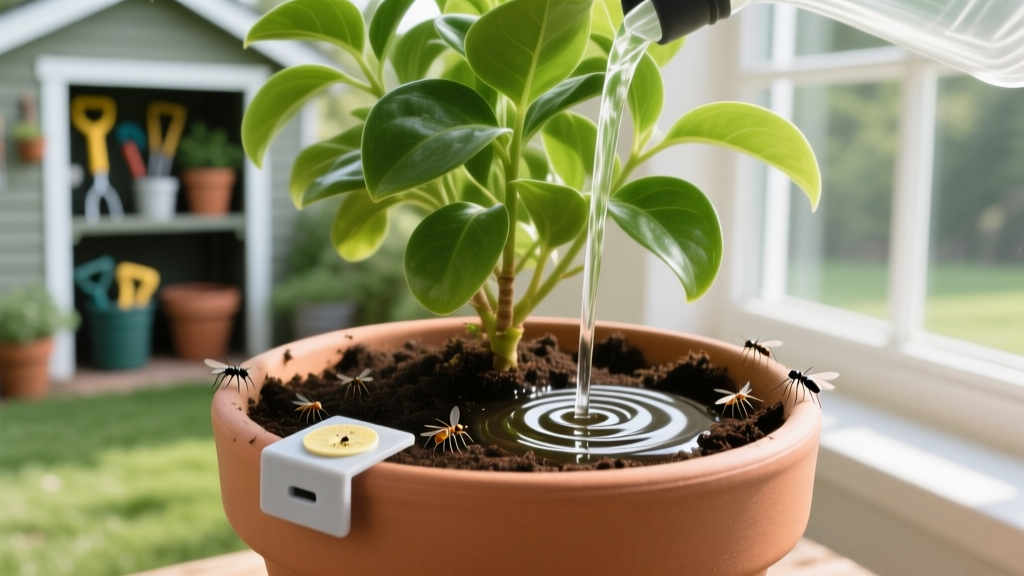
How to Get Rid of Gnats From Plants Using Soil Drenches & Traps
If you are dealing with tiny, dark-winged insects hovering around your houseplants or garden seedlings, you are likely facing a fungus gnat infestation (Bradysia species). While adult fungus gnats are a nuisance, they do not bite humans or pets. The real threat lies beneath the soil surface: the larvae. Fungus gnat larvae feed on fungi, decaying organic matter, and—when populations explode—the tender root hairs and stems of your plants, leading to stunted growth, yellowing leaves, and sudden wilting.
Many homeowners attempt to solve this problem by swatting adults or using apple cider vinegar traps, only to find the infestation returns within weeks. To permanently eliminate the colony, you must target the soil-dwelling larvae while simultaneously trapping the breeding adults. This guide details the exact biological controls, soil drench ratios, and cultural practices required to eradicate fungus gnats.
The Fungus Gnat Life Cycle: Why Surface Treatments Fail
Understanding the 21-to-28-day life cycle of the fungus gnat is critical for timing your treatments. According to UC Davis Integrated Pest Management, a single female can lay up to 200 eggs in the top 2 to 3 inches of moist potting soil during her 7-to-10-day adult lifespan.
Warning: The 80/20 Rule of Gnats
At any given time, only about 10% to 20% of the total fungus gnat population exists as flying adults. The remaining 80%+ are in the soil as eggs, larvae, or pupae. If your pest control strategy only targets the adults, you are ignoring the vast majority of the infestation.
At any given time, only about 10% to 20% of the total fungus gnat population exists as flying adults. The remaining 80%+ are in the soil as eggs, larvae, or pupae. If your pest control strategy only targets the adults, you are ignoring the vast majority of the infestation.
- Eggs: Hatch in 4 to 6 days in warm, moist soil.
- Larvae: Feed for 10 to 14 days. These are the translucent, 1/4-inch maggots with black head capsules that damage roots.
- Pupae: Last 3 to 4 days near the soil surface. They do not feed and are resistant to most contact pesticides.
- Adults: Emerge, mate, and lay eggs within 24 hours of hatching.
Phase 1: Eradicating the Larvae (The Soil Drench)
To kill the larvae, you must treat the soil matrix. The most effective, plant-safe biological control available to homeowners is Bacillus thuringiensis israelensis (Bti). Bti is a naturally occurring bacterium that produces proteins which bind to the alkaline gut lining of fungus gnat and mosquito larvae, causing fatal ruptures. It is completely harmless to plants, pets, earthworms, and humans.
The 'BTI Tea' Soil Drench Recipe
While Bti is sold in donut-shaped dunks, the granular form (such as Summit Mosquito Bits, typically priced around $15 for a 30 oz. jug) is far superior for potted plants because it can be brewed into a liquid drench that penetrates the entire root ball.
- Measure: Add 4 tablespoons of Bti granules to 1 gallon of warm (not hot) water.
- Steep: Let the mixture sit for 30 to 45 minutes, stirring occasionally. The water will turn a milky, tea-like color as the Bti spores release.
- Strain (Optional): If using a watering can with a narrow spout, strain out the granules to prevent clogging. You can bury the leftover wet granules in your outdoor garden beds.
- Drench: Water your infested plants thoroughly with the BTI tea until it runs out the drainage holes. Ensure the top 2 inches of soil are fully saturated.
Application Frequency: Apply this drench every 5 to 7 days for three consecutive weeks. This ensures you catch newly hatched larvae before they can pupate.
Why Hydrogen Peroxide and Neem Oil Often Fail
Many online guides recommend a 1:4 ratio of 3% hydrogen peroxide to water, or heavy neem oil soil drenches. While hydrogen peroxide will kill larvae on contact via oxidation, it simultaneously destroys the beneficial aerobic bacteria and mycorrhizal fungi in your potting mix, leading to long-term soil health degradation. Neem oil (azadirachtin) degrades rapidly in moist, microbe-rich environments and struggles to penetrate deep into the soil matrix to reach 3rd-instar larvae. Bti remains the superior choice for targeted, microbiome-safe eradication.
Phase 2: Trapping the Adults (Breaking the Breeding Cycle)
While the Bti drench handles the soil population, you must prevent the current adults from laying more eggs. According to research published by Penn State Extension, fungus gnats are highly attracted to the color yellow, specifically the wavelength associated with young, tender foliage.
Deploying Yellow Sticky Traps
Purchase heavy-duty yellow sticky traps (brands like DynaTrap or Gnat Stix, usually $8 to $12 for a pack of 20). Cut them into smaller 2x3 inch rectangles and insert them into the soil of every affected pot using the provided plastic stakes. Place them just 1 to 2 inches above the soil line, where the adults spend most of their time resting and mating.
Pro Tip: Skip the Apple Cider Vinegar
Apple cider vinegar (ACV) traps are highly effective for fruit flies (Drosophila), which are attracted to fermentation and yeast. Fungus gnats do not care about fermentation; they are attracted to moisture, fungi, and specific light wavelengths. ACV traps will catch zero fungus gnats while wasting your time.
Apple cider vinegar (ACV) traps are highly effective for fruit flies (Drosophila), which are attracted to fermentation and yeast. Fungus gnats do not care about fermentation; they are attracted to moisture, fungi, and specific light wavelengths. ACV traps will catch zero fungus gnats while wasting your time.
Treatment Comparison Matrix
| Treatment Method | Target Stage | Efficacy | Impact on Soil Microbiome |
|---|---|---|---|
| Bti Soil Drench (Mosquito Bits) | Larvae | Excellent (95%+) | None (Safe) |
| Yellow Sticky Traps | Adults | Good (Population control) | None |
| 3% Hydrogen Peroxide Drench | Larvae (Contact) | Moderate (Misses deep larvae) | High (Kills beneficial microbes) |
| Neem Oil Soil Drench | Larvae/Adults | Poor (Degrades in wet soil) | Moderate (Can disrupt fungi) |
| Systemic Granules (Imidacloprid) | Larvae/Adults | Excellent | High (Toxic to pollinators/bees) |
Phase 3: Cultural Controls and Physical Barriers
Chemical and biological controls will fail if the environment remains optimized for gnat reproduction. Fungus gnats require consistently moist, organic-rich topsoil to survive. Altering the physical environment of your plant pots is the ultimate long-term defense.
Implement Bottom-Watering Techniques
Overwatering is the primary catalyst for gnat infestations. Transition to bottom-watering for your houseplants. Place pots with drainage holes into a tray filled with 2 inches of water for 30 minutes, allowing the roots to wick moisture upward. This leaves the top 2 inches of the potting mix bone-dry, creating a hostile environment for eggs and young larvae.
Apply a Sand or DE Top-Dressing
Creating a physical barrier on the soil surface prevents adults from accessing the soil to lay eggs and stops emerging adults from escaping.
- Horticultural Sand: Apply a 1/4-inch to 1/2-inch layer of coarse horticultural sand or builder's sand. Do not use play sand or masonry sand; the particles are too fine and will compact when wet, suffocating plant roots and blocking oxygen exchange.
- Diatomaceous Earth (DE): Food-grade DE can be dusted lightly over dry soil. The microscopic silica shards lacerate the exoskeletons of crawling larvae and pupae. However, DE loses its efficacy the moment it gets wet, requiring reapplication after every watering.
Troubleshooting Decision Tree
Use this framework to diagnose persistent issues after your initial 3-week treatment protocol:
- Scenario A: Adults are still flying after 3 weeks of Bti and sticky traps.
Diagnosis: You have an untreated, hidden breeding source. Check nearby floor drains, overwatered outdoor patio planters, leaky HVAC drip pans, or bagged potting soil stored in a damp garage. Bti only works where it is applied. - Scenario B: Plant leaves are yellowing and wilting despite moist soil.
Diagnosis: Severe root damage from heavy larval feeding. The plant may have contracted Pythium or Fusarium root rot, which fungi gnats are known to vector between plants. Reduce watering immediately, apply a copper-based fungicide drench, and consider repotting the plant in fresh, sterile soil after washing the roots. - Scenario C: Gnats are only present in the kitchen, not near houseplants.
Diagnosis: You are likely dealing with fruit flies or drain flies, not fungus gnats. Shift your strategy to clearing organic sludge from sink drains with an enzyme cleaner and setting out ACV traps.
By combining a targeted Bti soil drench to eliminate the larval food source, yellow sticky traps to intercept breeding adults, and strict moisture management to remove the habitat, you will break the reproductive cycle and permanently reclaim your plants from fungus gnats.

