
Pest Control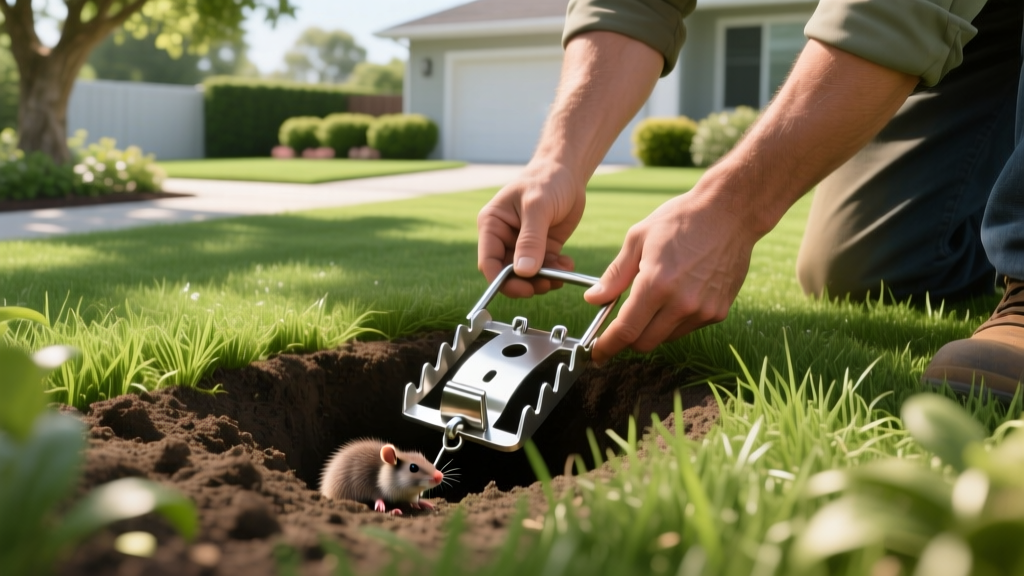
How to Get Rid of Gophers: Proven Trapping and Baiting Strategies
Learning how to get rid of gophers requires a fundamental understanding of their subterranean architecture. Pocket gophers (Thomomys species) are solitary, highly territorial rodents that construct complex tunnel systems ranging from 4 to 12 inches below the soil surface. A single gopher can move over 2,000 pounds of soil annually, severing irrigation lines, destroying turfgrass root systems, and killing ornamental shrubs. Because they spend 95% of their lives underground, surface deterrents like ultrasonic spikes, castor oil sprays, and vibrating stakes are entirely ineffective. Successful eradication requires targeting the main runway using mechanical traps or subterranean toxic baits.
Identifying the Target: Gophers vs. Moles
Before deploying traps, you must confirm you are dealing with a pocket gopher rather than a mole or a vole. Misidentification leads to incorrect trap placement and wasted effort. According to the UC Agriculture and Natural Resources Pest Notes, gophers and moles create distinctly different surface evidence.
| Characteristic | Pocket Gopher | Mole |
|---|---|---|
| Mound Shape | Crescent or horseshoe-shaped with a plugged lateral hole | Volcano-shaped or symmetrical cone |
| Diet | Herbivore (roots, tubers, grass crowns) | Insectivore (earthworms, grubs, larvae) |
| Surface Runways | Rarely visible; tunnels remain closed | Visible raised ridges across the lawn |
| Tunnel Depth | 6 to 12 inches deep | 2 to 6 inches deep (just below sod) |
The Probing Protocol: Locating the Main Runway
The most common reason homeowners fail to eliminate gophers is setting traps in shallow, abandoned lateral tunnels rather than the active main runway. You must use a metal gopher probe to locate the primary thoroughfare.
Pro-Tip: The main runway is typically located 8 to 12 inches away from the flat side of the crescent mound. Insert your metal probe at a 45-degree angle toward the center of the mound. When the probe suddenly drops 4 to 8 inches into an open void, you have found the active tunnel.
- Locate the freshest mound: Look for dark, moist soil that has been pushed up within the last 24 to 48 hours.
- Probe the perimeter: Insert the probe 8 to 12 inches from the mound's flat edge, angling toward the plug.
- Feel for the drop: A sudden loss of resistance indicates the probe has entered the tunnel. Mark this spot with a wire flag.
- Excavate the opening: Use a narrow trowel to dig down to the tunnel, creating a hole large enough to insert your trap or bait applicator (about 6 inches wide).
Method A: Mechanical Trapping (The Macabee and Gopherhawk)
Trapping is the most environmentally sound and immediately effective method for controlling light to moderate infestations. The two industry-standard traps are the classic Macabee 2-prong trap and the newer Gopherhawk trap.
Setting the Macabee 2-Prong Trap
The Macabee trap (Model 0460) costs between $12 and $15 per pair. It relies on a scissor-action spring mechanism. Before setting, boil the traps in water and rub them with local soil to remove human scent and manufacturing oils—gophers have highly sensitive olfactory receptors and will push dirt over a trap that smells like metal or sweat.
- Compress the springs and engage the catch hook on the trigger plate.
- Tie a 3-foot length of bright wire or paracord to the trap's pull ring, and stake the other end above ground. If the gopher is only wounded, it will drag the trap deep into the burrow system where you will never recover it.
- Insert the set trap deep into the excavated tunnel so the trigger plate rests on the tunnel floor.
- Block all ambient light from the excavation hole using a piece of cardboard or a clod of dirt. Gophers are photophobic and will plug the tunnel with dirt if they detect light, bypassing the trap entirely.
- Check traps every 12 to 24 hours. Reset or relocate if no catch occurs within 48 hours.
Method B: Chemical Baiting for Heavy Infestations
When dealing with multiple gophers across a large property (e.g., over 1 acre), trapping becomes labor-intensive. Toxic baits offer a scalable solution. The two primary active ingredients are Strychnine (acute toxicant) and Diphacinone (multiple-feed anticoagulant).
Products like Victor Poison Peanuts (0.01% Strychnine) or JT Eaton Gopher Bait cost approximately $10 to $15 per 8-ounce bag. Strychnine baits are highly lethal and require only a single feeding, making them ideal for rapid population reduction. However, they pose severe secondary poisoning risks to pets and wildlife.
Safety Warning: Never place bait on the surface or in shallow lateral tunnels where dogs, cats, or foraging birds can access it. Always use a specialized bait applicator tube to drop 3 to 5 pellets directly into the main runway, then immediately seal the probe hole with a clod of dirt and tamp it down with your heel.
For detailed safety protocols and environmental impact data, refer to the Oregon State University Extension Pocket Gopher Management Guide, which outlines the precise application rates for residential and agricultural zones.
Long-Term Exclusion: Gopher Baskets and Wire Mesh
If you are planting high-value ornamentals, fruit trees, or maintaining a prized garden bed, eradication is only half the battle. Exclusion prevents re-colonization. Standard chicken wire is useless; gophers can easily crush and chew through thin-gauge poultry netting.
- Gopher Baskets: For individual trees or shrubs, construct a basket using 19-gauge, 1/2-inch or 3/4-inch galvanized hardware cloth. The basket must be at least 24 inches deep and extend 2 inches above the soil line to prevent the gopher from climbing over the edge. Pre-made galvanized gopher baskets cost $3 to $6 each.
- Perimeter Trenching: For raised beds or small garden plots, dig a trench 24 inches deep around the perimeter. Bury the hardware cloth and bend the bottom 6 inches outward at a 90-degree angle (an L-shape facing away from the garden). When a gopher digs down and hits the wire, it will attempt to dig under it, hitting the horizontal L-flange rather than bypassing the barrier.
Troubleshooting: Why Your Traps Keep Failing
If you are setting traps but catching nothing, you are likely falling victim to one of these common operational errors:
- The Dirt Plug Bypass: The gopher detected light or air movement at your excavation site and pushed a wall of dirt from behind, burying your trap without triggering it. Fix: Ensure the excavation hole is completely sealed with a dark, solid object.
- Lateral Tunnel Placement: You set the trap in a short feeding lateral rather than the main transit runway. The gopher simply turned around and used a different tunnel. Fix: Re-probe closer to the center of the mound to find the primary artery.
- Spring Tension Loss: Older Macabee traps lose their spring temper over time, resulting in a weak strike that stuns but fails to kill the rodent, allowing it to retreat. Fix: Replace traps every 3 to 4 seasons, or upgrade to the Gopherhawk trap ($38), which features a heavy-duty coil spring and a wider strike zone.
Treatment Comparison Matrix
Choose your eradication strategy based on your property size, budget, and environmental constraints.
| Method | Cost Estimate | Time to Result | Efficacy Rate | Pet/Child Safety |
|---|---|---|---|---|
| Macabee Trapping | $15 - $20 | 24 - 48 Hours | High (85%+) | High (Subterranean) |
| Gopherhawk Trapping | $35 - $45 | 24 - 48 Hours | Very High (90%+) | High (Subterranean) |
| Strychnine Baiting | $12 - $18 | 1 - 3 Days | High (80%+) | Low (Severe Toxicity) |
| Exclusion (Wire Mesh) | $1.50/sq ft | Immediate | 100% (Barrier) | Very High |
| Exhaust Fumigation | $50+ (Equipment) | 2 - 4 Hours | Low (40-60%) | Moderate (CO Gas) |
Mastering how to get rid of gophers is an exercise in precision. By correctly identifying the main runway, eliminating human scent from your traps, and strictly blocking light from the tunnel system, you can systematically dismantle a gopher colony without resorting to expensive and ecologically damaging pest control services.

