
Pest Control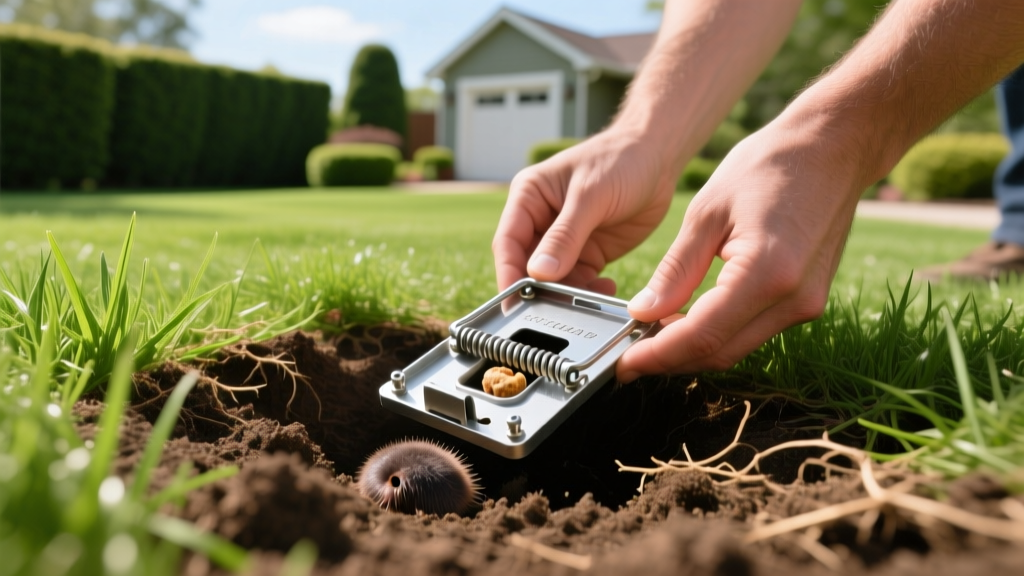
How to Get Rid of Ground Moles in My Yard: Traps, Baits & Tactics
The Reality of Mole Eradication
When homeowners desperately search for how to get rid of ground moles in my yard, they are often met with a maze of ineffective home remedies, from chewing gum to sonic spikes. The truth is that moles are highly adapted, subterranean insectivores that rarely interact with the surface. To successfully evict them, you must abandon internet myths and rely on integrated pest management (IPM) strategies backed by wildlife biology. According to the Internet Center for Wildlife Damage Management, trapping and specific toxic baits remain the only scientifically validated methods for permanent mole removal.
This guide provides a comprehensive, step-by-step framework for identifying active tunnels, deploying lethal traps, applying bromethalin baits safely, and modifying your yard's habitat to prevent future infestations.
Confirming the Intruder: Moles vs. Voles vs. Gophers
Before investing in traps, you must confirm the culprit. Misidentifying the pest leads to wasted money and continued turf damage. Moles are insectivores, while voles and gophers are herbivores. This dietary difference dictates your entire control strategy.
| Feature | Eastern Mole | Meadow Vole | Pocket Gopher |
|---|---|---|---|
| Diet | Earthworms, grubs, insects | Plant roots, bulbs, bark | Plant roots, tubers, stems |
| Surface Signs | Raised ridges, symmetrical volcano-shaped mounds | Surface runways through grass, no mounds | Fan-shaped or crescent mounds, plugged holes |
| Tunnel Depth | Shallow foraging (2-4"), deep nesting (12"+) | Surface level, hidden by thatch | Deep, extensive lateral burrows |
| Plant Damage | Indirect (root heaving, soil drying) | Direct (gnawed roots, girdled bark) | Direct (entire plants pulled underground) |
Pro Tip: If your plants are being eaten from the roots up, you likely have voles or gophers, not moles. Moles do not eat plant roots; they only damage them incidentally while tunneling for earthworms.
Lethal Control: Trapping (The Gold Standard)
Trapping is the most effective and immediate way to get rid of ground moles in your yard. However, success depends entirely on trap placement in an active main runway, not a temporary foraging tunnel.
The "Stomp Test" for Active Tunnels
Moles dig miles of exploratory tunnels that they may only use once. Setting a trap in an abandoned tunnel guarantees failure. To find an active main runway:
- Locate the straight, raised ridges that connect multiple molehills or run along fence lines and foundations.
- Step on a 6-inch section of the ridge to collapse it slightly, marking the spot with a flag or stick.
- Check the spot 24 to 48 hours later. If the mole has pushed the soil back up and repaired the tunnel, you have found an active main runway.
Top Trap Models for 2026
- Wire Tek 1001 EasySet Mole Eliminator ($35 - $45): A scissor-style trap that is widely considered the safest and easiest to set. Its wide jaws straddle the tunnel, and the foot pedal mechanism keeps your hands away from the trigger.
- Victor Out O'Sight Mole Trap ($20 - $28): A choker-loop trap that is highly lethal but requires more precision to set. It features a weather-proof design and a safety catch to prevent accidental firing during placement.
- Nash Choker Loop Trap ($25 - $35): A heavy-duty, cast-iron option favored by professional pest control operators for its immense striking force and durability in rocky soils.
Step-by-Step Trap Deployment
According to guidelines published by the University of Minnesota Extension, proper trap setting requires minimizing human scent and tunnel disruption.
- Clear the Runway: Use a garden trowel to carefully excavate a small section of the active tunnel. Clear out loose dirt so the trap sits flush on the solid tunnel floor.
- Block the Light: Moles will abandon tunnels that let in drafts or light. Place a bucket or a piece of dark cardboard over the trap area after setting it to block sunlight and rain.
- Scent Masking: Rub your hands and the trap with local soil before handling. Avoid wearing scented lotions, bug sprays, or petroleum-based gloves.
- Check Daily: Inspect traps every morning. If a trap fires but misses, the tunnel floor was likely uneven. Reset the trap in a slightly different location along the same runway.
Safety Warning: Always engage the safety catch on choker-loop traps until they are fully seated in the soil. Scissor traps possess enough spring tension to break human fingers if triggered accidentally.
Chemical Control: Bromethalin Worm Baits
If trapping proves too labor-intensive, toxic baits offer a highly effective alternative. The only active ingredient proven to reliably kill moles is Bromethalin (0.025%). Because moles are insectivores, grain-based or pellet baits (like those used for rodents) are completely ignored. You must use synthetic earthworm baits.
Leading Bromethalin Products
- Talpirid Mole Bait ($25 - $35 for 20 worms): The industry standard. These polyurethane worms mimic the exact size, texture, and moisture content of real earthworms. They contain a lethal dose of bromethalin in a single feeding.
- Tomcat Mole & Gopher Bait ($15 - $22 for 15 worms): A more budget-friendly option that utilizes the same active ingredient, though some professionals note a slightly lower palatability rate compared to Talpirid.
Application Protocol: Use a specialized bait applicator probe or a 1/2-inch steel rod to poke a hole through the top of the active tunnel. Drop a single worm into the hole, then gently cover the entry point with a small clump of dirt or a rock to block light. Do not collapse the tunnel itself. A single dead mole will typically be found 24 to 72 hours after ingestion.
"Bromethalin is a central nervous system toxicant. It is highly toxic to dogs and cats. Never place bait in areas where pets can dig it up, and always store unused worms in a secure, temperature-controlled environment."
— Integrated Pest Management Safety Guidelines
Habitat Modification & The Grub Control Myth
A pervasive myth in lawn care is that applying grub control will starve moles and force them to leave. While moles do eat white grubs, their primary food source—and the reason they prefer moist, loamy soils—is earthworms. A standard application of imidacloprid or chlorantraniliprole will eliminate grubs, but it will do absolutely nothing to the earthworm population. The mole will simply stay and eat worms.
To genuinely modify the habitat and make your yard less attractive to moles, you must alter the soil moisture and structure:
- Reduce Overwatering: Moles follow the moisture. Earthworms migrate to the surface in overly saturated soils. Scaling back your irrigation schedule forces both worms and moles deeper underground, reducing surface ridging.
- Improve Soil Drainage: Core aeration and top-dressing with sand can dry out the topsoil layer, creating a less hospitable environment for the mole's prey.
- Install Physical Barriers: For small, high-value areas like ornamental gardens, burying 1/4-inch hardware cloth 24 inches deep and 6 inches above ground creates an impenetrable subterranean fence.
Ineffective Gimmicks to Avoid
Save your money. Wildlife biologists have repeatedly tested commercial deterrents and found them entirely useless against established mole populations:
- Sonic Spikes: Moles quickly habituate to the vibrations and will often dig directly beneath the spikes.
- Castor Oil Repellents: While they may temporarily mask the scent of prey, rain and irrigation wash the oil away within days, requiring constant, expensive reapplication with zero long-term success.
- Mothballs and Chewing Gum: Moles do not eat plant matter or strong-smelling chemicals. They will simply dig around the obstruction and collapse that specific inch of the tunnel.
Repairing Mole Damage
Once the moles are eliminated, the remaining raised ridges and volcano mounds require turf repair. Do not simply mow over the ridges; this will scalp the grass and expose bare soil to weeds.
- Use the back of a steel rake or a lawn roller to firmly tamp down the raised ridges, re-establishing contact between the grass roots and the soil.
- Shovel away excess soil from the volcano mounds, using it to fill low spots elsewhere in the yard.
- Overseed the bare patches with a shade-tolerant or high-traffic grass blend matching your existing turf, and apply a starter fertilizer to encourage rapid germination.
Learning how to get rid of ground moles in my yard requires patience and precision. By correctly identifying active runways, deploying high-quality scissor or choker traps, and utilizing bromethalin earthworm baits when necessary, you can reclaim your lawn from subterranean damage without relying on ineffective commercial gimmicks.

