
Pest Control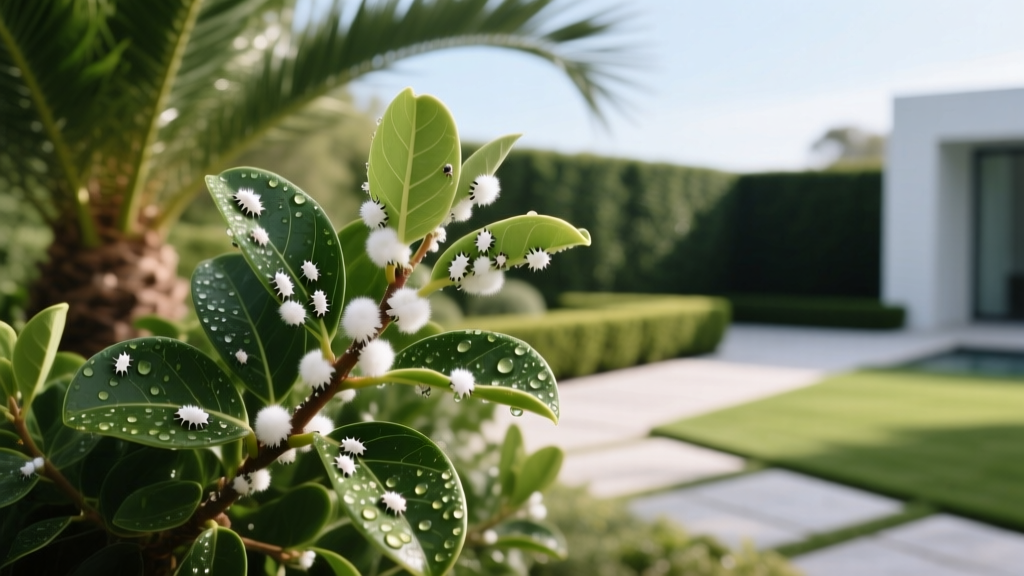
How to Get Rid of Mealy Bugs on Landscape Plants
Identifying the Mealybug Threat in Your Yard
Mealybugs (family Pseudococcidae) are unarmored scale insects that pierce plant tissue to drain phloem sap. In outdoor landscapes, they heavily target citrus, hibiscus, coleus, fuchsia, and ornamental grasses. The immediate damage appears as stunted growth, chlorotic (yellowing) leaves, and premature leaf drop. However, the secondary damage is often worse: mealybugs excrete a sugar-rich waste called honeydew, which serves as a breeding ground for black sooty mold (Capnodium species). This mold blocks photosynthesis, severely weakening the host plant.
Before deploying treatments, confirm the infestation. Look for small (1/16 to 1/8 inch), soft-bodied, oval insects covered in a distinct white, powdery or cottony wax. They congregate in protected microclimates: leaf axils, under bark scales, at the base of thorns, and along the midrib on the underside of leaves.
⚠️ CRITICAL WARNING: The Ant-Mealybug Symbiosis
If you see mealybugs, look for ants. Argentine ants and pavement ants actively "farm" mealybugs, protecting them from natural predators in exchange for honeydew. According to the University of California Integrated Pest Management (UC IPM) program, attempting to eradicate mealybugs without simultaneously controlling the local ant population will almost always result in treatment failure. The ants will simply relocate surviving mealybugs to untreated plant tissue.
The 3-Phase Outdoor Eradication Protocol
Effective mealybug management requires a phased approach, escalating from mechanical disruption to targeted chemical and biological interventions.
Phase 1: Mechanical Disruption and Pruning
For localized infestations on woody ornamentals or citrus, begin with physical removal. Use bypass pruners sterilized with 70% isopropyl alcohol to excise heavily infested terminal shoots. For mealybugs hiding in leaf axils or bark crevices, blast the plant with a high-pressure jet of water from a hose-end sprayer. This physically dislodges the pests and washes away the protective honeydew layer, making subsequent contact sprays significantly more effective.
Phase 2: Targeted Contact Sprays
Contact sprays are the frontline defense for moderate to severe outdoor infestations. Because mealybugs hide in tight crevices, spray coverage must be exhaustive—apply until the liquid is dripping from the foliage.
- Insecticidal Soap: Mix 2.5 tablespoons of pure liquid castile soap (such as Dr. Bronner’s Unscented) per gallon of water. Alternatively, use a commercial ready-to-use formulation like Bonide Insecticidal Soap ($12 to $15 per gallon). Failure Mode: Do not use standard dish detergents (like Dawn). Their aggressive degreasing agents strip the plant's protective cuticle, causing severe phytotoxicity (leaf burn) within 24 hours.
- Horticultural Oil: Paraffinic oils smother the insects and their eggs by blocking their spiracles (breathing pores). Use Monterey Horticultural Oil ($18 for a 16 oz concentrate). Mix at a 2% solution (2.5 oz per gallon of water). Application Rule: Only apply when outdoor temperatures are below 85°F and the plant is not in direct, midday sunlight. Applying oil in high heat traps moisture and causes thermal leaf burn.
Phase 3: Systemic Soil Drenches for Severe Infestations
When mealybugs infiltrate the root zone (root mealybugs) or when canopy spraying is impractical for massive trees, systemic insecticides are required. Bayer Advanced 12 Month Tree and Shrub Protect & Feed contains Imidacloprid, which the plant absorbs through its roots and translocates into the foliage. When mealybugs feed, they ingest a lethal dose.
Cost & Timing: Expect to pay roughly $20 for a 32 oz bottle, which treats multiple large shrubs. Apply as a soil drench in early spring before the plant enters its rapid growth phase.
Pollinator Risk: Imidacloprid is highly toxic to bees if applied to blooming plants. Never use systemic drenches on flowering ornamentals that are currently in bloom or about to bloom. Consult the EPA Integrated Pest Management Principles for safe application windows.
Treatment Comparison Matrix
| Treatment Type | Active Ingredient | Best For | Cost Estimate | Pollinator Risk |
|---|---|---|---|---|
| Insecticidal Soap | Potassium salts of fatty acids | Light infestations, soft-leaved plants | $12 - $15 / Gallon RTU | Low (only when wet) |
| Horticultural Oil | Paraffinic / Neem oil | Moderate infestations, egg suppression | $18 / 16oz Concentrate | Low (only when wet) |
| Systemic Drench | Imidacloprid | Severe/Root mealybugs, large trees | $20 / 32oz Concentrate | High (avoid on blooms) |
| Biological Control | Cryptolaemus montrouzieri | Large landscapes, greenhouse, long-term | $35 - $45 / 1,000 larvae | None (beneficial) |
Biological Warfare: Deploying the Mealybug Destroyer
For large-scale landscape management or environmentally sensitive areas, chemical sprays are unsustainable. Instead, deploy the Mealybug Destroyer (Cryptolaemus montrouzieri), a predatory lady beetle species native to Australia. Both the adult beetles and their larvae are voracious mealybug predators, capable of consuming hundreds of pests during their lifecycle.
Release Protocol:
1. Timing: Release the insects at dusk or early evening to prevent immediate dispersal and protect them from daytime avian predators.
2. Preparation: Mist the target plants with water beforehand. The predators require immediate moisture upon release.
3. Distribution: A standard commercial shipment contains 1,000 larvae or adults (costing roughly $35 to $45 from suppliers like Arbico Organics). Distribute them evenly across the infested canopy, placing them directly near visible mealybug colonies.
4. Contraindications: Do not release predators if you have applied horticultural oil or insecticidal soap within the last 7 days, as the residue will harm the beneficial insects. The University of Minnesota Extension notes that biological controls take 3 to 4 weeks to show significant population reduction, so patience is required.
Breaking the Ant-Mealybug Alliance
As noted earlier, ants will aggressively defend mealybug colonies. To protect your contact sprays or biological predators, you must sever the ants' access to the plant canopy.
The Tanglefoot Barrier Method
- Wrap the Trunk: Wrap a 4-inch wide band of landscape fabric, masking tape, or duct tape around the main trunk of the tree or shrub, about 2 feet above the soil line. (Never apply sticky barriers directly to bark, especially on young citrus or stone fruit trees, as it will girdle and kill the cambium layer).
- Apply the Adhesive: Using a putty knife, spread a thick, 2-inch band of Tanglefoot sticky barrier ($12.99 per 15 oz jar) over the tape wrap.
- Maintain: Inspect the barrier weekly. Clear away debris, leaves, or dead insects that stick to the barrier, as ants will use this debris to build a "bridge" over the sticky zone. Reapply Tanglefoot when the coating loses its tackiness.
Simultaneously, place Terro T300B Liquid Ant Bait stations at the base of the plant. The foraging worker ants will carry the borax-laced sugar syrup back to the colony, eventually eliminating the queen and collapsing the local ant population.
Frequently Asked Questions
Can I use rubbing alcohol to kill outdoor mealybugs?
Yes, for spot treatments. Dip a cotton swab in 70% isopropyl alcohol and press it directly onto individual mealybugs. The alcohol dissolves their protective wax coating and desiccates them instantly. However, this is only practical for a dozen or so pests; it is not viable for a full canopy infestation.
Will neem oil kill mealybug eggs?
Neem oil (specifically cold-pressed, containing Azadirachtin) has mild ovicidal (egg-killing) properties, but it is primarily an antifeedant and growth disruptor. For pure egg smothering, a refined paraffinic horticultural oil is significantly more effective because it creates a thicker, more uniform physical barrier over the egg masses.
How long does it take to completely eradicate an outdoor colony?
With aggressive weekly applications of horticultural oil and strict ant control, you can suppress a moderate infestation to undetectable levels in 4 to 6 weeks. Because mealybugs have overlapping generations (eggs, crawlers, and adults present simultaneously), you must continue treatments for at least two weeks after the last visible adult is spotted to catch newly hatched crawlers.

