
Pest Control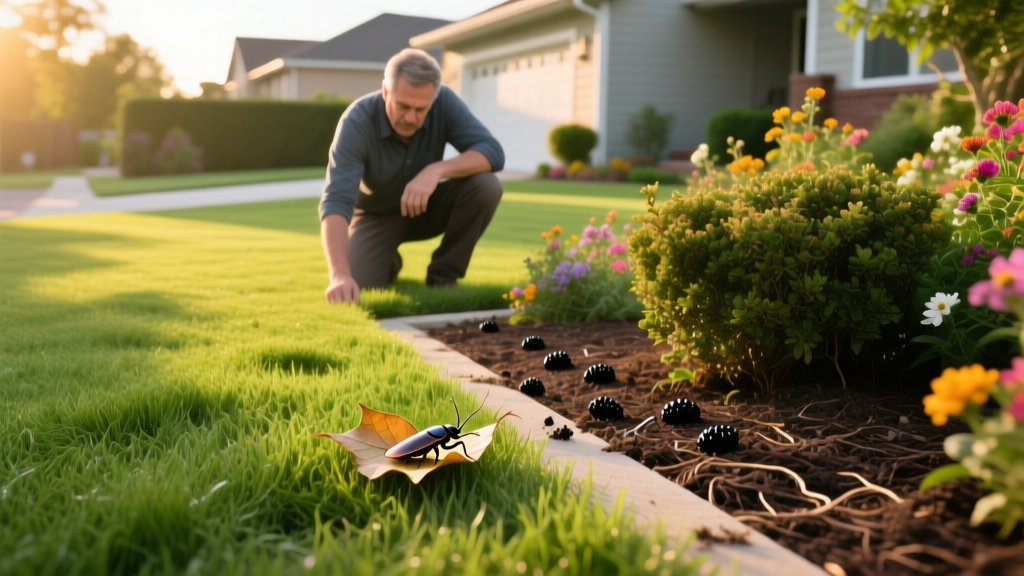
How to Get Rid of Cockroach Populations in Your Yard Perimeter
When homeowners ask how to get rid of cockroach infestations, the focus is almost entirely on indoor kitchens and bathrooms. However, outdoor peridomestic species—such as the American, Smokybrown, and Oriental cockroaches—breed in yard debris, mulch beds, and foundation cracks before migrating indoors to escape extreme weather. Effective yard defense requires breaking the moisture-harborage-food triangle outside your home before these pests cross the threshold.
According to the EPA's Safe Pest Control Guidelines, integrated pest management (IPM) prioritizes habitat modification and targeted baits over broadcast chemical spraying. This guide details the exact products, mixing ratios, and structural modifications required to eliminate outdoor cockroach populations and fortify your home's perimeter.
Identify the Peridomestic Threat
Not all cockroaches thrive outdoors. The German cockroach is strictly an indoor pest, but three larger species dominate the yard and garden environment. Identifying which species is invading your perimeter dictates your treatment strategy, particularly regarding moisture control.
| Species | Average Size | Primary Outdoor Habitat | Moisture Dependency | Flight Capability |
|---|---|---|---|---|
| American Cockroach | 1.5 - 2.0 inches | Sewer lines, palm trees, deep mulch | Very High | Gliding / Short bursts |
| Smokybrown Cockroach | 1.25 - 1.5 inches | Tree canopies, gutters, woodpiles | High (desiccates easily) | Strong flier |
| Oriental Cockroach | 1.0 - 1.25 inches | Crawlspaces, leaf litter, damp soil | Extreme (cannot survive dry conditions) | None (vestigial wings) |
Research from the University of Florida IFAS Extension notes that American cockroaches can travel up to 100 feet from their outdoor breeding sites to find food, making perimeter treatment essential even if your immediate foundation appears clear.
Phase 1: Moisture and Harborage Eradication
Peridomestic cockroaches lack the waxy cuticle layer that allows indoor species to retain water. They will die within days without a consistent moisture source. Eliminating yard moisture is the most cost-effective step in your defense strategy.
Pro Tip: The 6-Inch Mulch Rule
Keep all organic mulch, pine straw, and ground cover at least 6 inches away from your foundation. Limit mulch depth to a maximum of 2 inches. Deep, damp mulch against siding acts as a high-density cockroach nursery.
Keep all organic mulch, pine straw, and ground cover at least 6 inches away from your foundation. Limit mulch depth to a maximum of 2 inches. Deep, damp mulch against siding acts as a high-density cockroach nursery.
- Downspout Management: Install 48-inch corrugated downspout extenders to push roof runoff away from the foundation. A standard 1,000 sq ft roof sheds over 600 gallons of water during a 1-inch rainstorm; dumping this at the foundation creates prime Oriental cockroach habitat.
- French Drains and Grading: Ensure soil grading slopes away from the house at a minimum rate of 1/4 inch per foot for the first 10 feet. If water pools near the foundation, install a French drain with a 4-inch perforated PVC pipe wrapped in filter fabric.
- Gutter Maintenance: Smokybrown cockroaches breed heavily in clogged gutters filled with decaying wet leaves. Clean gutters bi-annually and install stainless steel micro-mesh gutter guards (costing $3 to $5 per linear foot) to prevent organic buildup.
Phase 2: Chemical and Biological Perimeter Defense
Broadcast spraying of repellent pyrethroids (like standard bifenthrin) often fails against heavy outdoor populations because it merely repels roaches, forcing them to find untreated cracks deeper into your foundation. Instead, utilize non-repellent liquid barriers and bio-activated gel baits.
1. Non-Repellent Liquid Barriers
Alpine WSG (Dinotefuran 40% WG) is a non-repellent water-soluble granule that cockroaches cannot detect. They walk across the treated perimeter, pick up a lethal dose, and return to the harborage to die, triggering a secondary kill effect.
- Mixing Ratio: 0.74 oz (one packet) per 1 gallon of water.
- Application: Spray a 3-foot wide band on the soil and a 2-foot high band on the foundation wall. One gallon covers approximately 1,000 square feet.
- Cost: Approximately $65 for a 200g bottle (yields roughly 14 gallons of finished solution).
2. Bio-Activated Gel Baits
Advion Cockroach Gel Bait contains 0.6% Indoxacarb. This active ingredient is unique because it requires bioactivation—it is only converted into its toxic form by specific enzymes found in the insect's gut, making it highly targeted and exceptionally safe for mammals and pets.
- Application: Apply 3 to 5 small dots (size of a pea) in sheltered outdoor areas: under HVAC units, inside meter boxes, behind downspouts, and in foundation weep holes.
- Cost: Roughly $38 for a 4-tube pack (30g per tube).
Phase 3: Structural Exclusion Tactics
Chemical treatments degrade over time due to UV exposure and rainfall. Physical exclusion provides a permanent barrier against yard-dwelling pests attempting to enter the home.
Warning: Avoid Standard Expanding Foam
Standard polyurethane expanding foam degrades quickly under UV light and is easily chewed through by rodents and large insects. Always use pest-specific foams or mechanical barriers first.
Standard polyurethane expanding foam degrades quickly under UV light and is easily chewed through by rodents and large insects. Always use pest-specific foams or mechanical barriers first.
- Weep Hole Protection: Brick veneer homes feature weep holes every 32 inches to allow moisture to escape. Do not seal these with mortar. Instead, stuff them with 1/4-inch copper mesh (Stuf-Fit), which rusts safely and physically blocks roaches and mice while maintaining airflow. A 20-foot roll costs about $15.
- Utility Penetrations: Seal gaps around AC refrigerant lines, gas pipes, and outdoor water spigots using Great Stuff Pestblock Insulating Foam Sealant ($8 per 12 oz can). This formulation includes a bittering agent to deter rodents from chewing the seal.
- Door Sweeps and Weatherstripping: Install heavy-duty rubber door sweeps on all exterior doors. If you can slide a standard credit card under the door, a large American cockroach can easily slip through.
Treatment Matrix: Organic vs. Conventional Options
Depending on your yard's proximity to sensitive areas (like koi ponds or vegetable gardens), you may need to adjust your chemical approach. Below is a decision matrix for selecting the right outdoor treatment.
| Treatment Type | Active Ingredient | Best Use Case | Environmental Impact | Estimated Cost |
|---|---|---|---|---|
| Desiccant Dust | Diatomaceous Earth (Food Grade) | Dry, protected crawlspaces and attic vents | Low (but harmful to bees if applied to blooms) | $15 / 4 lbs |
| Stomach Poison | Boric Acid (Niban Granular Bait) | Under decks, inside retaining wall blocks | Moderate (toxic to pets if ingested in bulk) | $25 / 4 lbs |
| Non-Repellent Liquid | Dinotefuran (Alpine WSG) | Foundation perimeter bands, soil drenching | Low mammalian toxicity, safe for most yards once dry | $65 / 200g |
| Bio-Activated Gel | Indoxacarb (Advion) | Cracks, crevices, meter boxes, localized nests | Extremely low (targeted insect enzyme activation) | $38 / 4 tubes |
Frequently Asked Questions
Will outdoor bug zappers help reduce cockroach populations?
No. Cockroaches are not strongly attracted to UV light like moths or mosquitoes. Furthermore, bug zappers indiscriminately kill beneficial predatory insects that naturally help control pest populations in your yard.
How often should I reapply perimeter sprays outdoors?
Non-repellent liquids like Alpine WSG typically provide residual control for 60 to 90 days outdoors. However, if your region experiences heavy, frequent rainfall or intense direct sunlight on the foundation, reapplication every 45 days during peak summer months is recommended.
Can yard cockroaches transmit diseases to humans?
Yes. Peridomestic cockroaches frequently traverse sewer lines, animal waste, and decaying organic matter. When they migrate indoors, they carry pathogens like Salmonella and E. coli on their tarsi (feet). Additionally, their shed skins and feces are potent allergens that can trigger severe asthma attacks, particularly in children.

