
Pest Control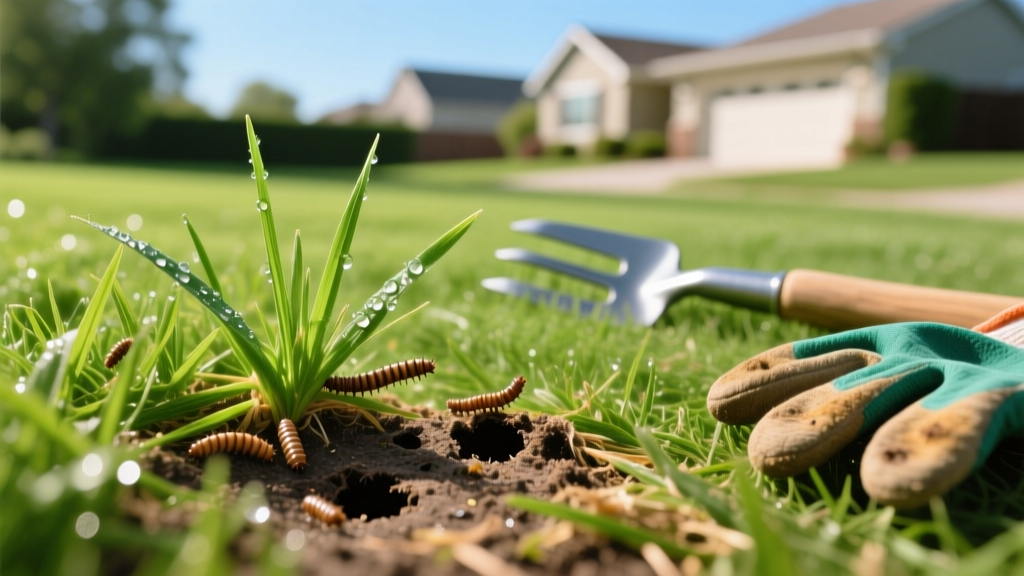
How to Get Rid of Grass Worms: A Complete Lawn Defense Guide
The "Grass Worm" Misnomer: Identifying the Real Culprits
Homeowners often spot irregular brown patches, chewed grass blades, and silken webbing, quickly blaming the damage on "grass worms." In professional turf management, this colloquial term actually refers to the larval (caterpillar) stages of several moth species that feed on turfgrass. Before deploying any insecticide or biological control, you must accurately identify which species is invading your yard, as their feeding habits and treatment windows differ significantly.
According to the University of Kentucky Entomology Department, the three most common turf-destroying caterpillars grouped under this umbrella are the sod webworm, the fall armyworm, and the black cutworm. Misidentifying them can lead to applying the wrong active ingredient at the wrong time of day, resulting in wasted money and continued turf loss.
| Pest Species | Larvae Appearance | Damage Pattern | Peak Activity |
|---|---|---|---|
| Sod Webworm | Gray/brown with dark spots, 3/4 inch long | Clipped blades, silk webbing on soil surface | Late summer to early fall |
| Fall Armyworm | Green/brown with inverted "Y" on head capsule | Rapid scalping, marching fronts across the lawn | Late summer (August-October) |
| Cutworm | Plump, dark gray/brown, curls into a "C" shape | Circular dead spots, severed grass crowns at soil line | Spring and fall nights |
The Soap Flush Test: Confirming an Infestation
Do not treat your lawn based on visual damage alone. Drought stress, dog urine, and fungal diseases like dollar spot can mimic caterpillar damage. To confirm a grass worm infestation, perform a standardized soap flush test. This forces the larvae out of the thatch and soil surface where they can be counted.
Pro-Tip: The 2-Gallon Flush Protocol
Mix 2 tablespoons of liquid dish soap (lemon-scented works best, avoid heavy degreasers or detergents with bleach) into 2 gallons of water. Pour this mixture evenly over a 1-square-yard area of damaged turf. Wait 10 minutes. If more than 10 to 15 larvae emerge in that single square yard, your lawn has crossed the economic threshold and requires immediate treatment.
Mix 2 tablespoons of liquid dish soap (lemon-scented works best, avoid heavy degreasers or detergents with bleach) into 2 gallons of water. Pour this mixture evenly over a 1-square-yard area of damaged turf. Wait 10 minutes. If more than 10 to 15 larvae emerge in that single square yard, your lawn has crossed the economic threshold and requires immediate treatment.
Targeted Treatment Protocols (Conventional & Organic)
Once you have confirmed an active infestation via the soap flush, timing is everything. Grass worms are primarily nocturnal feeders. Applying treatments at dawn or mid-day exposes the active ingredients to UV degradation and misses the pests when they are actively consuming foliage. Always apply treatments in the late afternoon or early evening.
Biological and Organic Controls
For environmentally sensitive areas or early-stage infestations (1st to 3rd instar larvae), biological controls are highly effective and preserve beneficial predator insects.
- Bacillus thuringiensis var. kurstaki (Bt): Sold under brand names like Monterey Bt or Thuricide (approx. $15-$20 per 16oz bottle). Bt is a naturally occurring soil bacterium that produces proteins toxic only to caterpillars. It must be ingested to work, so thorough foliar coverage is mandatory. Apply at a rate of 2 oz per 1,000 sq ft. Reapply every 5-7 days if rain occurs or larvae persist.
- Beneficial Nematodes: The species Steinernema carpocapsae actively hunts and parasitizes soil-dwelling larvae and pupae. A pack of 10 million nematodes (treating roughly 2,000 sq ft) costs between $35 and $50. Critical application rule: Nematodes are living organisms. Apply them when soil temperatures are between 60°F and 85°F, avoid direct sunlight, and water them into the soil immediately with at least 1/4 inch of irrigation to prevent desiccation.
Chemical Interventions for Severe Outbreaks
When fall armyworms are marching across your lawn in massive fronts, or cutworms are severing grass crowns, biologicals may act too slowly. In these scenarios, synthetic pyrethroids or carbamates are necessary to halt the destruction.
- Bifenthrin (e.g., Talstar P): A broad-spectrum pyrethroid that provides rapid knockdown and up to 30 days of residual control. Cost: $45-$60 per pint concentrate. Mix at 0.5 to 1 oz per 1,000 sq ft. Water in lightly (1/8 inch) after application to move the chemical into the thatch layer where webworms hide.
- Carbaryl (e.g., Sevin SL): Highly effective against larger, late-instar cutworms and armyworms that have developed resistance to other chemicals. Cost: $30-$40 per quart. Apply at 1.5 oz per 1,000 sq ft. Note that carbaryl is highly toxic to earthworms and pollinators; use strictly as a targeted rescue treatment, not a preventative.
Cultural Defense: Making Your Turf Uninviting
Chemical and biological treatments only address the current generation of pests. To build long-term yard defense against grass worms, you must alter the microenvironment of your turf to make it inhospitable for egg-laying moths and pupating larvae.
Warning: The Thatch Trap
A thatch layer thicker than 0.5 inches acts as an impenetrable bunker for sod webworms and cutworms, shielding them from both predators and contact insecticides. If your thatch exceeds this depth, schedule a core aeration and dethatching service immediately. The average cost for professional dethatching is $100 to $150 per 1,000 square feet, but it is a non-negotiable step for integrated pest management.
A thatch layer thicker than 0.5 inches acts as an impenetrable bunker for sod webworms and cutworms, shielding them from both predators and contact insecticides. If your thatch exceeds this depth, schedule a core aeration and dethatching service immediately. The average cost for professional dethatching is $100 to $150 per 1,000 square feet, but it is a non-negotiable step for integrated pest management.
Additionally, adjust your mowing habits. Moths prefer to lay eggs in tall, lush turf. Maintain your grass at the lower end of its recommended height range during peak moth flight seasons (late July through September). For Tall Fescue, keep it at 2.5 to 3 inches; for Bermuda, maintain 1 to 1.5 inches. Ensure your mower blades are sharply honed; tearing the grass tips creates open wounds that attract secondary fungal pathogens while the turf is already stressed by caterpillar feeding.
Monitoring and Pheromone Traps
According to Penn State Extension, monitoring adult moth flights is the most proactive defense strategy. By the time you see caterpillars, the eggs have already hatched and feeding has begun. Purchase a universal green plastic unitrap baited with a fall armyworm or sod webworm pheromone lure (approx. $25 for the trap and lure kit). Place the trap near a light source at the edge of your property in early summer. Check it twice a week. A sudden spike in trapped moths indicates that egg-laying is occurring, signaling you to apply a preventative biological like Bt exactly 7 to 10 days later, right as the eggs hatch.
Recovery Plan: Repairing Grass Worm Damage
Once the pests are eradicated, the lawn must be rehabilitated. Severed grass crowns will not regenerate. You must overseed bare patches and stimulate lateral growth in surviving turf.
- Debris Removal: Rake out dead, chewed blades and residual frass (caterpillar droppings) to expose the soil surface.
- Overseeding: Apply a turf-type tall fescue or matching bermuda seed at a rate of 5-8 lbs per 1,000 sq ft over bare areas. Top-dress with 1/4 inch of screened compost to retain moisture.
- Starter Fertilizer: Apply a high-phosphorus starter fertilizer (such as a 18-24-12 NPK ratio) at 4 lbs per 1,000 sq ft to drive rapid root establishment in the new seedlings. Avoid high-nitrogen synthetic fertilizers immediately after an infestation, as the flush of tender, succulent growth will attract the next generation of moths.
By combining accurate identification, precise soap-flush thresholds, and targeted biological or chemical interventions, you can successfully defend your yard against grass worms and restore your turf to peak health.

