
Pest Control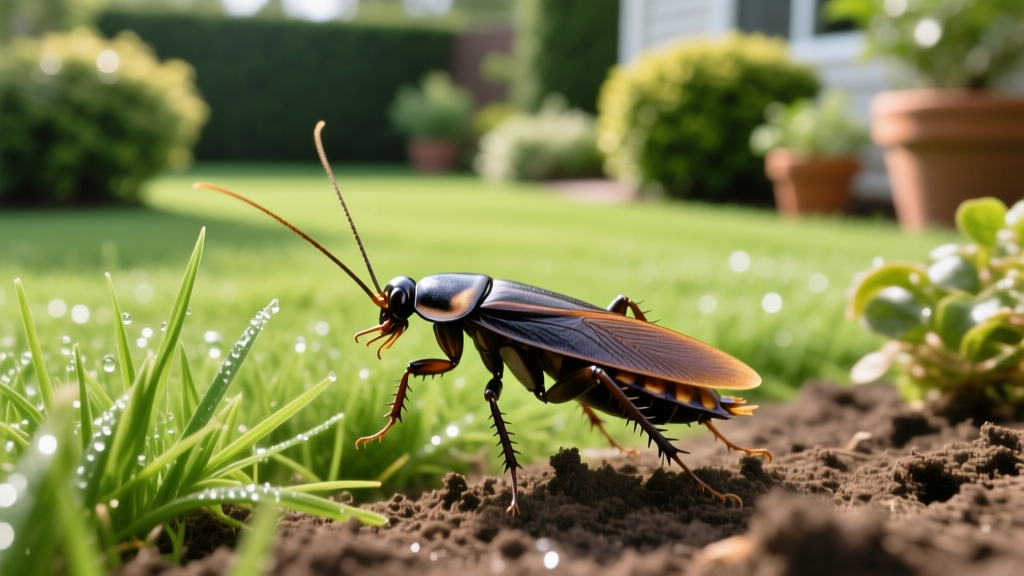
How to Get Rid of Palmetto Bugs: Yard Defense & Treatment
Understanding the Palmetto Bug Threat in Your Yard
Palmetto bugs are not a distinct species; they are a regional colloquialism for the American cockroach (Periplaneta americana) and, occasionally, the Smokeybrown cockroach. According to the University of Florida IFAS, these large, reddish-brown insects thrive in warm, humid environments and are primarily outdoor pests that only invade homes when external conditions become inhospitable or when population pressures force them to seek new harborage. To effectively manage them, you must treat your yard as the primary battleground.
Species Identification Note: True American cockroaches feature a distinctive yellowish figure-eight pattern on the back of their head. Smokeybrown cockroaches are uniformly dark mahogany and lack this marking. Both require identical yard defense strategies, but accurate identification helps gauge flight risk, as Smokeybrowns are much stronger fliers and often descend from tree canopies.
Phase 1: Moisture and Harborage Denial
Palmetto bugs require high moisture levels to survive. If your yard retains excess water, chemical treatments will only provide temporary relief. The Clemson University Home & Garden Information Center emphasizes that sanitation and moisture control are the foundational steps of integrated pest management (IPM) for peridomestic cockroaches.
The 12-Inch Mulch-Free Zone
Thick organic mulch holds moisture and provides ideal daytime harborage. You must rake back all pine straw, hardwood mulch, and leaf litter to create a minimum 12-inch bare dirt or gravel perimeter directly against your home's foundation. This exposes the soil to UV light and rapid drying, making it inhospitable to roaches.
Water Diversion Tactics
- Downspout Extensions: Extend all gutter downspouts at least 4 feet away from the foundation. Palmetto bugs congregate in the saturated soil near downspout exits.
- HVAC Condensate Lines: Route AC drip lines into French drains or extend them into the lawn. A constantly dripping PVC pipe creates a localized oasis for roaches right against your siding.
- Grading Corrections: Ensure the soil slopes away from the foundation at a minimum grade of 6 inches over the first 10 feet to prevent pooling.
Phase 2: The 3x3 Perimeter Chemical Barrier
Once the environment is dried out, establish a chemical barrier using a liquid residual insecticide. The industry standard application is the '3x3 Rule': spray 3 feet up the foundation wall and 3 feet out into the adjacent soil and mulch beds.
Product Selection and Mixing Ratios
For outdoor perimeter defense, Bifenthrin 7.9% (commonly sold as Talstar P) remains a top-tier choice due to its long residual life and slight repellent properties, which keep bugs from crossing the treated zone. As of 2026, a pint of Talstar P concentrate averages $45 and yields up to 32 gallons of finished spray.
- Mixing Ratio: 1 fluid ounce of Bifenthrin 7.9% per 1 gallon of water for standard maintenance. Increase to 2 ounces per gallon for severe initial knockdown.
- Application Tool: Use a 1-gallon or 2-gallon pump sprayer with a fan-nozzle tip to ensure an even, wide swath rather than a concentrated pin-stream.
- Frequency: Reapply every 60 to 90 days during the active season (April through October in southern climates).
Active Ingredient Comparison Matrix
| Active Ingredient | Product Example | Approx. Cost (2026) | Residual Life | Best Use Case |
|---|---|---|---|---|
| Bifenthrin 7.9% | Talstar P | $45 / pint | 60-90 days | Foundation perimeter barrier & yard broadcast |
| Dinotefuran 40% | Alpine WSG | $48 / 10 packets | 30-60 days | Non-repellent crack/crevice & foliage treatment |
| Indoxacarb 0.5% | Advion Insect Granule | $35 / 25lb bag | Until dissolved | Targeted baiting in heavy mulch & ground cover |
| Fipronil 0.05% | Maxforce FC Magnum | $38 / 4 tubes | Until consumed | Gel baiting in outdoor utility boxes & meter housings |
Phase 3: Strategic Baiting for Colony Eradication
Liquid sprays kill on contact and repel, but they do not eliminate the colony hidden deep in the yard. To achieve total eradication, you must incorporate non-repellent baits that foraging roaches carry back to their harborage sites.
Granular Baits in Organic Matter
In areas where you cannot remove thick ground cover (like ivy beds or distant mulch rings), apply Advion Insect Granule. The indoxacarb active ingredient requires bio-activation by the insect's enzymes, meaning it won't kill immediately. This delayed action allows the roach to return to the nest, die, and be cannibalized by others, triggering a secondary kill cascade. Apply at a rate of 200 lbs per acre, which translates to roughly 1.5 ounces per 1,000 square feet of yard space.
Gel Baits in Outdoor Hardscapes
Palmetto bugs love the warmth and moisture of outdoor electrical boxes, pool pump housings, and water meter covers. Apply dime-sized drops of Maxforce FC Magnum (Fipronil) gel bait inside these enclosures. Be careful not to place gel bait on surfaces recently sprayed with liquid Bifenthrin, as the repellent nature of the spray will deter the roaches from eating the bait.
Warning: Avoid Cross-Contamination
Never spray liquid residuals directly over granular or gel baits. The chemical residue will taint the bait matrix, rendering it unpalatable to the roaches and wasting your investment.
Never spray liquid residuals directly over granular or gel baits. The chemical residue will taint the bait matrix, rendering it unpalatable to the roaches and wasting your investment.
Common Failure Modes in Palmetto Bug Control
Even with premium products, homeowners frequently make tactical errors that compromise their yard defense.
- Spraying Over Organic Mulch: Bifenthrin binds tightly to organic matter. If you spray directly onto 4 inches of pine bark, the chemical is absorbed by the wood and never reaches the soil where the bugs travel. Always rake mulch back or use a wand to inject the spray beneath the mulch layer.
- Ignoring the Tree Canopy: Smokeybrown cockroaches breed in tree hollows and under loose bark. If you have large oak or palmetto trees overhanging your roof, spray the tree trunks up to a height of 6 feet and treat any visible tree hollows with Alpine WSG dust or granules.
- Over-reliance on Bug Bombs: Total release foggers (bug bombs) are entirely useless for outdoor yard defense and highly dangerous for indoor use against peridomestic roaches. They fail to penetrate harborage areas and often scatter the colony deeper into wall voids.
Frequently Asked Questions
Do palmetto bugs bite humans or pets?
No. While they possess chewing mouthparts, they are scavengers that feed on decaying organic matter. They do not bite humans or pets, though their presence can trigger asthma and allergies due to shed skin and fecal matter.
How far into the lawn should I treat?
Focus 90% of your effort on the 10-foot perimeter immediately surrounding the home, hardscapes, and dense shrubbery. Broad-casting insecticide across the open turfgrass is unnecessary for palmetto bugs, as they avoid direct sunlight and open, dry grass.
Will winter kill off the yard population?
In USDA Hardiness Zones 8 and above, winter temperatures rarely drop low enough or stay cold long enough to eradicate a palmetto bug colony. They simply move deeper into subterranean burrows, sewer lines, and foundation cracks, emerging again in early spring.

