
Pest Control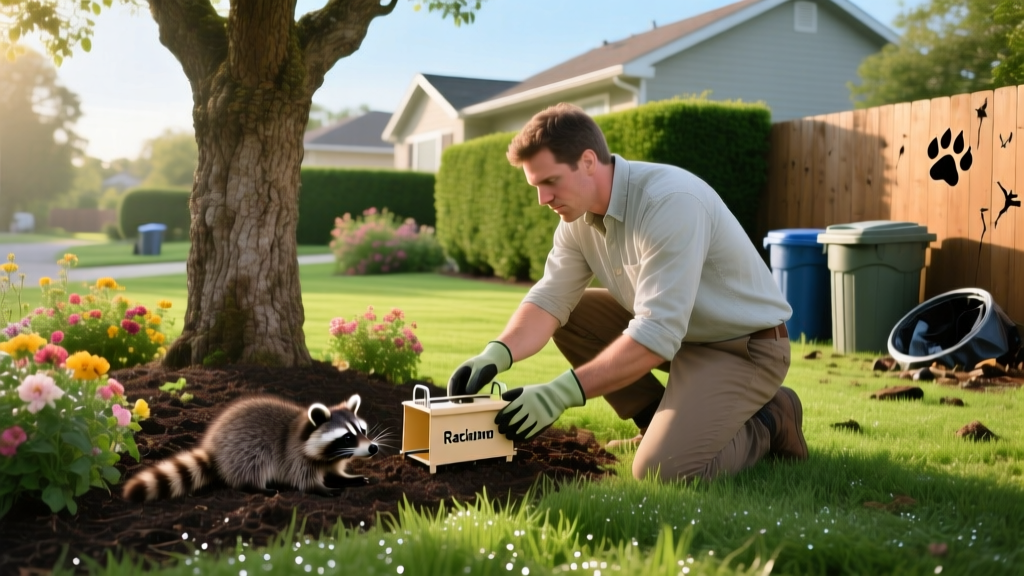
How to Get Rid of Raccoons From Your Yard for Good
The Raccoon Problem: Intelligence Meets Opportunity
Raccoons (Procyon lotor) possess remarkable problem-solving skills, dexterous forepaws capable of 108-degree rotation, and an acute sense of smell. When they invade your property, they are not just passing through; they are exploiting a reliable resource. According to the Internet Center for Wildlife Damage Management, raccoons cause millions in property damage annually by peeling back newly laid sod, raiding trash enclosures, and establishing latrines in attics and crawl spaces. Getting rid of them requires a multi-layered strategy that removes attractants and introduces physical and psychological barriers.
The Attraction Triangle: Why They Chose Your Yard
Before deploying deterrents, you must eliminate the 'Attraction Triangle'. If even one of these elements is present, raccoons will tolerate minor annoyances to stay.
- Food: Unsecured trash, pet food left outdoors, fallen fruit, and white grubs in your turfgrass.
- Water: Birdbaths, uncovered koi ponds, and poorly graded yards that create standing puddles.
- Shelter: Open crawl spaces, uncapped chimneys, hollow trees, and dense brush piles.
The Raccoon Deterrent Matrix: What Works vs. What Fails
Not all commercial repellents are effective. Raccoons quickly habituate to static threats. Here is a breakdown of common deterrence methods based on field efficacy and behavioral science.
| Deterrent Method | Efficacy | Avg. Cost | Common Failure Mode |
|---|---|---|---|
| Motion-Activated Sprinklers | High | $50 - $80 | Sensor blocked by overgrown grass; winter freezing. |
| Ultrasonic Sound Emitters | Low | $30 - $60 | Raccoons habituate within 48 hours; sound blocked by fences. |
| Ammonia-Soaked Rags | Very Low | $10 | Evaporates in hours; dangerous to pets and children. |
| Gravity-Latching Trash Locks | Very High | $20 - $45 | Improper installation; hinges rusting over time. |
| Predator Urine (Coyote) | Moderate | $15 - $25 | Washes away in rain; urban raccoons ignore unfamiliar scents. |
Step 1: Fortifying the Perimeter and Trash
Standard bungee cords are useless against raccoons. Their dexterity allows them to untwist hooks and lift loose lids. To secure your waste:
- Upgrade to Gravity Latches: Install a product like the Critter Guard or a generic gravity-latching lid lock ($25). These require human-level opposable thumb pressure or a specific upward-then-pull motion that raccoons cannot replicate.
- Use Galvanized Steel: Plastic trash cans are easily chewed through or tipped. Switch to galvanized steel cans with tight-fitting, locking lids.
- Timing is Critical: Never put trash out the night before collection. Wait until the morning of pickup.
Step 2: Lawn and Garden Defense Tactics
If you find large patches of your lawn rolled back like a carpet, raccoons are foraging for white grubs. Killing the food source is more effective than chasing the predator.
Biological Grub Control
Avoid broad-spectrum chemical insecticides that harm beneficial soil organisms. Instead, apply Heterorhabditis bacteriophora (Hb nematodes) in late summer when grubs are near the surface. These microscopic worms seek out and destroy grubs within 48 hours.
Application Rate: 1 million nematodes per 3,000 square feet.
Cost: $35 to $50 per application.
Pro Tip: Apply at dusk and water the lawn immediately afterward, as UV light and dry soil will kill the nematodes before they can penetrate the thatch layer.
Physical Exclusion Fencing
Standard chicken wire tears easily under raccoon weight. For garden beds, use 16-gauge, 1/2-inch galvanized hardware cloth. Bury the bottom 12 inches deep and bend the lowest 12 inches outward at a 90-degree angle to create an 'L-footer'. When a raccoon digs at the base of the fence, they hit the wire mesh and give up.
Step 3: Active Deterrents and Repellents
When physical barriers are not enough, introduce unpredictable, active deterrents that trigger the raccoon's flight response.
Top Product Pick: The Orbit 62100 Yard Enforcer motion-activated sprinkler (~$60). It detects movement up to 70 feet away and delivers a sharp burst of water accompanied by a metallic clicking sound. The combination of physical discomfort and sudden noise prevents habituation. Mount it at a height of 12 inches to target the raccoon's body, not just the air above them.
For roof and fence-line deterrence, install LED motion-sensor floodlights. Raccoons are nocturnal and prefer stealth. A sudden 2,000-lumen blast of light disrupts their foraging cycle. Avoid leaving static porch lights on, as raccoons will simply adjust to the constant illumination.
Humane Trapping: When Deterrence Fails
If a specific raccoon is causing severe damage and deterrents fail, live trapping may be necessary. The Humane Society strongly advises checking local and state wildlife regulations before trapping, as relocating raccoons is illegal in many jurisdictions (including New York, Massachusetts, and Colorado) due to the risk of spreading rabies and distemper to new areas.
Trapping Best Practices
- The Trap: Use a Havahart 1045 Two-Door Trap (32 x 10 x 12 inches, ~$55). The two-door design allows the animal to walk straight through, reducing trap shyness.
- The Bait: Do not use meat or tuna, which will attract neighborhood cats and skunks. Use sweet corn, marshmallows, or fruit. Place the bait entirely behind the trigger pan so the raccoon must step fully inside to reach it.
- Release: If local laws permit relocation, release the animal within 10 miles of the capture site in a suitable wooded habitat, preferably near a water source. Always wear heavy leather gauntlet gloves and a mask when handling the trap.
Health Risks: Raccoon Latrines and Parasites
Raccoons habitually defecate in specific communal sites known as latrines, often found on flat surfaces like roofs, large stumps, or hay bales. These latrines frequently contain eggs of Baylisascaris procyonis (raccoon roundworm). According to the Cornell University NYS IPM program, ingestion of these microscopic eggs can cause severe neurological damage in humans and pets.
Warning: Latrine Cleanup Protocol
Standard bleach solutions do not kill Baylisascaris eggs. The eggs possess a highly resistant lipid shell. To safely destroy a latrine, wear an N95 respirator and rubber gloves. Douse the area with boiling water or use a propane torch to incinerate the feces and the top layer of soil. Bag the remaining debris in heavy-duty contractor bags and dispose of it in the regular trash.
Standard bleach solutions do not kill Baylisascaris eggs. The eggs possess a highly resistant lipid shell. To safely destroy a latrine, wear an N95 respirator and rubber gloves. Douse the area with boiling water or use a propane torch to incinerate the feces and the top layer of soil. Bag the remaining debris in heavy-duty contractor bags and dispose of it in the regular trash.
Quick Troubleshooting Guide
Use this decision framework to address specific raccoon behaviors in your yard:
- Problem: Raccoons are tearing up the lawn at night.
Fix: Apply Hb nematodes to kill grubs. Install motion-activated sprinklers over the damaged zones for 14 days to break the foraging habit. - Problem: Raccoons are climbing the fruit trees.
Fix: Wrap a 24-inch band of 16-gauge sheet metal around the trunk, positioned 4 feet off the ground. Prune branches so they are at least 6 feet away from fences and rooflines. - Problem: Raccoons are raiding the bird feeder.
Fix: Switch to a weight-activated baffled bird feeder (e.g., Droll Yankees Yankee Flipper) or bring the feeder indoors at dusk. Never rely on 'spicy' bird seed, as birds lack capsaicin receptors but mammals do not; heavy rain will wash the spice coating off anyway.

