
Pest Control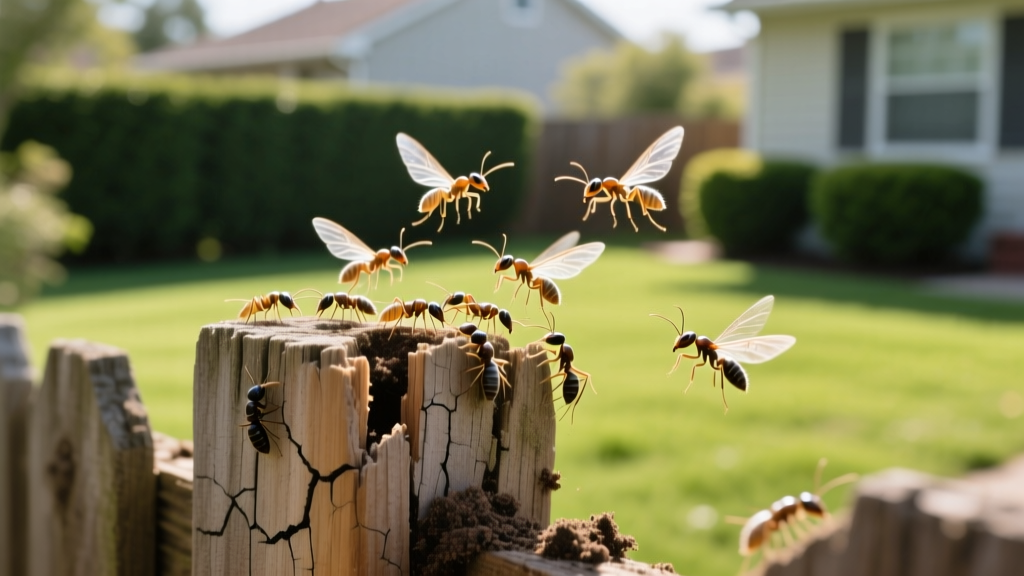
How to Get Rid of Termite Swarmers in Your Yard & Perimeter
When thousands of winged insects erupt from your mulch beds, lawn, or patio cracks in early spring, your first instinct might be to grab a can of aerosol bug spray. But learning how to get rid of termite swarmers in your yard requires a strategic shift in perspective. Swarmers (alates) are merely the reproductive messengers of a massive, hidden subterranean colony. Killing the visible swarmers does nothing to stop the structural damage occurring beneath your soil.
To defend your yard and home perimeter, you must target the parent colony and alter the exterior environment to make it inhospitable. This guide details the exact chemical barriers, baiting systems, and landscaping modifications required to secure your property against subterranean termite swarms.
The Biology of a Swarm: Why Swarmers Are a Symptom, Not the Disease
Termite swarmers are reproductive males and females that leave the nest to mate and establish new colonies. They typically emerge on warm, humid days following a spring rain. According to the National Pest Management Association, a mature subterranean termite colony can contain anywhere from 60,000 to over a million workers, but it will only produce swarmers once it reaches a critical mass, usually after three to five years.
Out in the open yard, swarmers are incredibly vulnerable. Most are eaten by birds, ants, or die from desiccation within a few hours. The swarmers themselves do not eat wood; their sole biological purpose is to fly, drop their wings, pair off, and burrow into the soil to start a new nest. Therefore, your yard defense strategy must focus on two objectives: eliminating the parent colony feeding in your yard and preventing new pairs from successfully burrowing into your perimeter soil.
Immediate Yard Defense: How to Get Rid of Termite Swarmers Outdoors
If a swarm is actively happening on your patio or emerging from a specific mulch bed, take these immediate steps to manage the immediate nuisance while preparing for long-term colony eradication.
1. Physical Removal and Light Management
Swarmers are highly phototactic, meaning they are aggressively attracted to light. During a swarm, turn off all exterior security lights, porch lights, and landscape lighting. Use a wet-dry shop vacuum to suck up swarmers resting on your patio, driveway, or window sills. Empty the vacuum canister into a sealed plastic bag and dispose of it in an outdoor trash bin. For swarmers landing on your lawn or garden beds, a simple sweep with a push broom will disorient them and expose them to natural predators.
2. Trenching and Applying a Non-Repellent Liquid Barrier
The most effective way to eliminate the colony producing the swarmers is to apply a non-repellent liquid termiticide around your home's perimeter and any detached wooden structures (sheds, pergolas) in your yard. The industry standard is Termidor SC (active ingredient: 9.1% Fipronil).
- The Transfer Effect: Unlike older repellent chemicals, termites cannot detect Fipronil. They tunnel through the treated soil, pick up the chemical on their exoskeletons, and carry it back to the nest, transferring it to the queen and other workers through grooming and trophallaxis (food sharing).
- Application Specifics: Dig a trench 6 inches deep and 6 inches wide directly against the foundation. Mix 0.8 fluid ounces of Termidor SC per gallon of water. Apply 4 gallons of the finished solution per 10 linear feet of trench. Backfill the trench with the treated soil.
- Cost: A 20 oz bottle of Termidor SC costs approximately $85 to $95 and yields enough solution to treat an average 150-linear-foot home perimeter.
3. Deploying In-Ground Cellulose Bait Stations
If your yard features extensive hardscaping, concrete patios, or sensitive garden beds where trenching is impossible, in-ground bait stations are the optimal alternative. Systems like the Advance Termite Bait System or Trelona ATBS use compressed cellulose cartridges laced with a chitin synthesis inhibitor (Diflubenzuron).
- Install stations every 10 feet around the perimeter of the home and near known yard hotspots (woodpiles, tree stumps).
- Termites foraging in the yard find the cellulose, consume the Diflubenzuron, and share it with the colony.
- Because Diflubenzuron prevents termites from molting, the colony slowly starves and collapses as workers die and are not replaced.
Liquid Termiticides vs. Bait Stations: A Yard Defense Comparison
| Feature | Non-Repellent Liquid (Fipronil) | Cellulose Bait Stations (Diflubenzuron) |
|---|---|---|
| Speed of Control | Fast (Colony elimination in 30-90 days) | Slow (Colony elimination in 6-12 months) |
| Yard Disruption | High (Requires trenching and rodding) | Low (Requires drilling small 2-inch holes) |
| Longevity | 5 to 10 years in undisturbed soil | Requires 90-day inspections and bait replacement |
| DIY Material Cost | $150 - $300 (Average home perimeter) | $250 - $400 (15-station kit + annual bait) |
| Best Yard Scenario | Dirt crawlspaces, bare soil flowerbeds | Concrete patios, heavy mulch, sensitive root zones |
CRITICAL WARNING: Avoid Over-the-Counter Repellent Sprays
Never use standard hardware store insecticides (like Ortho Home Defense or Raid, which typically contain Bifenthrin or Cypermethrin) on termite swarmers or soil. These are repellents. They will kill the swarmers on contact but will cause the hidden underground colony to detect the chemical barrier and 'bud'—splitting into multiple smaller satellite colonies that spread further across your yard and bypass your treatment zone. Always use non-repellent termiticides for soil application.
Landscaping & Mulch Modifications to Deter Future Swarms
Chemical treatments will fail if your yard's physical environment continually invites new swarming pairs to establish nests. The Environmental Protection Agency (EPA) emphasizes that moisture control and wood-to-soil contact reduction are mandatory for long-term defense.
Mulch Selection and Placement
Standard pine bark and hardwood mulches are essentially termite food. If you must use mulch in your perimeter beds, switch to Cypress heartwood or Cedar mulch. These woods contain natural resins, such as thujopsene, which are highly toxic and repellent to termites. Regardless of the mulch type, maintain a strict 6-inch vertical gap and a 12-inch horizontal gap between the mulch bed and your home's siding or foundation weep holes.
Moisture and Grading Corrections
Subterranean termites require constant access to moisture to survive above ground. Audit your yard's drainage:
- Downspout Extensions: Ensure all gutter downspouts discharge at least 4 feet away from the foundation. Pooling water near the house softens the soil and creates ideal swarmer burrowing conditions.
- Positive Grading: The soil should slope away from the foundation at a minimum grade of 6 inches of drop over the first 10 horizontal feet.
- AC Condensate Lines: Reroute air conditioning drip lines away from the perimeter. A single AC unit can dump up to 15 gallons of water a day into the soil during summer, creating a localized termite oasis.
When to Call a Professional vs. DIY Yard Treatment
While DIY application of Termidor SC or Trelona bait stations is legal and highly effective for accessible yards, certain property layouts require professional intervention. If your home has a finished basement, a slab-on-grade foundation with extensive interior plumbing penetrations, or a complex multi-level retaining wall system, DIY trenching will leave critical gaps in the chemical barrier.
Professional pest control companies utilize specialized 150-gallon power spray rigs and concrete-slab rodding equipment to inject termiticide deep beneath foundations. Expect to pay between $1,200 and $2,500 for a comprehensive professional perimeter treatment, which typically includes an annual inspection warranty. For straightforward properties with bare soil perimeters and dirt crawlspaces, a DIY approach using $200 worth of premium chemicals and a weekend of labor will yield identical biological results.
Frequently Asked Questions About Yard Swarmers
Do termite swarmers eat the wood in my fence or shed?
No. Swarmer termites do not possess the gut protozoa required to digest cellulose, and they do not feed. The structural damage in your yard is caused exclusively by the blind, wingless worker termites that remain hidden inside the soil and wood galleries.
How far can termite swarmers fly from the parent colony?
Despite having wings, subterranean termite swarmers are notoriously weak fliers. They rely entirely on wind currents. In most residential yard scenarios, they travel less than 300 feet from the parent colony before dropping to the ground. If you see a massive swarm in your yard, the parent colony is almost certainly located on your property or an immediate neighbor's property.
Will a yard treatment for swarmers protect the inside of my house?
Yes, if applied correctly. A continuous, unbroken trench of non-repellent termiticide around the exterior foundation perimeter creates a chemical moat. Termites foraging from the yard toward the house will pass through this treated soil and be eliminated before they can access the structural wood inside your home.

