
Pest Control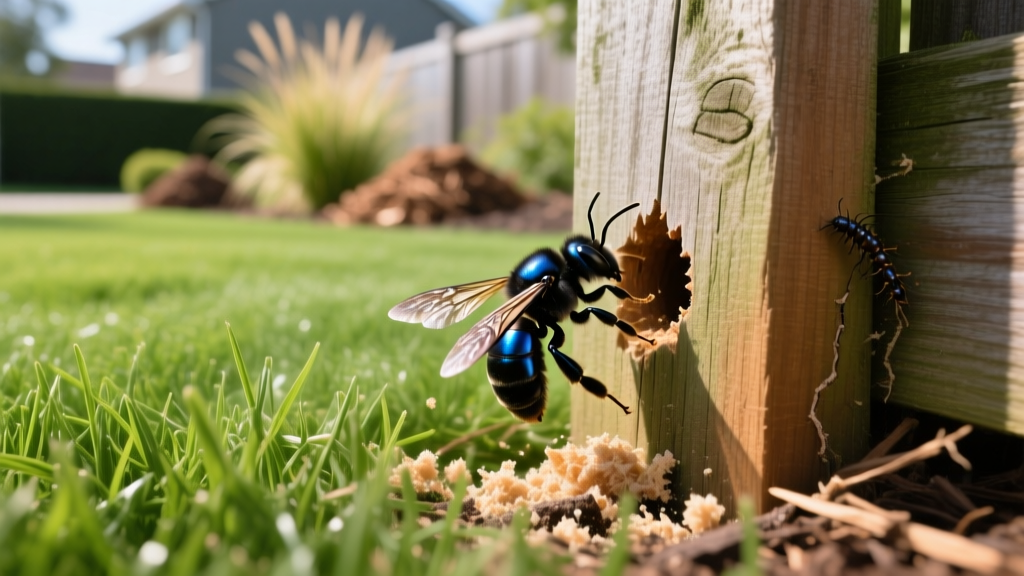
How Do You Get Rid of Wood Boring Bees? Expert Yard Defense Guide
The Reality of Wood Boring Bees in Your Yard
When homeowners ask, "how do you get rid of wood boring bees?" they are almost always dealing with carpenter bees (Xylocopa species). Unlike termites or carpenter ants, these large, robust insects do not eat wood. Instead, they use their powerful mandibles to excavate perfectly round, half-inch diameter tunnels into untreated timber to create nesting galleries. While a single female excavating a nest causes minimal structural harm, successive generations returning to the same fascia boards, pergolas, and eaves can compromise the integrity of your outdoor wood structures over time.
Effective eradication requires understanding their nesting behavior. According to University of Kentucky Entomology, carpenter bees prefer soft, unpainted, or weathered woods like cedar, pine, and redwood. The most common culprit in North America is the Eastern carpenter bee (Xylocopa virginica), which is frequently mistaken for a bumblebee due to its similar size and yellow-and-black coloration. However, carpenter bees feature a distinct, shiny, hairless black abdomen, whereas bumblebees have entirely fuzzy abdomens and nest in the ground.
Assessing the Damage: Beyond the Entry Hole
The visible half-inch entry hole is merely the gateway. Once inside, the female bee excavates a primary tunnel that typically extends 4 to 6 inches deep before making a sharp 90-degree turn to follow the wood grain. From this main corridor, she carves out individual brood chambers, provisioning each with a mixture of pollen and nectar (bee bread) before laying a single egg and sealing the chamber with chewed wood pulp.
Critical Warning: The Woodpecker Multiplier Effect
The most severe structural damage associated with carpenter bees is often secondary. Woodpeckers, particularly the pileated and downy species, can hear the larvae developing inside the wood. They will aggressively peck and tear at the fascia boards and eaves to extract the larvae, causing exponentially more cosmetic and structural damage than the bees themselves. Treating the bee infestation promptly is essential to prevent avian destruction.
The 'Dust and Plug' Protocol: Step-by-Step Eradication
Liquid sprays are notoriously ineffective for active carpenter bee galleries. The liquid absorbs into the dry wood or evaporates before it reaches the deep, 90-degree-angled brood chambers. To successfully eliminate an active infestation, you must use a residual insecticidal dust that clings to the bees' hairy bodies as they enter and exit the nest.
Step 1: Locate and Map Active Galleries
Inspect your property during peak daylight hours. Look for the telltale signs: perfectly round half-inch holes, small piles of coarse sawdust (frass) directly beneath the holes, and yellowish-brown staining from fecal matter near the entry points. Map every hole you find, including old, abandoned ones, as new females frequently reuse and expand existing galleries.
Step 2: Apply Residual Insecticidal Dust
Using a handheld bulb duster or a professional bellows duster, puff a small amount of insecticidal dust directly into each hole. Do not pack the hole full; you only need enough dust to coat the inner walls of the first few inches of the tunnel. As the bees enter and exit, the dust will transfer to their bodies and be carried deep into the brood chambers.
Step 3: The Mandatory 48-to-72 Hour Wait
This is where most DIY treatments fail. Do not plug the holes immediately. You must leave the holes open for at least 48 to 72 hours after dusting. This allows multiple bees to contact the dust and track it into the deepest parts of the nest, ensuring the larvae and the mother are eliminated. Plugging the hole too early traps the treated bee outside and leaves the brood intact to hatch next season.
Step 4: Seal and Plug the Galleries
After the waiting period, plug the holes to prevent future bees from reusing the tunnels. Insert a small piece of copper mesh or steel wool into the hole (bees cannot chew through metal), and seal the exterior with a high-quality, paintable polyurethane wood filler or exterior-grade silicone caulk. Sand and paint the area to match the surrounding wood.
Product Arsenal: Top Insecticides for Carpenter Bees
Selecting the right chemical formulation is critical for long-term control. Modern pest control relies on microencapsulated and desiccant technologies that provide extended residual activity without the high toxicity of older organophosphates.
| Product Name | Formulation Type | Active Ingredient | Avg. Cost (2026) | Best Application |
|---|---|---|---|---|
| Delta Dust | Waterproof Dust | Deltamethrin (0.06%) | $18 - $24 | Injecting into active holes; highly effective in damp outdoor environments. |
| Drione Dust | Silica Gel Dust | Silica Aerogel + Pyrethrin | $25 - $32 | Desiccating bees and larvae; excellent for dry, sheltered eaves and attics. |
| Tempo SC Ultra | Liquid Concentrate | Cyfluthrin (11.8%) | $45 - $55 | Broad-spectrum surface barrier spray for wood surfaces prior to staining/painting. |
| Cyzmic CS | Microencapsulated Liquid | Lambda-Cyhalothrin (9.7%) | $42 - $50 | Long-residual exterior perimeter spray to deter foraging bees from landing. |
Note: Always read and follow the manufacturer's label instructions. The EPA regulates all pesticide applications, and the label is the law. When applying dusts or sprays overhead, wear safety goggles and a N95 respirator to avoid inhaling particulate matter.
Long-Term Yard Defense: Making Wood Unappealing
Eradication is only half the battle. To stop asking "how do you get rid of wood boring bees" every spring, you must alter the environment to make your structures inhospitable to nesting females. Research from NC State Extension confirms that carpenter bees show a strong preference for raw, untreated wood.
- Paint Over Stain: While stains offer some protection, a thick coat of exterior acrylic latex paint is the most effective deterrent. The hard, opaque film masks the wood grain and is physically difficult for the bees to chew through.
- Use Polyurethane Sealants: If you prefer the natural look of wood, apply at least two heavy coats of exterior-grade polyurethane or marine varnish. Reapply every two to three years as UV degradation breaks down the sealant.
- Install Aluminum Flashing: For fascia boards and rooflines that are repeatedly targeted, wrap the vulnerable wood in painted aluminum coil stock or PVC trim boards. Bees cannot excavate metal or cellular PVC.
- Provide Decoy Habitats: Some homeowners successfully divert carpenter bees by hanging untreated pine blocks in distant, non-critical areas of the yard, though this method yields mixed results and should only be used in conjunction with primary deterrents.
Frequently Asked Questions
Will vinegar or essential oils kill wood boring bees?
No. While strong scents like citrus oil, almond oil, or vinegar may act as mild, temporary repellents, they possess zero residual killing power and will not eliminate an active gallery or brood chamber. Relying on home remedies usually results in expanded damage over the season.
Are carpenter bees aggressive? Will they sting?
Male carpenter bees are highly territorial and will aggressively hover and dive-bomb intruders near their nests, but they lack a stinger entirely. Female carpenter bees possess a potent stinger but are extremely docile and will only sting if physically handled or trapped against the skin. The threat to humans is very low compared to social wasps like yellowjackets.
When is the best time of year to treat for them?
Timing is critical. Treat active holes in early spring (March to May) when females are actively excavating new nests, and again in late summer (August to September) when the new generation emerges and seeks overwintering sites. Applying preventative liquid barriers should be done in early spring before excavation begins.

