
Pest Control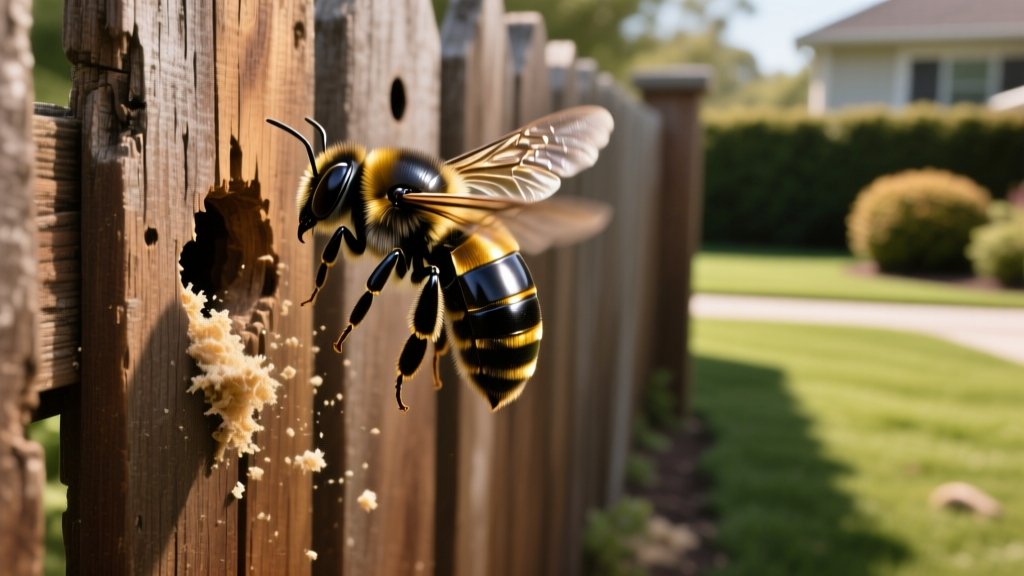
Getting Rid of Carpenter Bees: Effective Wood & Yard Defense Tactics
Carpenter bees (Xylocopa species) are solitary insects that excavate perfectly circular, half-inch diameter tunnels into untreated wood to lay their eggs. While they are vital pollinators for your garden flora, their nesting habits pose a severe structural threat to wooden decks, pergolas, fascia boards, and fence posts. Getting rid of carpenter bees requires a strategic approach that targets the hidden gallery system without simply killing the foraging adults, which does nothing to stop the next generation from emerging.
Identifying the Threat: Carpenter Bees vs. Bumblebees
Homeowners frequently mistake carpenter bees for bumblebees due to their similar size and black-and-yellow coloration. Misidentification leads to ineffective treatment, as bumblebees nest in the ground and are generally non-destructive to woodwork. Use the comparison matrix below to confirm your pest before applying any chemical controls.
| Feature | Carpenter Bees (Xylocopa) | Bumblebees (Bombus) |
|---|---|---|
| Abdomen Appearance | Shiny, hairless, metallic black | Fuzzy, covered in dense yellow/black hairs |
| Nesting Location | Untreated wood, eaves, deck rails | Underground burrows, abandoned rodent holes |
| Entry Hole | Perfectly round, 1/2-inch diameter | No wood entry holes; soil mounds |
| Aggression Level | Low (males lack stingers; females rarely sting) | Moderate (will defend ground nests aggressively) |
| Sawdust Presence | Coarse sawdust piles directly beneath holes | None |
The Damage Profile: What Structural Excavation Looks Like
Carpenter bees do not consume wood; they mill it. A single female uses her mandibles to chew through the wood grain, creating a primary tunnel that typically extends 6 to 10 inches deep. According to University of Kentucky Entomology, these primary galleries often branch into multiple secondary chambers where individual eggs are provisioned with pollen balls.
Warning: The Woodpecker Multiplier Effect
The most expensive damage caused by carpenter bees is often indirect. Woodpeckers actively hunt carpenter bee larvae hidden inside the galleries. A single woodpecker can tear apart a cedar fascia board or deck railing to reach the larvae, causing hundreds of dollars in cosmetic and structural damage that far exceeds the bee's original excavation.
Step-by-Step Eradication: Getting Rid of Carpenter Bees
Liquid sprays are largely ineffective for deep nest eradication because they soak into the wood grain and fail to reach the rear of the gallery. The industry standard for getting rid of carpenter bees is the application of a desiccant or residual insecticide dust.
Phase 1: Targeted Dust Application
- Time the Treatment: Apply treatments at dusk or after dark. Carpenter bees return to their roosts at night and are highly docile in low light, significantly reducing the risk of being stung.
- Select the Right Product: Use a waterproof insecticidal dust like Delta Dust (active ingredient: deltamethrin 0.05%) or Drione Dust. As of 2026, a 1-pound bottle of Delta Dust costs between $22 and $28 and is sufficient to treat dozens of nests.
- Apply with a Bulb Duster: Fill a specialized rubber bulb duster no more than one-third full. Insert the metal tip directly into the half-inch entry hole and puff 2 to 3 bursts of dust deep into the gallery. The dust will coat the tunnel walls and the bees' bodies as they move through the nest.
Phase 2: The Waiting Period
Do not plug the holes immediately. Leave the entry holes open for 48 to 72 hours. This allows foraging bees to return, track the dust into the deeper brood chambers, and eliminate the developing larvae. Plugging the hole too early traps the adults outside and forces them to simply chew a new entry hole inches away.
Phase 3: Sealing and Repair
After the 72-hour window, seal the entry holes to prevent future bees from reusing the existing galleries.
- Best Method: Insert a 1/2-inch wooden dowel rod coated in exterior wood glue, then cut it flush with a handsaw.
- Alternative: Use a high-quality exterior polyurethane wood putty.
- What to Avoid: Never use steel wool to plug holes. Steel wool will absorb moisture, rust, and create severe, permanent black stains on cedar and redwood.
Preventative Wood Treatments & Yard Defense
Eradication only solves the immediate problem. Long-term yard defense requires altering the physical properties of the wood to make it unappealing to nesting females. Research from NC State Extension confirms that carpenter bees heavily prefer untreated, unpainted softwoods like cedar, cypress, and pine.
- Paint vs. Stain: A thick coat of exterior alkyd or acrylic latex paint is the most effective deterrent. Carpenter bees will rarely attempt to chew through a solid paint film. Transparent or semi-transparent stains offer virtually zero protection against excavation.
- Polyurethane Topcoats: If you wish to maintain the natural grain of your cedar deck or pergola, apply two to three heavy coats of exterior-grade spar polyurethane. The hardened resin barrier is too tough for their mandibles to penetrate efficiently.
- Botanical Repellents: For a non-toxic, short-term deterrent, spray a mixture of water and pure citrus oil or almond oil around eaves and fence rails. The strong volatile compounds mask the scent of the wood and deter initial scouting, though this requires reapplication every 10 to 14 days during peak spring activity.
Decision Framework: DIY vs. Professional Extermination
Determining whether to handle the infestation yourself or hire a licensed pest control operator depends on the height of the nests and the extent of the damage.
When to DIY: If the nests are located on accessible fence posts, ground-level deck railings, or shed trim, and you have fewer than 15 visible entry holes. Total material cost will remain under $50, and the process takes less than an hour.
When to Call a Professional: If the bees are nesting in second-story fascia boards, steep roof eaves, or structural support beams where ladder work poses a fall risk. Professional extermination for a standard residential perimeter and eave treatment typically ranges from $175 to $350 in 2026. Professionals utilize micro-encapsulated residual sprays (like Cyzmic CS) applied via pressurized extension poles, ensuring complete coverage of high-risk architectural overhangs without the need for scaffolding.
Frequently Asked Questions
Will filling the holes with caulk kill the bees inside?
No. If you seal the hole while a female is inside, she will simply chew her way out, often creating a larger, more jagged exit hole that causes more structural damage. Always apply an insecticidal dust and wait three days before sealing.
Do carpenter bee traps actually work?
Wooden trap boxes with angled entry holes can catch foraging males and some females, but they are a supplementary tool, not a primary eradication method. Traps do not eliminate the larvae developing inside your existing structural wood. Use traps as a monitoring tool in early spring to gauge population density before the main nesting season begins.
Are male carpenter bees dangerous?
Male carpenter bees are highly territorial and will aggressively fly directly at your face or hover near pets to defend their nesting sites. However, males lack a stinger and are physically incapable of stinging. Only the females possess a stinger, and they are generally docile unless physically grabbed or crushed.

