
Pest Control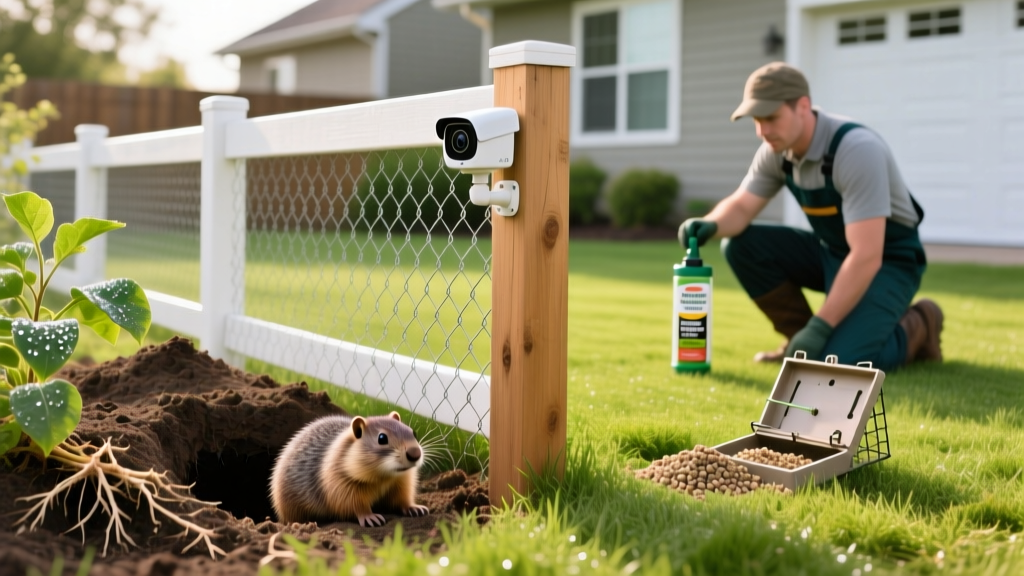
Getting Rid of Groundhogs: Fencing, Repellents, and Trapping Guide
Understanding Groundhog Excavation and Damage Patterns
Groundhogs (Marmota monax), frequently called woodchucks, are highly efficient excavators that can move up to 35 cubic feet of dirt when digging a single burrow system. Before implementing any deterrent strategy, you must understand the physical footprint of their tunnels. A mature groundhog burrow features a main entrance measuring 10 to 12 inches in diameter, often marked by a large mound of excavated soil. However, the true danger to your landscape lies in the secondary exits, known as plunge holes, which measure only 2 to 4 inches wide and are often hidden beneath dense vegetation or deck lattices.
Tunnels typically descend 2 to 4 feet below the frost line and can extend laterally up to 60 feet. This depth allows them to bypass shallow root barriers and undermines structural foundations, patios, and retaining walls. According to Penn State Extension, groundhogs cause significant agricultural and residential damage primarily during their peak foraging months of May through August, consuming up to 1.5 pounds of vegetation daily.
⚠️ Legal Warning Regarding Relocation: Before setting any live traps, consult your state wildlife agency. In many jurisdictions, groundhogs are classified as rabies vector species. Relocating them across county lines or releasing them on public lands is strictly illegal without a special permit. Euthanasia or on-site release (if permitted) are often the only legal options for captured animals.
The Exclusion Framework: Fencing That Actually Works
Standard chicken wire and decorative garden fences will not stop a groundhog. They possess powerful claws designed for deep excavation and are surprisingly adept climbers. To permanently exclude them, you must construct a physical barrier utilizing the "L-footer" and "floppy-top" engineering principles.
Material Specifications
- Wire Type: 16-gauge, 1/2-inch by 1/2-inch galvanized hardware cloth. Do not use chicken wire; groundhogs can easily chew through or bend it.
- Height: Minimum 4 feet above grade.
- Posts: 4x4 treated timber or heavy-duty steel T-posts spaced no more than 6 feet apart.
Installation Protocol
- Dig the Trench: Excavate a trench 12 inches deep and 12 inches wide along the perimeter of the area you are protecting.
- Create the L-Footer: Bend the bottom 12 inches of the hardware cloth at a 90-degree angle so it points outward, away from the garden. Bury this horizontal section in the trench and backfill with compacted soil. When a groundhog digs down at the fence line, they will hit the wire but lack the cognitive ability to back up and dig further out.
- Secure the Vertical Section: Attach the remaining 3 feet of wire to your posts.
- Install the Floppy Top: Leave the top 12 inches of the hardware cloth unattached to any post. Angle it outward at a 45-degree angle. When a groundhog climbs the fence, the unsupported wire will bend backward under their weight, dropping them safely outside the perimeter.
Sensory Deterrents: Repellents and Habitat Modification
While fencing provides a 100% physical barrier, repellents serve as a secondary line of defense for open properties where fencing is cost-prohibitive. Groundhogs rely heavily on their olfactory and gustatory senses to locate food and detect predators.
Chemical and Organic Repellents
Capsaicin-based liquid repellents are highly effective when applied directly to foliage. Products like Miller Hot Sauce Animal Repellent (retailing around $30 for 32 oz) utilize concentrated capsaicin to create an unbearable burning sensation on the groundhog's palate. Apply using a pump sprayer in the early evening, ensuring coverage on the underside of leaves. Reapplication is mandatory after any rainfall exceeding 0.25 inches.
For soil and perimeter treatment, castor oil-based granular repellents (such as Bonide Mole & Gopher Repellent) alter the scent and taste of the root zones, signaling to the groundhog that the area is inhospitable. Apply at a rate of 1 lb per 1,000 square feet and water in deeply to activate the ricinoleic acid.
Habitat Modification
Groundhogs require dense cover near their burrow entrances to feel secure from aerial predators like hawks and coyotes. Eliminate brush piles, tall weeds, and overgrown shrubbery within a 30-foot radius of any known burrow. Maintaining a manicured, short-grass perimeter forces them to cross exposed terrain, significantly increasing their stress levels and encouraging them to abandon the site.
Live Trapping Protocols for Relocation
If exclusion and repellents fail, live trapping is the most definitive method for getting rid of groundhogs. The industry standard for this species is the Havahart 1081 (10" x 12" x 32"), which provides enough length for the animal to fully enter and trigger the plate without backing out.
The Pre-Baiting Strategy
Groundhogs are highly neophobic (fearful of new objects). Placing a set trap directly at the burrow will result in failure. You must condition them to the trap using a 3-day pre-baiting protocol:
- Day 1: Wire the trap doors open. Place high-value bait (cantaloupe chunks or sweet corn) just inside the entrance. Allow them to eat and leave safely.
- Day 2: Move the bait deeper into the trap, directly in front of the trigger plate. Leave doors wired open.
- Day 3: Remove the wire ties, set the trigger mechanism, and place the bait directly on the pan. Position the trap 3 to 5 feet from the main burrow entrance.
Once captured, immediately cover the trap with a heavy towel or blanket. Depriving the groundhog of visual stimuli drastically reduces its heart rate and prevents it from damaging its teeth and snout by gnawing on the wire mesh in a panic.
Method Comparison Matrix
| Deterrent Method | Initial Cost (Est.) | Longevity | Labor Intensity | Success Rate |
|---|---|---|---|---|
| L-Footer Hardware Cloth Fencing | $8 - $12 per linear ft | 10 - 15 Years | High (Trenching) | 98% |
| Capsaicin Foliar Repellents | $30 - $45 per acre | 2 - 4 Weeks | Low (Spraying) | 60% - 75% |
| Castor Oil Soil Granules | $20 - $30 per 10lb bag | 4 - 6 Weeks | Medium (Spreading) | 50% - 65% |
| Live Trapping (Havahart 1081) | $60 - $80 per trap | 5+ Years | High (Monitoring) | 85% (with pre-baiting) |
Filling and Securing Abandoned Burrows
Simply shoveling topsoil into a groundhog hole is ineffective; the animal (or a new tenant like a skunk or snake) will easily dig it back out. To permanently close a burrow system, you must use structural fill.
- Wait until late fall (November) when the groundhog is in deep hibernation, or ensure the burrow is completely abandoned in the summer.
- Use a long crowbar or soil probe to map the direction of the main tunnel.
- Dig out the first 2 feet of the tunnel entrance.
- Fill the excavated void and the tunnel entrance with 3/4-inch crushed gravel. Groundhogs despise digging through sharp, loose stone as it collapses and injures their claws.
- Cap the final 6 inches with a mixture of topsoil and quick-setting concrete, tamping it down firmly to match the surrounding grade.
Frequently Asked Questions
Do ultrasonic groundhog repellents work?
No. Independent studies by university extension programs, including the University of Maryland Extension, have consistently shown that ultrasonic devices and vibrating stakes have zero statistically significant impact on groundhog behavior. They quickly habituate to the noise and vibration, ignoring it entirely within 48 hours.
Can I use mothballs to drive them out of their burrows?
Using mothballs (naphthalene or paradichlorobenzene) outdoors is a violation of federal pesticide law. Not only is it illegal, but it is also highly ineffective. The porous nature of soil allows the fumes to dissipate rapidly, and the toxic chemicals will leach into your groundwater, posing severe risks to local wildlife, pets, and children.
What time of day are groundhogs most active?
Groundhogs are diurnal, meaning they are active during daylight hours. Their peak foraging times occur during the early morning (dawn to 9:00 AM) and late afternoon (4:00 PM to dusk). If you are monitoring live traps or applying liquid repellents, do so during the midday lull when they are resting deep inside their burrows.

