
Pest Control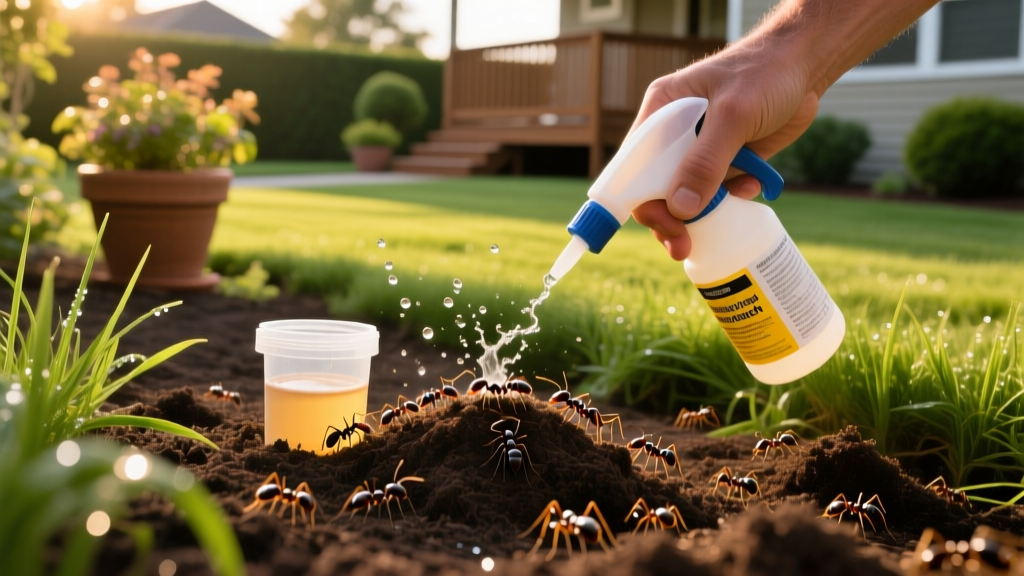
Getting Rid of Ants in the Yard: Baiting and Drenching
When tackling an ant infestation in your outdoor spaces, the approach must shift from reactive killing to strategic colony elimination. Getting rid of ants in the yard—particularly aggressive species like the Red Imported Fire Ant (RIFA) or persistent pavement ants—requires an understanding of their foraging behaviors and social structure. Broadcast contact sprays often exacerbate the problem by triggering colony budding. This guide details the precise chemical and biological protocols for reclaiming your turf in 2026, focusing on the industry-standard Two-Step Method and advanced organic alternatives.
The Biology of the Colony: Why Contact Sprays Fail
Many homeowners instinctively reach for fast-acting contact insecticides like bifenthrin or permethrin when they spot a mound. While these pyrethroids kill foraging workers on contact, they rarely reach the queen, who resides deep within the subterranean gallery. When a colony detects a sudden, massive die-off of its worker caste, it initiates a survival mechanism known as colony budding. The stressed queen produces multiple secondary queens, and the colony fractures into several smaller, satellite mounds scattered across your lawn. Instead of one large problem, you now have four smaller ones.
To effectively eradicate the colony, you must exploit trophallaxis—the process by which ants share food mouth-to-mouth and anus-to-mouth throughout the colony network. This biological vulnerability is the cornerstone of modern baiting strategies.
The Two-Step Method for Complete Eradication
Pioneered by entomologists and endorsed by the Texas A&M Fire Ant Project, the Two-Step Method remains the most cost-effective and environmentally sound strategy for large-scale yard defense.
Step 1: Broadcasting Slow-Acting Baits
Broadcast baits are formulated with a slow-acting active ingredient mixed into a palatable carrier (usually soybean oil and corn grits). Workers carry the bait deep into the mound and feed it to the larvae and queen. Because the active ingredient takes 3 to 14 days to kill, the colony does not recognize it as a threat.
- Advion Fire Ant Bait (0.04% Indoxacarb): Highly palatable and effective against pyrethroid-resistant strains. Apply at 1.5 lbs per acre using a broadcast spreader. Cost: ~$42 for a 1.5 lb jug.
- Amdro FireStrike (0.73% Hydramethylnon + 0.25% Methoprene): Combines a metabolic toxin with an insect growth regulator (IGR) that sterilizes the queen. Apply at 1.5 lbs per acre. Cost: ~$18 for a 3 lb bag.
Application Timing: Apply baits in the late afternoon or early evening during spring or fall. Ants forage most actively when soil surface temperatures are between 70°F and 85°F. Do not apply if rain is expected within 24 hours, as moisture ruins the bait matrix and renders it unpalatable.
Step 2: Targeted Mound Drenching for Immediate Threats
While baits handle the broader population, mounds located near high-traffic zones, HVAC units, or electrical boxes require immediate neutralization. Mound drenching involves mixing a liquid insecticide with water and pouring it directly into the nest galleries.
Mix 1 to 2 gallons of a Spinosad-based solution (such as Monterey Garden Insect Spray) or a fast-acting pyrethroid drench. Pour the mixture slowly over the mound, starting from the outer edges and working inward to prevent the ants from escaping through peripheral exit tunnels.
Organic and Pet-Safe Yard Defense
For households with pets or organic vegetable gardens integrated into the lawn space, synthetic IGRs and pyrethroids may be unacceptable. Biological controls offer a viable, albeit slower, alternative.
Beneficial Nematodes (Steinernema carpocapsae)
These microscopic, soil-dwelling roundworms actively seek out ant larvae and pupae. Once inside the host, they release symbiotic bacteria that kill the insect within 48 hours. Apply at a rate of 1 million nematodes per 1,000 square feet using a hose-end sprayer.
Crucial Edge Case: Nematodes are highly sensitive to UV light and desiccation. They must be applied in the evening or on an overcast day, and the soil temperature must be between 55°F and 85°F. The soil must be kept consistently moist (not saturated) for two weeks post-application to allow them to establish in the thatch layer.
Botanical Drenches and Diatomaceous Earth
Food-grade Diatomaceous Earth (DE) causes mechanical desiccation of the ant's exoskeleton. However, DE is strictly a contact barrier; once it gets wet from irrigation or dew, it loses efficacy until it dries out completely. For organic drenches, botanical oils like d-limonene (orange oil) can kill mounds on contact, but they lack residual control and do not prevent re-infestation from neighboring properties.
Cost and Efficacy Comparison Matrix
| Method | Active Ingredient | Cost per 1,000 sq ft | Time to Eradication | Pet Safety Profile |
|---|---|---|---|---|
| Broadcast Bait | Indoxacarb (Advion) | $0.65 | 7 - 14 Days | High (once incorporated) |
| Broadcast Bait | Hydramethylnon + IGR | $0.25 | 14 - 21 Days | High (once incorporated) |
| Mound Drench | Spinosad (Monterey) | $1.20 / mound | 24 - 48 Hours | Very High (Organic) |
| Biological | S. carpocapsae Nematodes | $3.50 | 14 - 30 Days | Absolute (Non-toxic) |
Preventative Cultural Controls
Eradication is only half the battle. Ants are heavily attracted to yards that provide consistent food and shelter. Implementing cultural controls disrupts their ability to establish new colonies.
- Eradicate Honeydew Producers: Ants "farm" aphids, scale insects, and mealybugs for their sugary honeydew excretions. If your ornamental trees or shrubs have black sooty mold, you likely have an aphid problem driving ant traffic. Treat the canopy with horticultural oil to cut off the ants' primary food supply.
- Manage Thatch Layers: Pavement ants and little black ants thrive in the microclimate of thick thatch (over 0.5 inches). Core aeration and regular dethatching remove their preferred nesting medium and improve soil drainage.
- Eliminate Moisture Vectors: Fix leaky irrigation heads and ensure downspouts divert water at least 4 feet away from the foundation. Carpenter ants and moisture ants require damp, decaying wood or saturated soil to establish satellite colonies near your home's perimeter. Look for "frass" (sawdust-like droppings) near baseboards to identify carpenter ant activity early.
Frequently Asked Questions
Will boiling water kill an ant mound?
Pouring 2 to 3 gallons of boiling water directly into the center of a mound will kill approximately 60% of the colony. However, it will also sterilize the soil and kill the turfgrass roots, leaving a dead patch in your lawn that requires reseeding. It is not recommended for high-quality turf or large-scale infestations.
How do I keep ants from entering my house from the yard?
Create a chemical barrier using a microencapsulated pyrethroid like Demand CS (Lambda-cyhalothrin). Spray a 3-foot band around the home's foundation and a 3-foot band extending outward into the soil. The microencapsulation protects the active ingredient from UV degradation, providing up to 90 days of residual defense against foraging scouts.
Are fire ant stings dangerous?
According to the EPA's guidelines on managing fire ants, RIFA stings inject a necrotic alkaloid venom (solenopsin) that causes raised, itchy pustules. Approximately 1% of the population is highly allergic and may experience anaphylaxis, making aggressive yard management a critical health and safety priority for families with young children.

