
Pest Control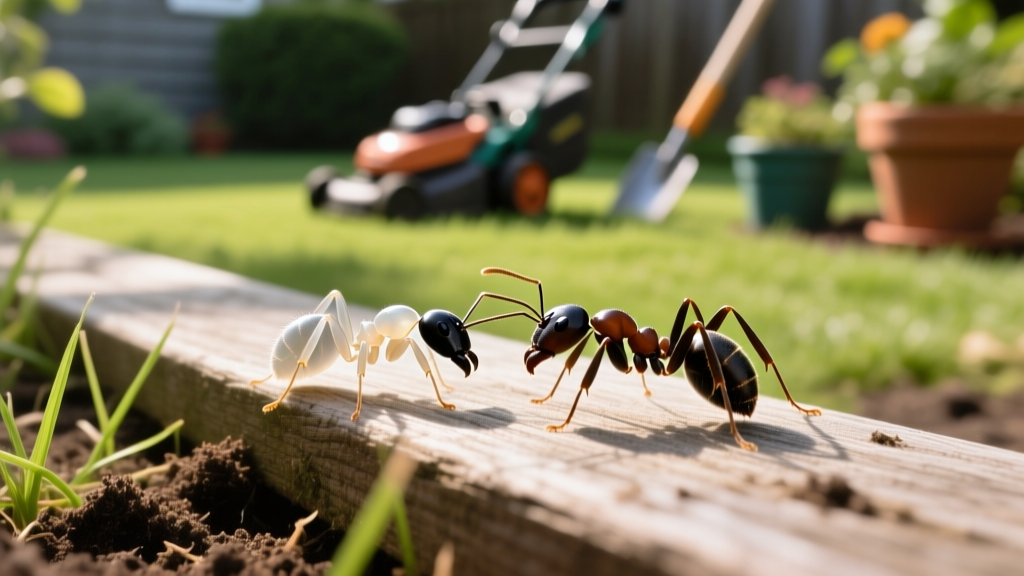
Ghost Ants vs Sugar Ants: Identification and Yard Defense
The Taxonomy Trap: What is a 'Sugar Ant' Really?
When homeowners spot tiny, sweet-foraging ants invading their patio or foundation, the immediate search is often for 'sugar ant' control. However, in the United States pest control industry, 'sugar ant' is a colloquial misnomer, not a scientific classification. The true Banded Sugar Ant (Camponotus consobrinus) is native exclusively to Australia. In North America, when you are comparing ghost ants vs sugar ants, you are actually comparing the Ghost Ant (Tapinoma melanocephalum) to the Odorous House Ant (Tapinoma sessile), which is the species most frequently labeled as a 'sugar ant' by US homeowners and local exterminators.
Understanding this taxonomic reality is critical for yard defense. Both species belong to the Tapinoma genus, meaning they share similar colony structures, reproductive habits, and vulnerabilities. However, their environmental preferences and physical identifiers dictate entirely different landscaping and perimeter treatment strategies.
Ghost Ants vs Sugar Ants: Visual and Behavioral Identification
Accurate identification prevents wasted money on ineffective baits. Ghost ants and odorous house ants (US sugar ants) look distinctly different under magnification and behave differently when their trails are disturbed.
| Identification Feature | Ghost Ant (Tapinoma melanocephalum) | Odorous House Ant (US 'Sugar Ant') |
|---|---|---|
| Size | 1.3 - 1.5 mm (Extremely tiny) | 2.4 - 3.3 mm (Small, but visibly larger) |
| Coloration | Dark brown head/thorax; milky white, translucent abdomen and legs | Uniform dark brown to black across entire body |
| Odor When Crushed | Faint or no distinct odor | Strong, pungent smell of rotting coconut or blue cheese |
| Trail Speed | Erratic, rapid, and jerky movements | Steady, deliberate, and organized single-file lines |
| Primary Diet | Sweets and high-moisture proteins | Sweets, honeydew, and dead insects |
According to the University of Florida IFAS Entomology Department, ghost ants are highly dependent on moisture, which is why their trails are frequently seen moving from irrigated mulch beds directly into the weep holes of brick foundations. In contrast, the Texas A&M Agrilife Extension notes that odorous house ants are more tolerant of dry soil and will often nest under flat stones, concrete pavers, and firewood stacks at the edge of the property.
The Danger of Colony Budding
⚠️ CRITICAL WARNING: Avoid Repellent Sprays
Both ghost ants and odorous house ants reproduce via a process called budding. Unlike carpenter ants that swarm to create new colonies, these species simply split their existing colony into multiple satellite nests when stressed. If you spray a standard over-the-counter repellent (like bifenthrin or permethrin) directly on a trail, the colony will detect the chemical barrier, panic, and bud into your home's walls or deeper into your yard's root systems. Never use repellent sprays for Tapinoma species.
Targeted Perimeter Treatment Protocols
Effective yard defense requires a two-pronged approach: a non-repellent liquid barrier to stop outward expansion, and slow-acting gel baits to eliminate the satellite nests hidden in your landscaping.
Step 1: The Non-Repellent Liquid Barrier
To secure the perimeter, use a suspended concentrate (SC) containing Fipronil, such as Termidor SC. Fipronil is undetectable to ants. They walk through it, pick it up on their tarsi, and carry it back to the nest, spreading it via trophallaxis (food sharing).
- Mixing Ratio: 0.8 fluid ounces of Termidor SC per 1 gallon of water.
- Application Zone: Spray 1 foot up the foundation and 1 foot out into the adjacent soil, mulch, or grass.
- Volume: 4 finished gallons will treat approximately 240 linear feet of perimeter.
- Cost: A 20 oz bottle of Termidor SC costs roughly $75 in 2026 and yields over 60 gallons of finished solution, making the cost per perimeter treatment under $5.
- Timing: Apply in the early morning or late evening when UV degradation is lowest. Do not apply if rain is forecast within 24 hours.
Step 2: Strategic Gel Baiting in the Yard
While the liquid barrier protects the house, gel baits eliminate the nests hiding in your potted plants, retaining walls, and mulch beds. For ghost ants and odorous house ants, the active ingredient Indoxacarb (found in Advion Ant Gel Bait) or Imidacloprid (found in Maxforce Quantum) yields the highest transfer rates.
- Locate active foraging trails along tree branches, fence lines, and foundation edges.
- Apply 3 to 5 small drops (about the size of a pea) every 10 feet directly adjacent to the trail. Do not apply the gel directly on top of the ants, as this will disrupt the trail and prevent them from carrying the bait back to the queen.
- Place baits on small pieces of cardboard or in commercial bait stations to prevent the gel from absorbing into porous concrete or drying out in the sun.
- Reapply every 3 days until foraging activity ceases completely. A 4-tube pack of Advion costs approximately $28 and is sufficient for severe yard infestations.
Landscaping Adjustments to Break the Trail
Chemical treatments will fail if the yard environment remains highly conducive to nesting. Modifying your landscaping removes the microclimates these ants require to thrive.
Moisture and Mulch Management
Ghost ants are practically aquatic in their nesting requirements. They thrive in hardwood mulch that retains heavy moisture. Switch to pine straw or cedar mulch, which dry out faster and contain natural repellent oils. Limit mulch depth to a maximum of 2 inches. Ensure your irrigation system's drip lines are not pooling water directly against the foundation. A $15 soil moisture meter can help you identify over-watered zones near the house that are acting as ghost ant incubators.
The 18-Inch Vegetation Rule
Both species use tree branches and shrubbery as aerial highways to bypass ground-level chemical barriers. Trim all foliage, branches, and vines so they are at least 18 inches away from the roofline, siding, and foundation. This forces the ants to forage at ground level, where your Fipronil barrier is active, rather than entering through second-story soffit vents.
Frequently Asked Questions
Do ghost ants or sugar ants cause structural damage to my home?
No. Unlike carpenter ants or termites, neither ghost ants nor odorous house ants chew or consume wood. They are strictly nuisance pests that invade structures to seek moisture, shelter, and carbohydrates. However, their ability to form massive, multi-queen supercolonies can result in thousands of ants inside wall voids, which can lead to secondary issues like moisture retention in insulation.
Why do my ant treatments work for a month and then fail?
Because of colony budding. If a treatment only kills 70% of the workers, the surviving queens will simply split the remaining population and establish a new nest 20 feet away in your yard. This is why slow-acting, non-repellent transfer products like Fipronil and Indoxacarb are mandatory. The poison must have time to circulate through the entire colony network before the workers die.
Can I use diatomaceous earth (DE) in the yard for these ants?
Food-grade diatomaceous earth is largely ineffective for outdoor yard defense against Tapinoma species. DE requires direct, dry contact to desiccate the insect's exoskeleton. In a yard environment, morning dew, irrigation, and rain will instantly neutralize the abrasive properties of the silica, rendering it useless as a perimeter barrier.
For comprehensive, long-term pest management strategies, the NC State Extension recommends integrating these chemical and cultural controls into a continuous seasonal maintenance schedule, focusing heavily on the spring and early fall when colony expansion is most aggressive.

