
Pest Control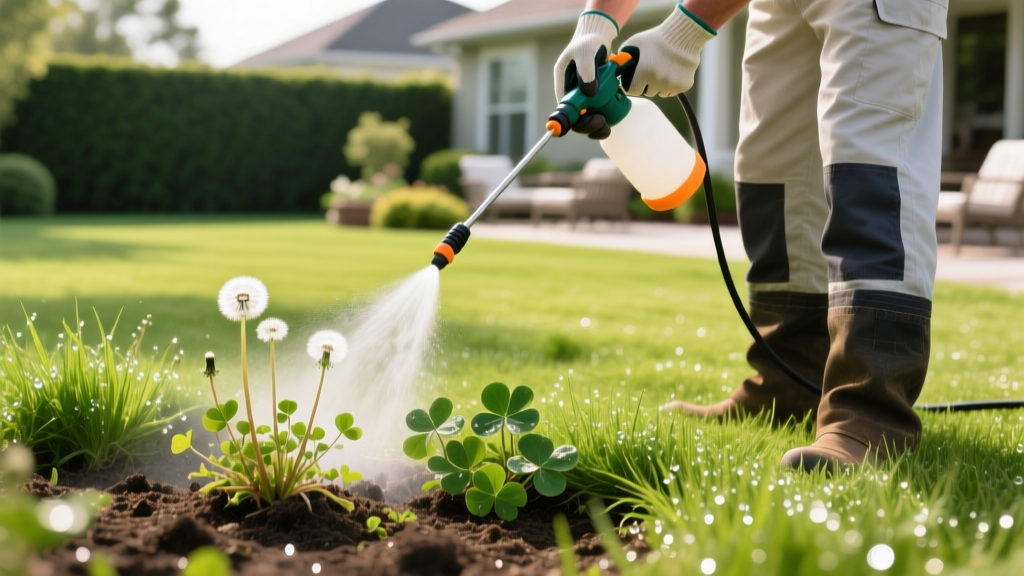
Glycophosphate Weed Killer: Spot-Treating Tough Lawn Weeds
The Reality of 'Glycophosphate' and Systemic Weed Control
Homeowners frequently search for a glycophosphate weed killer when battling invasive lawn species, though the correct chemical nomenclature is glyphosate (N-(phosphonomethyl)glycine). This non-selective, systemic herbicide remains the most effective tool for eradicating deep-rooted perennial weeds that survive standard selective broadleaf herbicides. Because it inhibits the EPSP synthase enzyme—effectively shutting down the plant's ability to synthesize essential amino acids—it kills the entire organism, from the leaf tip to the deepest rhizome.
However, its non-selective nature means it will destroy your desirable turfgrass upon contact. Therefore, broadcast spraying is never an option for lawn maintenance. Success relies entirely on precision spot-treatment protocols, proper surfactant integration, and strategic timing based on the target weed's life cycle.
⚠️ Critical Warning: Never use standard pump sprayers for spot-treating weeds near desirable turf on windy days. Even a 3 MPH breeze can cause micro-droplet drift, resulting in distinct yellow streaks across your fescue or bermudagrass. Always use a shielded applicator or wick system for lawn borders.
The Economics: Concentrate vs. Ready-To-Use (RTU)
Buying pre-mixed RTU glyphosate products from big-box stores is a massive financial drain for ongoing lawn care. A standard 32 oz RTU bottle costs roughly $6.50 and contains less than 2% active ingredient. By contrast, purchasing a professional-grade 41% glyphosate concentrate (such as Compare-N-Save or Ranger Pro) costs approximately $25 per gallon. When diluted at standard spot-treatment rates (1.5 oz per gallon of water), that single $25 jug yields over 85 gallons of finished solution, bringing your cost down to roughly $0.29 per gallon.
The Surfactant Requirement: Professional concentrates do not include built-in surfactants. You must add a Non-Ionic Surfactant (NIS) at a rate of 0.25% volume/volume (about 1/2 teaspoon per gallon). This breaks the surface tension of the water, allowing the herbicide to spread evenly across the waxy cuticle of tough weeds like wild violet or plantain rather than beading up and rolling off.
Target Weed Species & Spot-Treatment Protocols
Different weed architectures require different mixing ratios and application timings. Below are the exact protocols for the three most problematic lawn invaders.
1. Dallisgrass (Paspalum dilatatum)
Dallisgrass is a clumping, deep-rooted perennial grass that selective herbicides cannot touch without killing your surrounding lawn. Protocol: Mix 1.5 oz of 41% concentrate per gallon of water. Apply in late summer (August to early September) when the plant is actively pulling nutrients down into its root system for winter storage. Do not mow the dallisgrass for 48 hours before application; you need maximum leaf surface area to absorb the chemical. Expect complete browning in 7 to 10 days.
2. Field Bindweed (Convolvulus arvensis)
Bindweed's extensive rhizome network can reach depths of 20 feet. Spraying it when it is merely vegetative will only burn off the top growth, leading to rapid regrowth. Protocol: Increase the mix rate to 3.0 oz per gallon. Wait to apply until the bindweed has reached the early flowering stage. During flowering, the plant's vascular system is in maximum downward flow, pulling the glyphosate deep into the subterranean root crown. Adding 1 lb of ammonium sulfate to your spray tank per gallon of water will help overcome hard water ions and penetrate the bindweed's tough leaf cuticle.
3. Poison Ivy & Woody Brambles
Woody vines require the highest concentration and specific adjuvants to penetrate bark and thick cuticles. Protocol: Mix 4.0 oz per gallon. For poison ivy growing up tree trunks or fence lines, do not spray. Instead, use the 'cut-stump' method: sever the vine 2 inches above the soil line and immediately paint the freshly cut stump with a 50/50 mixture of glyphosate concentrate and water using a disposable foam brush. This delivers the chemical directly into the cambium layer, killing the root system without risking drift onto surrounding foliage.
Mixing Rates and Application Timelines
Use this reference matrix to calibrate your pump sprayer for specific lawn invaders. All rates assume a 41% active ingredient concentrate.
| Target Weed | Growth Stage | Mix Rate (per Gallon) | Surfactant Needed? | Days to Browning |
|---|---|---|---|---|
| Dallisgrass / Crabgrass | Active vegetative growth | 1.5 oz | Yes (NIS) | 5 - 7 days |
| Wild Violet / Ground Ivy | Pre-flowering | 2.0 oz | Yes (NIS) | 7 - 10 days |
| Field Bindweed | Early flowering | 3.0 oz | Yes + Ammonium Sulfate | 10 - 14 days |
| Poison Ivy / Woody Vines | Any (Cut-stump method) | 4.0 oz (or 50/50 paint) | No (for cut-stump) | 14 - 21 days |
Precision Application Techniques for Lawns
When treating weeds intermingled with desirable turfgrass, standard spray nozzles are a liability. Utilize these mechanical barriers to protect your lawn:
- The Cardboard Shield Method: Take a 2x2 foot piece of heavy corrugated cardboard and cut a 1-inch slit from the edge to the center. Slide the weed stem through the slit so the cardboard rests flat on the lawn, completely covering the surrounding turf. Spray the weed from directly above. This eliminates drift and overspray entirely.
- Rope Wick Applicators: For weeds that grow taller than your mowed lawn (like dallisgrass or crabgrass seed heads), use a rope wick applicator filled with a 5% glyphosate solution. Walk backward, dragging the saturated rope over the tops of the tall weeds. The chemical wipes directly onto the target weed without touching the lower-growing desirable turf.
- Precision Gel Formulations: For isolated weeds in flower beds or near the roots of ornamental trees, abandon liquid sprays entirely. Products like Roundup Precision Gel contain a thickened, 1% glyphosate matrix that you squeeze directly onto the leaf. It will not drip, volatilize, or splash onto nearby root zones.
Soil Interaction and Lawn Recovery Timelines
A common misconception among homeowners is that glyphosate leaves toxic residual in the soil, preventing future grass growth. According to the United States Environmental Protection Agency (EPA), glyphosate binds tightly to soil particles (adsorption) upon contact, rendering it biologically inactive and incapable of being taken up by plant roots. Soil microbes subsequently break it down into aminomethylphosphonic acid (AMPA) and naturally occurring compounds.
Overseeding Protocol: You can safely overseed or lay new sod just 3 to 5 days after a glyphosate application. However, do not till or rake the dead weed debris into the soil immediately. Leave the dead thatch in place to act as a natural mulch for your new grass seed, protecting it from birds and retaining moisture. Once the new turf germinates, the dead weed material will decompose naturally.
Environmental and Safety Considerations
While highly effective, systemic herbicides require strict adherence to environmental best practices. The University of Minnesota Extension emphasizes that herbicide runoff is a primary concern near waterways. Never apply any weed killer within 10 feet of a storm drain, creek, or pond buffer. Furthermore, avoid application if rainfall is expected within 6 hours; the chemical requires approximately 30 to 60 minutes to penetrate the leaf cuticle and become rainfast. Washing off the leaves before translocation occurs will result in treatment failure and unnecessary chemical introduction into the watershed.
Frequently Asked Questions
Can I mix glyphosate with selective broadleaf herbicides like 2,4-D?
Yes, tank-mixing 2,4-D with a low dose of glyphosate (0.5 oz per gallon) creates a 'synergistic shock' that rapidly burns down the foliage while the 2,4-D translocates. However, this is only recommended for complete lawn renovations or non-turf areas, as the glyphosate will still kill your desirable grass.
Why did the weed turn yellow but not die completely?
This usually indicates one of three failure modes: 1) You mowed the weed too short before spraying, removing the necessary leaf surface for absorption. 2) The weed was under drought stress, causing its stomata to close and halting internal fluid movement. 3) You used hard water without adding ammonium sulfate, causing the glyphosate to bind to calcium ions in the water tank before it ever reached the plant.
Is it safe for pets to walk on the treated area?
Keep pets and children off the treated foliage until the liquid has completely dried (usually 2 to 4 hours depending on humidity). Once dry, the chemical is locked inside the plant tissue and poses negligible risk from incidental contact.

