
Pest Control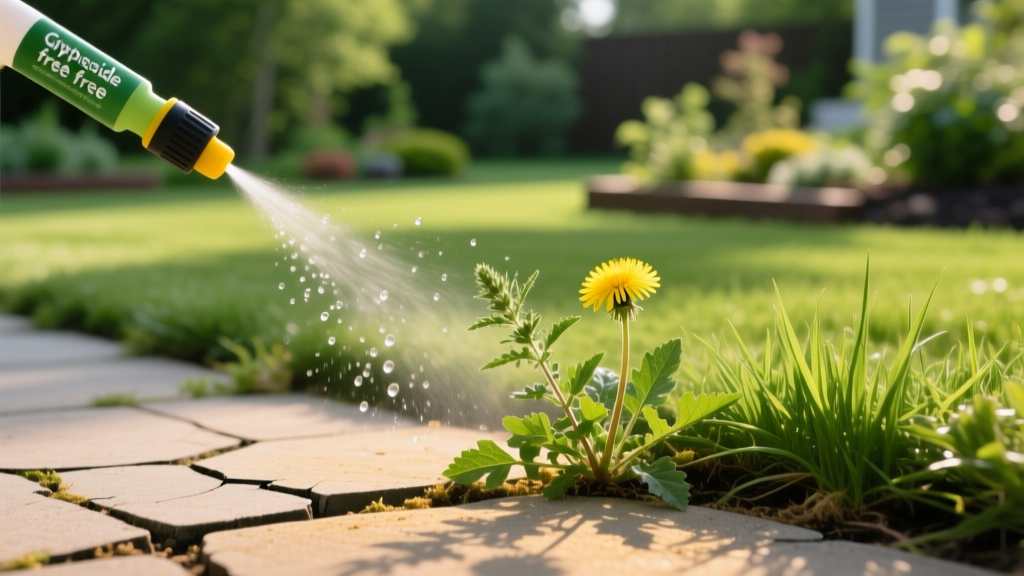
Best Glyphosate Free Weed Killer for Spot Treating Weeds
The Shift Toward Targeted, Non-Synthetic Weed Management
Managing weeds in a residential lawn without relying on systemic synthetic herbicides requires a fundamental shift in strategy. When you opt for a glyphosate free weed killer, you are trading the convenience of systemic root-kill for the environmental and health benefits of contact-based, biodegradable active ingredients. Spot treatment is the most effective delivery method for these alternatives, as broadcast spraying of non-selective organic herbicides will damage your turfgrass just as severely as it damages the weeds.
The primary challenge with organic and minimum-risk herbicides is that they lack translocation. Unlike glyphosate, which is absorbed through the leaves and travels down to the root system, alternative active ingredients work by destroying the cellular membranes of the foliage they touch. This causes rapid desiccation and necrosis of the leaf tissue, but leaves the root system intact. For annual weeds, this foliage burn-down is sufficient to kill the plant. For mature perennials with deep taproots—such as dandelions, plantain, or bindweed—spot treatment must be viewed as a multi-stage depletion process rather than a one-and-done application.
Active Ingredients: What Actually Works in 2026?
The market is saturated with ineffective "natural" weed killers that rely on 5% household vinegar or low-concentration essential oils. To achieve professional-grade burn-down on tough lawn weeds, you must select products with specific active ingredients at proven concentrations. According to the EPA's guidelines on minimum risk pesticides, these ingredients bypass standard federal registration due to their low toxicity profiles, but they still require strict adherence to application rates for efficacy.
Pelargonic Acid (Nonanoic Acid)
Pelargonic acid is a fatty acid naturally found in plants like geraniums. In herbicide formulations, it is typically concentrated between 5% and 57%. It works by dissolving the waxy cuticle of the leaf, causing the cells to leak and collapse within hours. It is highly effective on broadleaf weeds and young grassy weeds. Products containing 5% to 10% pelargonic acid are standard for home use, costing roughly $25 to $35 per 32-ounce ready-to-use bottle.
Horticultural Acetic Acid (20% to 30%)
Forget kitchen vinegar. Horticultural vinegar contains 20% to 30% acetic acid. At this concentration, it acts as a severe contact desiccant. It strips the protective foliar cuticle and rapidly drops the pH of the plant tissue, causing immediate browning. However, it is highly corrosive to human skin and eyes, requiring full personal protective equipment (PPE). A gallon of 20% acetic acid concentrate typically costs between $40 and $60 and must be diluted according to the manufacturer's label, usually at a 1:1 or 1:2 ratio with water.
D-Limonene (Citrus Oil) and Eugenol (Clove Oil)
These essential oil derivatives act as solvents that dissolve the waxy coatings on leaves. While they provide a pleasant scent and are highly effective on soft-tissue annual weeds (like chickweed or henbit), they struggle to penetrate the thick, waxy cuticles of mature broadleaf weeds like plantain or purslane without the heavy addition of surfactants.
Comparative Matrix: Organic Spot-Treatment Herbicides
| Active Ingredient | Mode of Action | Speed of Kill | Best Target Weeds | Avg. Cost (2026) |
|---|---|---|---|---|
| Pelargonic Acid (5-10%) | Cell membrane disruption / desiccation | 2 to 4 hours | Dandelions, clover, young crabgrass | $25 - $35 / 32oz RTU |
| Acetic Acid (20%) | Extreme pH drop / cuticle stripping | 1 to 3 hours | Thistle, mature broadleaf weeds | $40 - $60 / Gallon Conc. |
| D-Limonene (Citrus Oil) | Solvent action / wax dissolution | 12 to 24 hours | Chickweed, henbit, spurge | $20 - $30 / 32oz RTU |
| Eugenol (Clove Oil) | Cellular leakage / tissue burn | 12 to 24 hours | Moss, soft annual weeds | $25 - $40 / 32oz RTU |
Step-by-Step Spot Treatment Protocol
Success with a glyphosate free weed killer relies heavily on application technique. Follow this protocol to maximize foliage burn-down while protecting your surrounding turfgrass.
- Timing and Weather Check: Apply only when temperatures are between 65°F and 85°F. Avoid spraying when humidity is below 30%, as the droplets will evaporate before penetrating the leaf cuticle. Ensure no rain is forecast for at least 12 hours post-application (though pelargonic acid becomes rainfast in roughly 2 hours).
- Mix the Surfactant: Organic herbicides naturally bead up on waxy leaves. You must add a non-ionic surfactant or methylated seed oil (MSO) to your tank mix. Add 0.5 ounces of surfactant per gallon of herbicide solution. This reduces surface tension, allowing the liquid to spread evenly across the weed's foliage rather than rolling off onto the soil.
- Equip Proper PPE: If using 20% acetic acid or high-concentration pelargonic acid, wear nitrile gloves, long sleeves, and ANSI-approved splash goggles. These concentrates will cause severe, immediate corneal damage if splashed into the eyes.
- Calibrate for Spot Spraying: Use a 1-gallon or 2-gallon pressurized pump sprayer equipped with a pin-point nozzle or a shielded spray hood. Do not use a fan nozzle, which creates drift that will burn the tips of your desirable turfgrass.
- Saturate the Foliage: Spray the weed until the leaves are uniformly wet and dripping. Do not just mist the top of the canopy; ensure the undersides of the leaves and the central growth crown are thoroughly coated.
- Schedule Follow-Up: For perennial weeds, inspect the treated area 5 to 7 days later. The original foliage will be dead, but the taproot will likely push up new, small shoots. Reapply the herbicide to the new growth immediately to continue depleting the root's energy reserves.
Warning: Soil pH and Reseeding Timelines
If you are using high-concentration acetic acid (vinegar) for spot treatment, be aware that heavy overspray can temporarily lower your soil pH, creating an acidic environment that inhibits turfgrass seed germination. If you plan to overseed the treated bare spots, wait at least 14 days after an acetic acid application, and apply a light dusting of pelletized lime to neutralize the soil. Pelargonic acid, conversely, breaks down rapidly in the soil and leaves no residual pH impact; you can safely sow grass seed 24 to 48 hours after a pelargonic acid application.
Troubleshooting Common Failure Modes
Homeowners frequently abandon organic weed control after a single failed attempt, assuming the products do not work. In reality, failure is almost always due to one of three correctable mistakes.
1. Treating Weeds in Drought Stress
When weeds are drought-stressed, they physically adapt by thickening their waxy leaf cuticle to retain moisture and closing their stomata. If you spray a glyphosate free weed killer on a drought-stressed plant, the active ingredient will sit on the surface and fail to penetrate. Always water your lawn deeply 24 hours before applying contact herbicides to ensure the weeds are actively growing and their cuticles are permeable.
2. Ignoring the Growth Crown
Broadleaf weeds like plantain grow from a central crown situated at or just below the soil line. If your spray only covers the upper leaves and misses the central crown, the weed will rapidly regenerate from the untouched meristematic tissue. Angle your spray wand downward to ensure the base of the plant is saturated.
3. Using Inadequate Concentrations
As noted by researchers at the University of Minnesota Extension, household vinegar (5% acetic acid) is largely ineffective on mature weeds and requires massive, soil-damaging volumes to achieve partial control. Always verify that your product contains at least 20% acetic acid or a minimum of 5% pelargonic acid to ensure commercial-level efficacy.
Frequently Asked Questions
Will glyphosate free weed killers kill my grass?
Yes. Most effective organic herbicides are non-selective contact burn-downs. If you spray pelargonic acid or 20% acetic acid directly onto your Bermuda, Kentucky Bluegrass, or Fescue, it will burn and kill the grass blades it touches. This is why spot-treating with a shielded nozzle or a paint-on applicator sponge is critical for lawn applications.
How many times do I need to spray a dandelion?
Because these products do not translocate to the root, a mature dandelion will typically require 2 to 4 applications spaced 7 to 10 days apart. You must consistently burn off the new regrowth before it can photosynthesize and rebuild the taproot's carbohydrate reserves.
Are these products safe for pets?
Once the liquid has completely dried on the foliage, pelargonic acid and essential oil-based herbicides are generally safe for pets to walk on. However, the wet concentrates (especially 20% acetic acid) are highly irritating to paw pads and mucous membranes. Keep pets off the treated area until the spray is fully dry, usually within 1 to 2 hours depending on humidity.

