
Pest Control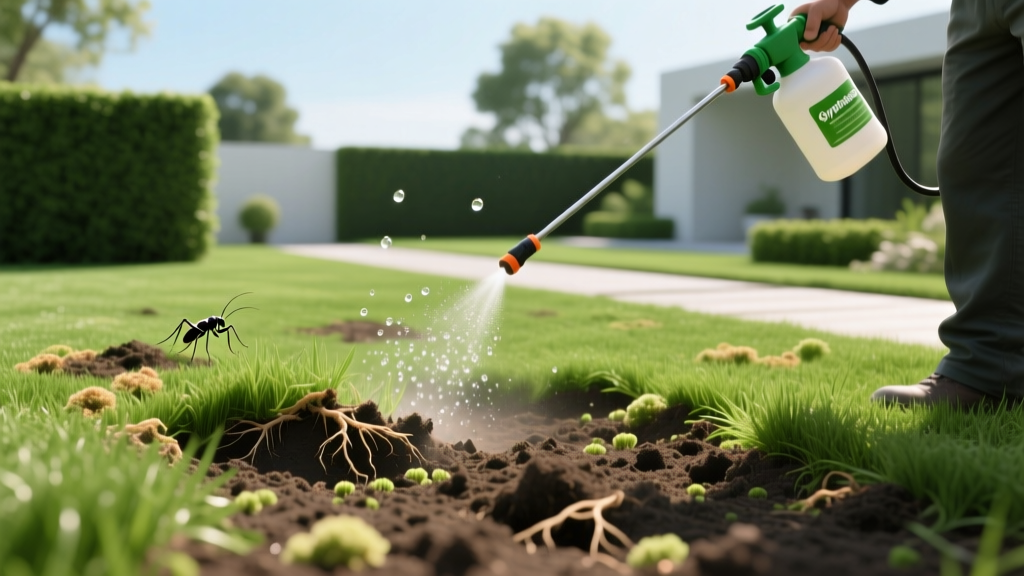
How Glyphosate Herbicide Alters Soil Nutrition & Recovery
The Hidden Cost of Weed Control: Glyphosate’s Soil Signature
Most homeowners and even many lawn care professionals treat weed control and soil nutrition as entirely separate disciplines. The standard approach is simple: spray the weeds, wait a week, and then apply fertilizer. However, when your pest management strategy relies heavily on glyphosate herbicide, the chemical interacts directly and aggressively with your soil's nutritional profile. Understanding this interaction is critical for maintaining turf density, color, and long-term soil health.
Glyphosate (N-(phosphonomethyl)glycine) is a broad-spectrum systemic herbicide widely used to clear unwanted vegetation before seeding or to manage stubborn perennial weeds in landscape beds and hardscape cracks. While the Environmental Protection Agency (EPA) notes that glyphosate breaks down in the environment, its intermediate breakdown phase and its fundamental chemical properties create a temporary but severe disruption in soil nutrient availability and microbial cycling.
The Chelation Mechanism: Why Your Fertilizer Isn't Working
Before it was patented as a herbicide in 1974, glyphosate was actually patented in 1964 as a chelating agent—a chemical designed to bind to and remove minerals from pipes. When glyphosate enters the soil profile through runoff, root exudation from dying weeds, or overspray, it acts as a powerful chelator. It binds tightly to essential soil micronutrients, specifically manganese (Mn), iron (Fe), zinc (Zn), and copper (Cu).
Once chelated by glyphosate, these minerals form stable, insoluble complexes that turfgrass roots cannot absorb. This leads to a phenomenon known as "nutrient lockout." You might be applying premium granular fertilizers loaded with micronutrients, but if the soil is saturated with residual glyphosate, those nutrients remain chemically trapped.
⚠️ The Phantom Deficiency Trap: Homeowners frequently misdiagnose glyphosate-induced manganese and iron lockout as a nitrogen deficiency. They respond by applying more high-nitrogen NPK fertilizers, which forces rapid, weak, and pale top-growth without resolving the underlying chlorosis (yellowing). If your lawn is yellowing shortly after a heavy glyphosate application nearby, suspect micronutrient lockout before adding more nitrogen.
Soil Microbiology and Nutrient Cycling Disruption
Beyond direct chemical chelation, glyphosate herbicide fundamentally alters the soil food web. The chemical is exuded from the roots of treated weeds into the rhizosphere for up to two weeks before the plant fully dies. During this window, it acts as an unintended antimicrobial agent.
Research highlighted in USDA soil health assessments emphasizes the importance of microbial diversity for nutrient cycling. Glyphosate specifically suppresses beneficial Pseudomonas bacteria and mycorrhizal fungi. These organisms are responsible for solubilizing phosphorus and protecting roots from soil-borne pathogens. When their populations crash, natural nitrogen cycling slows, and opportunistic pathogens like Fusarium can temporarily thrive, increasing the risk of root rot in newly seeded or stressed turf.
Nutrient Lockout Timeline and Recovery Matrix
The severity and duration of nutrient lockout depend heavily on your soil's cation exchange capacity (CEC), organic matter content, and pH. Sandy soils with low organic matter will experience rapid leaching but acute short-term lockout, while heavy clay soils will bind the glyphosate, prolonging the chelation effect. Use the matrix below to guide your remediation strategy.
| Target Nutrient | Lockout Severity | Typical Recovery Time | Best Remediation Strategy |
|---|---|---|---|
| Manganese (Mn) | High | 30–60 Days | Foliar Manganese Sulfate (2 oz/1000 sq ft) |
| Iron (Fe) | Moderate | 14–30 Days | EDDHA-Chelated Liquid Iron (3 oz/1000 sq ft) |
| Zinc (Zn) | Low-Moderate | 45–90 Days | Zinc EDTA Soil Drench |
| Phosphorus (P) | Indirect (Microbial) | 60+ Days | Mycorrhizal Fungi Inoculant |
The 2026 Soil Recovery Protocol Post-Glyphosate
If you have used glyphosate herbicide for spot treatments, edging, or pre-seed burndown, implementing a targeted soil recovery protocol is non-negotiable for maintaining high-performance turf. Here is the exact, step-by-step methodology used by professional agronomists to neutralize residual effects and restore soil biology.
- Wait 14 Days Post-Application: Do not apply granular fertilizers or soil amendments immediately after spraying. Allow the glyphosate to fully translocate through the target weeds and begin its initial soil-binding phase. Applying humic acids too early can interfere with the herbicide's efficacy on the weeds.
- Apply Liquid Humic and Fulvic Acids: Humic substances act as a sacrificial sponge, binding to residual glyphosate molecules and pulling them away from soil minerals. Apply a high-quality liquid humic acid like N-EXT Humic12 at a rate of 3 oz per 1,000 square feet. A 32 oz bottle costs approximately $35 and covers over 10,000 sq ft. Water it in deeply with at least 0.25 inches of irrigation to drive it into the root zone.
- Inoculate with Soil Microbes: To rebuild the suppressed Pseudomonas and fungal networks, apply a biological inoculant. Products like Holganix Bio 800+ (priced around $120 per gallon, mixed at 1.5 oz per 1,000 sq ft) introduce over 800 species of beneficial soil microbes that accelerate the biodegradation of the herbicide and restore natural nutrient cycling.
- Utilize Foliar Feeding for Micronutrients: Because the soil pathway for iron and manganese is temporarily blocked, bypass the soil entirely. Apply a liquid foliar iron supplement containing EDDHA chelation (which is highly stable and resistant to glyphosate interference) directly to the grass blades. This guarantees immediate greening without wasting product in the locked soil matrix.
💡 Pro Tip for Clay Soils: If you are managing heavy clay soils, glyphosate binds much more aggressively to clay particles, extending its half-life. In these environments, increase your liquid humic acid application rate by 25% and consider a mild liquid aeration product containing ammonium lauryl sulfate to physically open the soil profile and encourage microbial breakdown.
"The biggest mistake lawn care operators make is viewing glyphosate as a 'clean slate' chemical. It leaves a profound chemical and biological footprint. The turf that wins in the long run is the one that receives immediate biological remediation, not just a fresh coat of synthetic nitrogen." — Dr. Aaron Hathaway, Soil Agronomist
Frequently Asked Questions
Does glyphosate persist in the soil long-term?
According to EPA data, the half-life of glyphosate in soil ranges widely from 2 to 197 days, depending heavily on soil composition, temperature, and microbial activity. In a healthy, biologically active lawn with regular organic matter inputs, it typically breaks down into harmless aminomethylphosphonic acid (AMPA) within 30 to 45 days. However, in sterile, compacted, or heavy clay soils, the chelation effects can linger for several months.
Can I fertilize my lawn immediately after spraying weeds with glyphosate?
You should avoid applying granular NPK fertilizers for at least 7 to 14 days after a glyphosate application. Applying fertilizer too early can stimulate new weed growth before the herbicide has fully killed the existing root system, and the glyphosate will immediately chelate the micronutrients in your fertilizer, rendering them useless to your turfgrass. Focus first on weed eradication, then transition to biological soil recovery.

