
Pest Control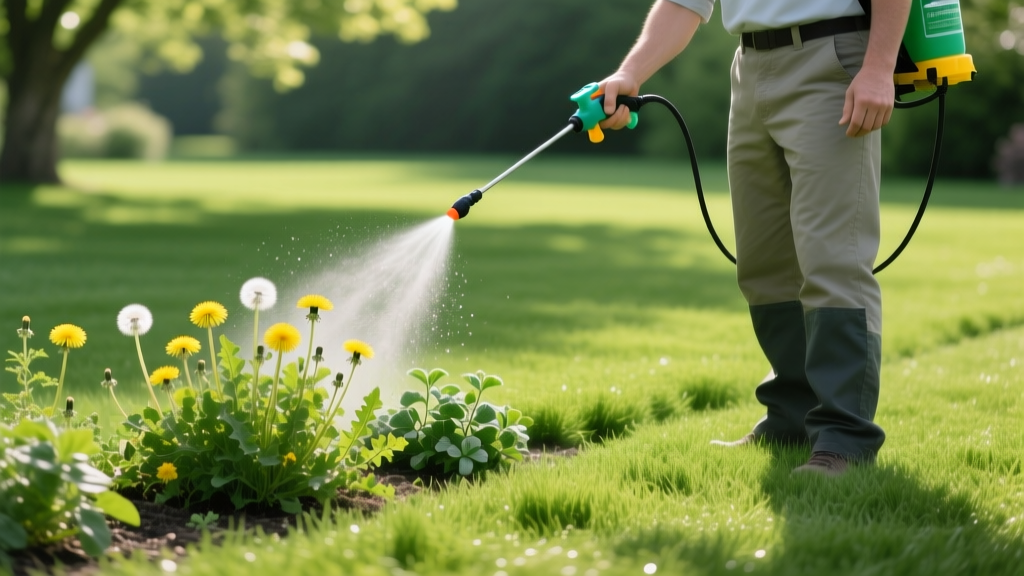
Targeted Spot-Treatment Using a Glyphosate Herbicide Weed Killer
The Non-Selective Challenge: Why Precision Matters
Glyphosate is a systemic, non-selective herbicide. This means it does not distinguish between a stubborn dallisgrass weed and your prized Kentucky bluegrass. When a glyphosate herbicide weed killer contacts any green plant tissue, it is absorbed and translocated down to the roots, effectively killing the entire plant. While this makes it incredibly effective for eradicating deep-rooted perennial weeds, it also poses a severe risk to your desirable turf if applied carelessly.
Spot-treatment is the art of applying the herbicide exclusively to the target weed. Broadcast spraying is never acceptable in an established lawn. To succeed, you must combine the correct chemical formulation with precision application equipment and optimal environmental conditions. According to the U.S. Environmental Protection Agency (EPA), proper handling and targeted application not only protect your lawn but also minimize environmental runoff and non-target exposure.
Drift Warning: Never apply glyphosate when wind speeds exceed 5 mph. Even a light breeze can carry microscopic droplets (particle drift) onto adjacent desirable grass, causing severe yellowing and localized turf death.
Selecting the Right Formulation for Lawn Spot-Treatment
Walk into any garden center, and you will see dozens of glyphosate products. Most consumer 'Ready-to-Use' (RTU) wands contain only 1% to 2% active ingredient. While convenient, they are economically inefficient for treating multiple weeds and often lack the surfactant load required to penetrate waxy weed cuticles. For professional-grade spot-treatment, purchase a concentrated agricultural or commercial landscape formulation.
| Formulation Type | Active Ingredient | Best Use Case | 2026 Avg. Cost |
|---|---|---|---|
| 41% Concentrate (e.g., Ranger Pro) | 41.0% | General lawn spot-treatment, mixed at 1.5 oz/gal | $45 - $55 / 2.5 gal |
| 50.2% Concentrate (e.g., Roundup Pro Max) | 50.2% | Tough perennials, nutsedge, requires lower mix rate | $70 - $85 / 2.5 gal |
| Ready-to-Use (RTU) Wands | 1.0% - 2.0% | Single isolated weeds in driveway cracks | $12 - $18 / 1.33 gal |
Pro Tip: If your chosen 41% concentrate does not include a built-in surfactant, you must add a Non-Ionic Surfactant (NIS) at a rate of 0.25% volume-to-volume (roughly 1/3 teaspoon per gallon of water). This breaks the surface tension of the water, allowing the glyphosate to spread evenly across the weed leaf rather than beading up and rolling off.
Precision Application Equipment
The tool you use dictates your success rate. A standard hose-end sprayer is entirely inappropriate for spot-treatment due to its wide, uncontrollable fan pattern. Instead, utilize one of the following precision tools:
- 1-Gallon Pump Sprayer with a Pin-Stream Nozzle: Use a high-quality pump sprayer (like the Chapin ProSeries). Dial the adjustable cone nozzle down from a wide fan to a tight, solid pin-stream. Keep the pressure low (15-20 PSI) to prevent the liquid from atomizing into a fine mist that can drift.
- Wick Applicator: Ideal for weeds that grow taller than your turfgrass (like mature crabgrass or johnsongrass). A wick applicator uses a rope or sponge to wipe the herbicide directly onto the weed stem and upper leaves without dripping onto the lower desirable grass.
- Sponge Brush or Paint Pad: For extreme precision around the base of ornamental plants or in tight turf corners, use a dedicated 2-inch foam paint brush to literally paint the mixture onto the weed leaves.
Step-by-Step Spot-Treatment Protocol
Follow this exact sequence to maximize weed mortality while safeguarding your lawn.
- Mow First, Wait Second: Mow your lawn to its normal height, then wait 3 to 5 days before applying the herbicide. This ensures the target weed has regenerated enough leaf surface area (at least 2 to 3 inches of new growth) to absorb a lethal dose of the chemical.
- Mix the Solution: Fill your pump sprayer halfway with clean water. Add the measured 41% glyphosate concentrate (1.5 fl oz per gallon of water for standard weeds). Add the non-ionic surfactant if required. Fill the rest of the tank with water and agitate gently. Do not mix more than you can use in 24 hours, as the solution degrades over time.
- Check the Weather: According to University of California Integrated Pest Management (UC IPM) guidelines, systemic herbicides are most effective when applied during active plant growth. Ensure daytime temperatures are between 65°F and 85°F. Avoid application if rain is forecast within 6 hours or if the lawn is currently drought-stressed, as weeds shut down their vascular systems during drought, preventing the glyphosate from reaching the roots.
- Apply with Precision: Hold the sprayer wand 12 to 18 inches from the target weed. Spray the center of the weed until the leaves are uniformly wet, but not to the point of dripping. One to two seconds of spray time per weed is usually sufficient.
- Do Not Disturb: Do not mow, water, or walk on the treated area for at least 48 hours. The herbicide needs this time to translocate from the leaves down to the root crown.
Weed-Specific Mixing Rates and Timing
Not all weeds respond to the same concentration. Adjust your mixing ratio based on the specific species invading your lawn.
| Target Weed Species | Mix Rate (41% Conc.) | Optimal Application Timing | Expected Control Time |
|---|---|---|---|
| Crabgrass (Smooth/Hairy) | 1.5 fl oz / gallon | Early summer before seed head formation | 7 - 10 days |
| Dallisgrass | 2.5 fl oz / gallon | Late spring to early fall (active growth) | 14 - 21 days (may require 2nd app) |
| Yellow Nutsedge | 2.5 fl oz / gallon | Early summer (before nutlet production) | 14 - 21 days |
| Poa Annua (Annual Bluegrass) | 1.0 fl oz / gallon | Late fall or early spring | 10 - 14 days |
Post-Application Lawn Recovery
Because glyphosate kills the weed down to the root, you will be left with a bare patch of soil in your lawn once the dead weed material is raked away. Leaving this bare spot exposed invites new weed seeds to germinate.
Wait 7 to 10 days after the weed has completely browned and died. Rake out the dead debris and loosen the top half-inch of soil. Apply a starter fertilizer (such as a 18-24-12 NPK ratio) and overseed the bare spot with a grass seed blend that matches your existing turf. Keep the patch lightly moist until the new grass seedlings reach 2 inches in height. By immediately filling the ecological void left by the dead weed, you prevent the next generation of weeds from taking root.
Equipment Cleanup: Never use the same pump sprayer for glyphosate and lawn fertilizers or broadleaf herbicides. Even trace residues of glyphosate left in the tank or wand can cause severe phytotoxicity to your lawn during future applications. Dedicate one sprayer exclusively for non-selective weed killers and label it clearly with a permanent marker.
Frequently Asked Questions
Will glyphosate kill the grass seed I just planted?
Yes. Glyphosate will kill emerging grass seedlings. You must wait until newly planted grass has been mowed at least three times before applying any spot-treatment near the new turf. If you need to treat weeds in a newly seeded lawn, hand-pulling is the only safe option.
Can I mix glyphosate with a pre-emergent herbicide?
While physically possible, it is highly discouraged for lawn spot-treatments. Pre-emergents are designed to be broadcast across the entire lawn to create a chemical barrier in the soil. Spot-spraying a pre-emergent only creates isolated, ineffective barriers. Keep your post-emergent spot-treatments strictly focused on glyphosate and surfactant.
Why did the weed turn yellow but not die completely?
This usually occurs for two reasons: either the application was made during a period of drought stress (preventing root translocation), or you mowed the weed too soon after application. Ensure the weed has ample green leaf tissue and is actively growing when sprayed, and strictly observe the 48-hour no-mow window.

