
Pest Control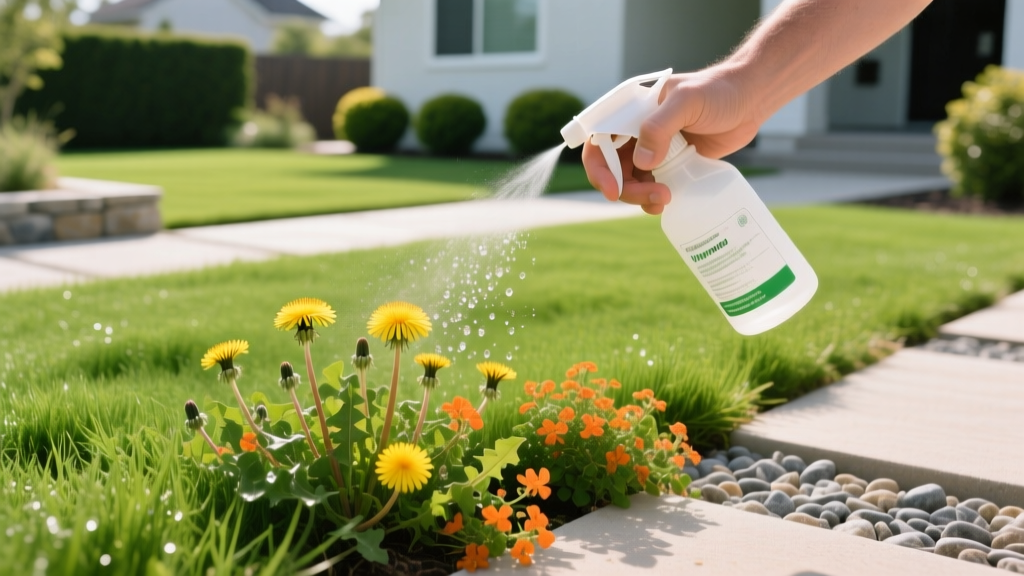
Glyphosate Weed Killer Spot-Treatment Guide for Perennial Weeds
The Translocation Principle: Why Timing Beats Concentration
Glyphosate weed killer is a systemic, non-selective herbicide that works by inhibiting the EPSP synthase enzyme, effectively starving the plant of essential amino acids. However, its efficacy against deep-rooted perennial weeds relies entirely on phloem translocation—the process where the plant actively pulls the chemical from the leaves down into the root and rhizome network. If you apply glyphosate weed killer when the plant is pushing energy upward (early spring) or when it is drought-stressed, the chemical remains trapped in the foliage, killing only the top growth while the roots survive to resprout.
For spot-treatment in established lawns, the goal is maximum root kill with minimum collateral damage to surrounding turfgrass. This requires precise timing, typically in late summer or early fall, when perennial weeds are actively storing carbohydrates in their root systems for winter dormancy.
⚠️ CRITICAL WARNING: Hard Water Antagonism
Calcium, magnesium, and iron in hard water bind to glyphosate molecules, rendering them inactive before they even reach the leaf cuticle. If your local water supply is hard (over 150 ppm calcium carbonate equivalent), you must add Ammonium Sulfate (AMS) to your tank mix. Add 0.5 oz of AMS per gallon of water before adding the glyphosate weed killer. The AMS ions will bind to the hard water minerals, protecting the active ingredient.
Species-Specific Spot-Treatment Protocols
Different perennial weeds possess unique rhizome structures and cuticle thicknesses. A one-size-fits-all mixing ratio will result in treatment failure. Below are the exact protocols for the three most notorious lawn invaders.
1. Canada Thistle (Cirsium arvense)
Canada thistle features an extensive, horizontal rhizome network that can extend 15 feet laterally and 6 feet deep. Spraying the iconic purple flowers in June is a common mistake; the plant is focused on reproduction, not root storage.
- Optimal Timing: Early September to mid-October, when fall rosettes are forming and nutrients are translocating downward.
- Mix Rate: 4 to 5 fl oz of 41% glyphosate concentrate (e.g., Ranger Pro or Compare-N-Save) per gallon of water.
- Preparation: Do not mow for at least 5 days prior to application. The plant needs maximum leaf surface area to absorb a lethal dose.
2. Field Bindweed (Convolvulus arvensis)
Often mistaken for morning glory, field bindweed vines choke out turfgrass and develops a taproot that can weigh over 5 lbs. According to Penn State Extension, its waxy leaf cuticle makes herbicide penetration notoriously difficult during mid-summer heat.
- Optimal Timing: Early flowering stage (late June) OR early fall after the first light frost triggers nutrient storage.
- Mix Rate: 5 fl oz of 41% glyphosate per gallon.
- Surfactant Requirement: Mandatory. Add a high-quality Non-Ionic Surfactant (NIS) like Alligare 90 at 0.5% v/v (approx. 1.5 teaspoons per gallon) to break the waxy cuticle tension.
3. Poison Ivy (Toxicodendron radicans)
When poison ivy infiltrates lawn edges or fence lines, pulling it is a severe health hazard. Spot-spraying requires careful drift management.
- Optimal Timing: Late summer (August/September) when leaves are fully expanded and actively transporting sap to the woody base.
- Mix Rate: 6 fl oz of 50.2% glyphosate concentrate (e.g., Roundup Super Concentrate) per gallon.
- Application Method: Never broadcast spray. Use a sponge wiper or paintbrush to physically dab the solution onto the leaves, avoiding contact with desirable ornamentals or turf.
Spot-Treatment Comparison Matrix
| Weed Species | Ideal Growth Stage | Glyphosate (41%) Rate | Surfactant Needed? |
|---|---|---|---|
| Canada Thistle | Fall Rosette (Sept-Oct) | 4 - 5 fl oz / gal | Recommended (0.25%) |
| Field Bindweed | Early Flower / Post-Frost | 5 fl oz / gal | Mandatory (0.5%) |
| Poison Ivy | Late Summer (Aug-Sept) | 6 fl oz / gal (50.2% AI) | Mandatory (0.5%) |
| Dallisgrass | Active Summer Growth | 2 fl oz / gal (Spot dab) | No |
Precision Application Tools for Lawn Preservation
Because glyphosate weed killer is non-selective, it will kill your Kentucky Bluegrass or Bermudagrass just as dead as the target weed. When spot-treating in high-value turf, abandon the standard pump sprayer wand in favor of precision tools.
Shielded Sprayers
For dense patches of thistle or brush, a shielded sprayer (such as the Chapin 1949 or similar cone-shielded models) creates a physical barrier that blocks wind drift. Keep the shield pressed firmly against the soil and spray only when the wind is under 5 mph. This allows you to treat a 6-inch diameter area without catching a single blade of adjacent turf.
Sponge Wiper Applicators
For weeds that grow taller than the surrounding lawn (like mature thistle or foxtail), a sponge wiper is highly effective. Fill the reservoir with a concentrated mix (up to 8 oz per gallon). Walk through the lawn and wipe the sponge exclusively over the top third of the weed. The lower-growing turfgrass remains completely untouched by the chemical.
The Syringe Method for Single Weeds
If you are dealing with isolated Dallisgrass or crabgrass plants in a pristine lawn, use a 10cc veterinary syringe fitted with a blunt-tip needle. Draw up a 50/50 mix of glyphosate and water, and inject 1-2cc directly into the center crown of the weed. This guarantees zero soil contact and zero drift.
Troubleshooting Treatment Failures
If your spot-treated weeds are resprouting 3 weeks after application, diagnose the failure using this framework:
- Symptom: Leaves turned yellow but roots survived.
Cause: Application occurred during drought stress. The plant closed its stomata and halted phloem movement to conserve water.
Fix: Water the area deeply 24 hours before your next application to turgor-up the plant and resume active growth. - Symptom: Top growth died in 4 days, but new shoots emerged from the soil immediately.
Cause: You mowed the weeds too short before spraying, or you applied a 'burn-down' rate that was too high. High concentrations cause rapid cellular necrosis in the leaf, pinching off the vascular system before the chemical reaches the roots.
Fix: Lower your mix rate to the minimum recommended threshold and allow 7 days of unmowed growth before reapplying. - Symptom: No visible yellowing after 10 days.
Cause: Hard water antagonism or rain wash-off. Glyphosate requires a minimum of 2 hours of dry weather to penetrate the cuticle, and 6 hours for optimal absorption.
Fix: Check your water hardness, add AMS, and monitor the hourly weather forecast strictly.
"The most common mistake homeowners make with systemic herbicides is impatience. Glyphosate weed killer is not a contact burn herbicide like diquat. It takes 7 to 14 days to see yellowing, and up to 21 days for complete root death in mature perennials. Do not reapply or mow the area until the weed is entirely brown and brittle."
Post-Treatment Lawn Recovery
Once the targeted perennial weeds have turned completely brown and the roots have surrendered (typically 21 days post-application), remove the dead debris. Because glyphosate binds tightly to soil particles and is deactivated by soil microbes within days, it leaves no residual soil activity. You can safely overseed the bare spots with your preferred turfgrass seed and apply a starter fertilizer immediately after pulling the dead weed crowns. According to the Environmental Protection Agency (EPA), glyphosate's strong soil adsorption profile means it will not leach into the groundwater or harm newly germinating grass seed, making it an ideal first step in a comprehensive lawn renovation strategy.

