
Pest Control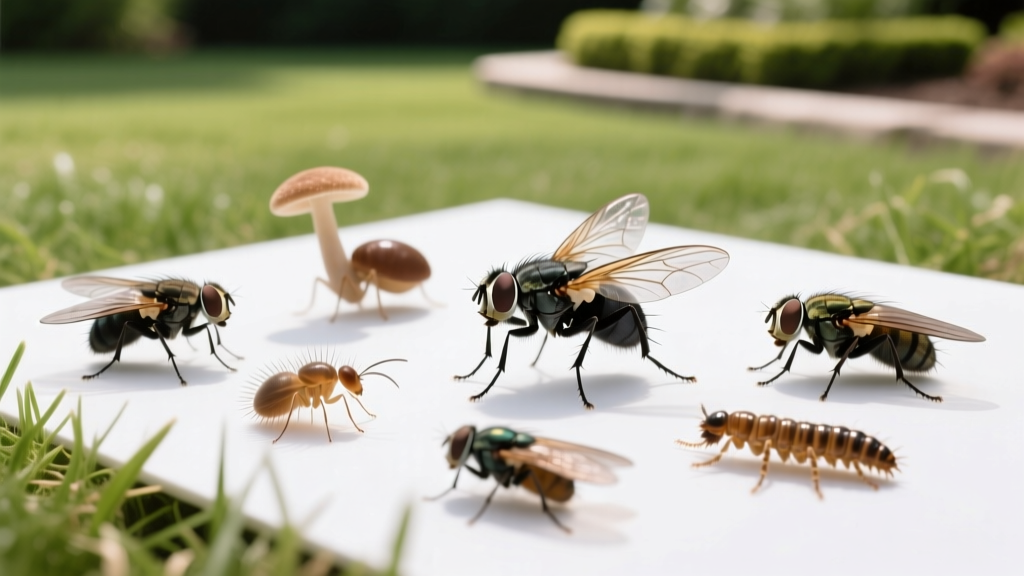
Gnat Size Guide: Identifying and Treating Yard Pests
Homeowners frequently lump all tiny, swarming flying insects into the generic "gnat" category. However, treating a 1mm biting midge with a fungus gnat soil drench is a waste of time, money, and chemical products. Accurate identification and effective yard defense begin with a millimeter ruler. Understanding the exact gnat size and physical characteristics of the pest invading your outdoor space dictates whether you need a biological soil treatment, a residual perimeter spray, or simple habitat modification.
The "Gnat" Misconception: Why Size Matters in Pest Control
In entomology, "gnat" is not a strict taxonomic classification. It is a colloquial umbrella term applied to various small flies from the suborder Nematocera. In a yard setting, the three most common pests labeled as gnats are fungus gnats (Sciaridae), biting midges (Ceratopogonidae), and fruit flies (Drosophilidae). Each occupies a distinct ecological niche, breeds in different substrates, and requires entirely different active ingredients for eradication.
Expert Insight: If you cannot visually distinguish the pest, capture one using a yellow sticky card and measure it against a standard millimeter ruler. A 1mm difference in gnat size separates a harmless soil-dweller from a blood-feeding nuisance.
Gnat Size Comparison Matrix: Measure to Identify
Use the following matrix to cross-reference the physical dimensions and behavioral traits of the insects swarming your patio or garden beds.
| Common Name | Average Size | Visual Markers | Primary Yard Habitat | Bites Humans? |
|---|---|---|---|---|
| Fungus Gnat | 2.5 - 3.0 mm | Dark gray/black, long legs, distinct Y-wing vein | Damp potting soil, compost piles, mulch | No |
| Biting Midge (No-See-Um) | 1.0 - 2.0 mm | Mottled wings, stout body, barely visible | Marshy edges, muddy ruts, wet sand | Yes (Painful) |
| Fruit Fly | 3.0 - 4.0 mm | Tan/brown body, prominent red eyes | Overripe fallen fruit, unsealed compost | No |
| Drain Fly | 2.0 - 3.0 mm | Fuzzy, moth-like wings, heart-shaped resting posture | Outdoor drains, AC condensation lines | No |
Fungus Gnats (Bradysia spp.): The 2.5mm Soil Invader
Fungus gnats are the most common pest misidentified by gardeners. Measuring exactly 2.5mm to 3mm, these delicate, dark-winged flies are weak fliers that hover erratically just above the soil line. While the adults are merely a nuisance, the translucent, black-headed larvae living in the top 2 inches of soil feed on fungi, algae, and crucially, the fine root hairs of your ornamental plants and vegetables.
Targeted Treatment Protocol
Adult fungus gnats live for only 7 to 10 days, making adulticidal sprays ineffective for long-term control. You must target the larval stage in the soil using Bacillus thuringiensis israelensis (Bti). According to the EPA, Bti is a naturally occurring soil bacterium that produces crystal proteins toxic only to the alkaline midguts of fly larvae, leaving earthworms, pets, and humans completely unharmed.
- Product Recommendation: Summit Mosquito Bits (Bti granules).
- Estimated Cost: $18.99 for a 30 oz. canister.
- Application Rate: Steep 4 tablespoons of granules in 1 gallon of water for 30 minutes. Strain the liquid and use it to drench the affected soil completely. Repeat every 7 days for three cycles to break the 21-day breeding lifecycle.
Biting Midges (Culicoides): The 1mm "No-See-Ums"
If the pest swarming your ankles at dusk is smaller than 2mm and leaves behind intensely itchy, red welts, you are dealing with biting midges. Often called "no-see-ums" due to their microscopic 1mm size, these stout-bodied insects are aggressive blood-feeders. Unlike fungus gnats, midges do not breed in standard garden soil; they require highly saturated mud, marshy pond edges, or decaying wet organic matter to lay their eggs.
Warning: Standard mosquito repellents containing low concentrations of DEET (under 10%) are frequently ineffective against biting midges due to their small size and ability to bite through thin mesh. The CDC recommends EPA-registered repellents with at least 20% Picaridin or 30% DEET for personal defense.
Yard Perimeter Defense
To reclaim your yard from midges, you must apply a residual synthetic pyrethroid to the vegetation surrounding their breeding sites. Bifenthrin is the industry standard for this application. As detailed by the National Pesticide Information Center, bifenthrin disrupts the insect nervous system by modulating sodium channels, providing up to 30 days of residual control on foliage.
- Product Recommendation: Talstar P Professional Insecticide (Bifenthrin 7.9%).
- Estimated Cost: $48.00 for a 3/4 gallon jug.
- Mixing Ratio: 1 fluid ounce per gallon of water.
- Application: Use a pump sprayer to coat the leaves of shrubs, tall grasses, and the perimeter of water features. Apply at dusk when midges are actively resting on foliage. Do not spray directly into water bodies, as bifenthrin is highly toxic to aquatic invertebrates.
Step-by-Step Yard Defense Decision Tree
Eliminate guesswork by following this diagnostic flow when tiny flies appear in your outdoor spaces.
- Step 1: Capture and Measure. Trap a specimen on white paper or a sticky card. If it is under 2mm and stout, suspect midges. If it is 2.5mm+ with long legs, suspect fungus gnats.
- Step 2: Assess the Bite. If you are experiencing bites, discard fungus gnats and fruit flies immediately. Pivot to midge or mosquito defense protocols.
- Step 3: Locate the Breeding Substrate. Check soil moisture. If the top inch of your potted plants or mulch beds is constantly wet, you have a fungus gnat nursery. Allow the soil to dry out completely between waterings to desiccate the larvae.
- Step 4: Deploy Targeted Chemistry. Use Bti drenches for soil-bound larvae. Use Bifenthrin barrier sprays for foliage-resting adult midges. Never use broad-spectrum foggers, which kill beneficial predatory insects like ladybugs and parasitic wasps that naturally regulate pest populations.
Expert FAQ: Gnat Size and Eradication
Can I use apple cider vinegar traps for yard gnats?
Apple cider vinegar traps are effective for Drosophila melanogaster (fruit flies) indoors, but they are virtually useless for outdoor fungus gnats or biting midges. Fungus gnats are attracted to the scent of decaying organic matter and fungal hyphae, not fermentation. For outdoor monitoring, rely on yellow sticky cards placed horizontally just above the soil line.
Are nematodes effective against 2.5mm fungus gnats?
Yes. Beneficial nematodes (Steinernema feltiae) are highly effective biological controls for fungus gnat larvae. You can purchase them in refrigerated gel packs (approx. $35 for 5 million nematodes). Mix them with water and apply via a watering can to damp soil. The nematodes actively seek out larvae, enter their bodies, and release bacteria that kill the host within 48 hours.
Why do midges swarm my yard only at dawn and dusk?
Biting midges are highly sensitive to desiccation. Their 1mm bodies lose moisture rapidly in direct sunlight and high winds. They emerge to feed primarily during the high-humidity, low-wind windows of dawn and dusk. Timing your bifenthrin perimeter sprays just before these windows ensures maximum contact with the active adults.

