
Pest Control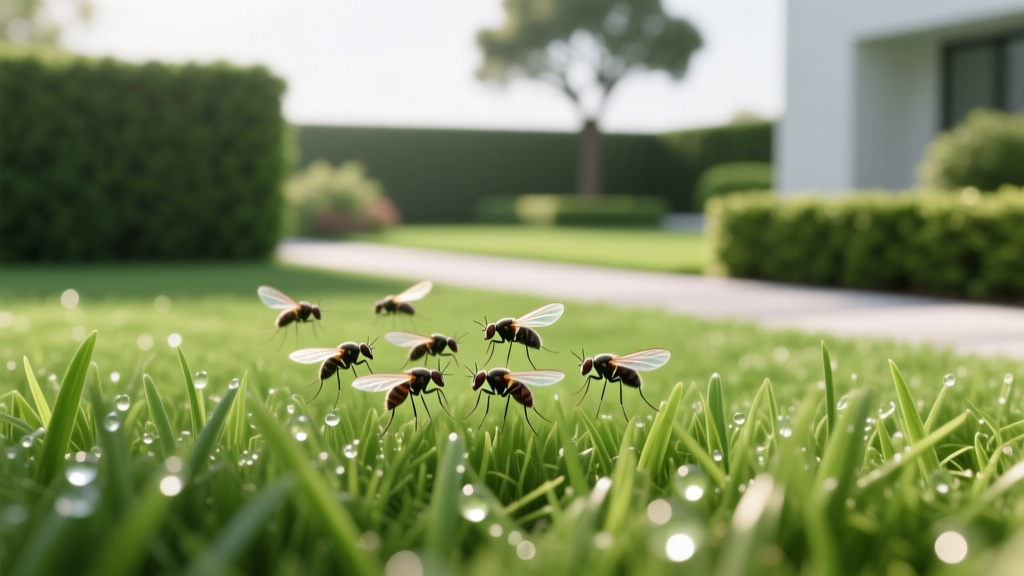
Why Are Gnats Swarming Your Lawn? Yard Defense & Eradication Guide
The Biology of a Gnat Swarm: Why They Target Your Yard
When you notice gnats swarming your patio or lawn at dusk, you are witnessing a highly synchronized mating flight. These swarms are not random; they are triggered by specific environmental cues—namely, dropping light levels and rising humidity. For homeowners, a visible swarm is a biological indicator that your yard possesses the exact microclimates these insects require to breed: excessive moisture, decaying organic matter, and sheltered soil interfaces.
To effectively reclaim your outdoor space, you must shift your focus from killing the adults you see to destroying the larvae you cannot see. Adult gnats live for only 7 to 10 days, but a single female can lay up to 300 eggs in damp soil or thatch. If you only treat the air, the swarm will return in exactly two weeks when the next generation emerges.
⚠️ Critical Diagnostic Step: Before purchasing any treatment, perform the "Squeeze Test." Grab a handful of soil or thatch from the swarming zone and squeeze it tightly. If water drips out, the moisture content is above 40%—the exact threshold where fungus gnat and biting midge larvae thrive.
Identifying the Culprit: Fungus Gnats vs. Biting Midges
Not all gnats are created equal. The treatment protocol changes drastically depending on whether you are dealing with a nuisance pest or a biting pest. Use the matrix below to identify the swarm.
| Feature | Fungus Gnats (Bradysia spp.) | Biting Midges (Culicoides spp.) |
|---|---|---|
| Size & Appearance | 1/8 inch, dark gray/black, long legs, weak fliers. | 1/32 to 1/8 inch, grayish, mottled wings, fast fliers. |
| Biting Behavior | Do not bite humans or pets. Strictly a nuisance. | Females bite, leaving itchy, red welts. Often called "no-see-ums." |
| Primary Breeding Zone | Overwatered potted plants, heavy lawn thatch, wet mulch beds. | Muddy shorelines, tree holes, salt marshes, irrigated low spots. |
| Swarm Timing | Morning and early evening, hovering low over soil. | Dusk and dawn, aggressive around exposed skin. |
For a deeper understanding of non-biting gnat life cycles in turfgrass, refer to the University of Kentucky Entomology Fungus Gnat Fact Sheet, which details their 21-to-28-day development cycle in moist environments.
The 3-Phase Yard Defense Protocol
Eradicating a gnat infestation requires a layered approach. Relying on a single method will result in temporary relief followed by a rapid rebound.
Phase 1: Source Reduction and Cultural Controls
Gnats cannot breed in dry soil. Your first line of defense is altering the yard's hydrology.
- Adjust Irrigation: Recalibrate your smart controller (e.g., Rachio 3 or Hunter Hydrawise) to reduce watering frequency. Switch to deep, infrequent soakings (e.g., 0.5 inches twice a week) rather than daily 10-minute sprinkles that keep the top inch of soil perpetually saturated.
- Dethatch the Lawn: If your thatch layer exceeds 0.5 inches, rent a power dethatcher. Thatch acts like a sponge, holding moisture and decaying roots that fungus gnat larvae feed on.
- Fix Hardscape Drainage: Ensure patio pavers and retaining walls are not trapping water. Re-grade soil away from concrete edges where midges love to lay eggs in the resulting mud.
Phase 2: Biological Warfare (Targeting the Larvae)
This is the most critical phase. You must introduce biological agents that specifically target gnat larvae without harming earthworms or beneficial soil microbes.
1. Bti (Bacillus thuringiensis israelensis)
Bti is a naturally occurring bacterium that produces proteins toxic only to the digestive systems of gnat, midge, and mosquito larvae.
- Recommended Product: Summit Mosquito Bits (Granular).
- Cost: $18 - $22 for a 30 oz. shaker bottle.
- Application Rate: Apply 1/2 cup per 200 square feet of damp soil or thatch. Water it in lightly with a hose to release the Bti into the top 2 inches of soil where larvae feed.
- Frequency: Reapply every 14 days for two consecutive cycles to break the breeding chain.
The American Mosquito Control Association confirms that Bti is highly specific and poses no risk to humans, pets, or non-target wildlife, making it the gold standard for residential larval control.
2. Beneficial Nematodes (Steinernema feltiae)
For severe, entrenched infestations in garden beds and turf, microscopic nematodes actively hunt and parasitize gnat pupae and larvae in the soil.
- Recommended Product: Arbico Organics NemaShield or BioLogic Scan-Mask (10 million count).
- Cost: $32 - $38 per 10 million nematodes (treats ~3,000 sq ft).
- Application Rules: Mix with water and apply via a hose-end sprayer at dusk. Failure Mode Warning: UV light kills nematodes instantly. Soil temperature must be above 55°F, and the soil must remain moist for 7 days post-application.
Phase 3: Adult Knockdown (Immediate Relief)
While Phase 2 stops the next generation, you still need to deal with the adults currently swarming your patio.
- Botanical Sprays: Use Essentria IC3 (a mix of rosemary, geraniol, and peppermint oils). Mix 2 oz per gallon of water and mist shrubs, patio perimeters, and the underside of deck railings. Cost: ~$45 per pint. It provides a 3-to-5-day residual knockdown and repels adults with strong olfactory masking.
- Avoid Bug Zappers: UV light traps are highly ineffective against fungus gnats and biting midges. They primarily kill beneficial moths and beetles, disrupting your yard's natural predator balance.
Chemical vs. Organic Treatments: Efficacy & Cost Breakdown
Homeowners often debate between synthetic pyrethroids and organic biologicals. Here is how they compare in a real-world yard defense scenario.
| Treatment Type | Active Ingredient | Target Stage | Cost per 1,000 sq ft | Environmental Impact |
|---|---|---|---|---|
| Biological Larvicide | Bti (Mosquito Bits) | Larvae | ~$1.50 | Zero impact on beneficials |
| Synthetic Barrier | Bifenthrin (Talstar P) | Adults | ~$0.80 | Highly toxic to bees and aquatic life |
| Biological Predator | Steinernema feltiae | Larvae/Pupae | ~$11.00 | Beneficial; improves soil ecology |
| Botanical Repellent | Essentria IC3 (Oils) | Adults | ~$4.00 | Safe for pets; short residual |
Common Eradication Mistakes (And How to Fix Them)
Mistake #1: Treating the foliage instead of the soil.
The Fix: Gnats do not eat your grass blades or shrub leaves. They live in the top 2 inches of the soil profile. Direct all Bti and nematode applications at the soil surface and water them in.
Mistake #2: Ignoring potted plants and hanging baskets.
The Fix: A single overwatered geranium pot can produce thousands of fungus gnats. Flush potted plants with a Bti drench (1/4 teaspoon per gallon of water) and allow the top inch of potting mix to dry out completely between waterings.
Frequently Asked Questions
Will standard mosquito yard sprays kill gnats?
Yes, synthetic pyrethroid sprays (like bifenthrin or permethrin) applied as a perimeter barrier will kill adult gnats on contact. However, they do not penetrate the soil to kill larvae, meaning the swarm will return as soon as the chemical degrades (usually 14-21 days). Furthermore, these chemicals decimate local pollinator populations. Biological larvicides like Bti are a vastly superior long-term strategy.
Why are gnats swarming my face and eyes specifically?
Fungus gnats and biting midges are highly attracted to carbon dioxide, moisture, and the lactic acid present in human sweat and breath. When they swarm your face, they are following your CO2 plume. Wearing a hat with a brim and using a localized fan on your patio disrupts their weak flight patterns and masks the CO2 trail, providing immediate physical relief.
How long does it take to completely eliminate a gnat swarm?
If you combine source reduction (drying the soil) with a Bti soil drench, you will see a 90% reduction in the swarm within 7 to 10 days. Complete eradication of the colony requires two full life cycles, which takes approximately 28 days of consistent treatment and moisture management.

