
Pest Control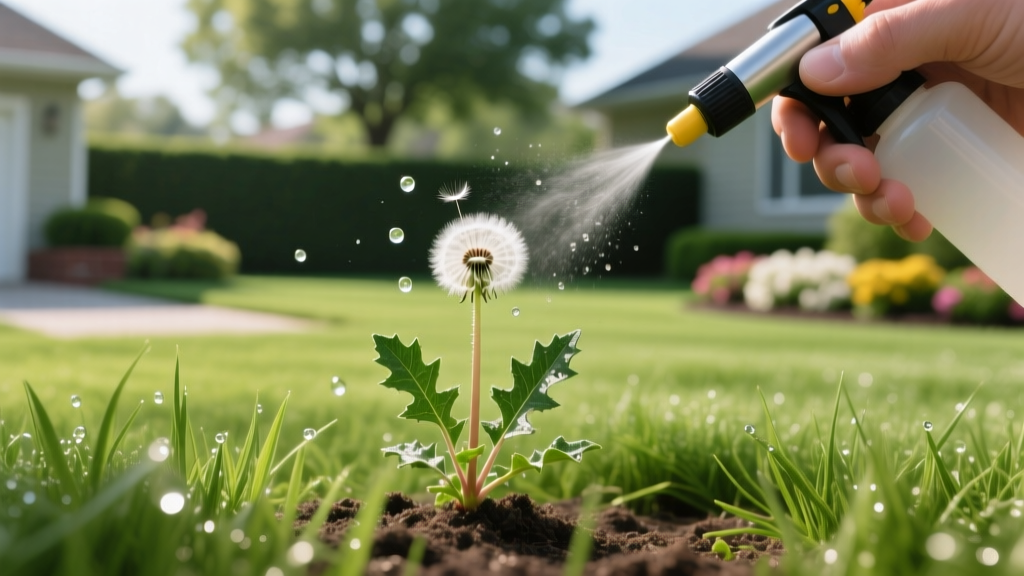
What Makes a Good Weed Killer for Lawns? Spot-Treatment Guide
Defining a 'Good' Weed Killer for Targeted Lawn Care
When homeowners search for a good weed killer for lawns, they are often met with a confusing array of broad-spectrum chemicals that can easily damage surrounding turf. In professional turfgrass management, a truly effective weed killer is not defined by its ability to scorch everything it touches, but by its selectivity, systemic translocation, and species-specific efficacy. Spot-treating isolated weed outbreaks requires a fundamentally different approach than blanket broadcasting. Blanket applications waste active ingredients, increase environmental runoff, and stress the turf. Spot-treatment, conversely, demands precise calibration, the correct surfactant pairing, and a deep understanding of weed biology.
According to the University of California Integrated Pest Management (IPM) program, targeted herbicide applications reduce chemical usage by up to 80% compared to broadcast spraying, while maintaining superior turf health. This guide breaks down the exact chemical profiles, mixing ratios, and application protocols required to spot-treat the most stubborn lawn weeds without harming your grass.
⚠️ Turf Sensitivity Warning: Not all grasses tolerate the same herbicides. Centipedegrass and St. Augustinegrass are highly sensitive to 2,4-D and Dicamba at standard rates. Always verify your specific turfgrass species before selecting an active ingredient. Cool-season grasses (Fescue, Kentucky Bluegrass) generally tolerate higher concentrations of broadleaf herbicides than warm-season varieties.
The Chemistry: Active Ingredients That Actually Work
A good weed killer for lawns relies on specific modes of action (MoA) to disrupt weed cellular processes while leaving monocot turfgrasses unharmed. Understanding these chemical classes is critical for preventing herbicide resistance and ensuring the weed dies down to the root.
Synthetic Auxins (Group 4 Herbicides)
Chemicals like 2,4-D, Dicamba, MCPP, and Triclopyr mimic the plant hormone auxin. When absorbed by broadleaf weeds (dicots), they trigger unregulated, unsustainable growth that literally tears the plant's vascular tissue apart. These are the backbone of most commercial broadleaf spot-treatments. Triclopyr is particularly vital for woody or tough-stemmed weeds like wild violet and ground ivy, which often shrug off standard 2,4-D applications.
PPO Inhibitors (Group 14 Herbicides)
Carfentrazone and Sulfentrazone disrupt cell membrane integrity by blocking the protoporphyrinogen oxidase (PPO) enzyme. This causes rapid cellular leakage and necrosis. When combined with synthetic auxins (such as in the commercial formulation SpeedZone), PPO inhibitors accelerate the 'burn-down' effect, causing visible wilting within 24 hours while the systemic auxins work on the root system.
ALS Inhibitors (Group 2 Herbicides)
For sedges and specific grassy weeds, Halosulfuron-methyl inhibits the acetolactate synthase (ALS) enzyme, stopping the synthesis of essential branched-chain amino acids. This is the gold standard for nutsedge control, a weed that is completely immune to standard broadleaf herbicides.
Spot-Treatment Matrix: Matching Herbicide to Weed Species
Using the wrong chemical is the primary reason spot-treatments fail. Reference this matrix to select the correct active ingredient for your specific infestation.
| Weed Species | Primary Active Ingredient | Recommended Commercial Product | Spot Mix Rate (per Gallon) |
|---|---|---|---|
| Dandelion & Plantain | 2,4-D + Dicamba + MCPP | Ortho WeedClear / Trimec Classic | 1.5 fl oz |
| Wild Violet & Ground Ivy | Triclopyr + 2,4-D | PBI Gordon SpeedZone / Cool Power | 1.5 fl oz |
| Yellow & Purple Nutsedge | Halosulfuron-methyl | SedgeHammer / Prosedge | 1 packet (0.047 oz) + surfactant |
| Crabgrass (Small Tillers) | Quinclorac | Drive XLR8 / Bayer BioAdvanced | 1.5 fl oz + Methylated Seed Oil |
| White Clover | Quinclorac + 2,4-D | Q4 Plus | 2.0 fl oz |
Deep Dive: Tackling Broadleaf Perennials
Perennial broadleaf weeds like dandelions and plantain possess deep taproots. A contact herbicide will only burn the top growth, leading to rapid regrowth. A good weed killer for lawns facing perennial broadleaves must be highly systemic. When spot-spraying, you must achieve thorough foliar coverage—spraying until the leaves are wet, but not dripping. The Purdue University Turfgrass Science program emphasizes that applying these herbicides during periods of active growth (soil temperatures between 65°F and 75°F) maximizes downward translocation into the taproot.
Deep Dive: Eradicating Grassy Weeds and Sedges
Grassy weeds (crabgrass, poa annua) and sedges (nutsedge) are biologically closer to your lawn grass, making selective control highly complex. Quinclorac is unique because it controls both broadleaf weeds and certain grassy weeds by triggering auxin toxicity and disrupting cell wall synthesis. However, quinclorac requires a specific adjuvant—Methylated Seed Oil (MSO)—to penetrate the waxy cuticle of crabgrass. Never use a standard non-ionic surfactant for quinclorac; it will fail. For nutsedge, halosulfuron-methyl requires patience. It does not burn the plant immediately; instead, it stops growth at the meristem, causing the plant to slowly yellow and die over 14 to 21 days.
The Professional Spot-Spraying Protocol
Having the right chemical is only half the battle. Application technique dictates success. Follow this exact protocol for a 1-gallon handheld pump sprayer, the industry standard for residential spot-treatments.
- Calibrate the Nozzle: Adjust your sprayer tip to a flat fan or cone pattern, never a pinpoint jet stream. A jet stream delivers too much product to a tiny area, causing soil contamination and turf burn. You want a fine mist that coats the leaf surface evenly.
- Mix the Surfactant First: Fill the sprayer halfway with water. Add 0.5% Non-Ionic Surfactant (NIS)—roughly 1/3 fluid ounce per gallon. Surfactants break the surface tension of water, allowing the herbicide to spread across the waxy weed leaf rather than beading up and rolling off.
- Add the Herbicide: Pour the exact measured dose of herbicide into the tank. For most concentrates, this is 1.5 fluid ounces per gallon.
- Agitate and Fill: Secure the lid, shake vigorously for 30 seconds, then fill the rest of the tank with water to minimize foaming.
- Target the Rosette: For weeds like dandelions and plantain, aim the spray directly at the basal rosette (the center crown near the soil line). This is where the newest, most absorbent tissue is located.
- Observe Weather Windows: Do not spray if temperatures exceed 85°F. High heat causes herbicides like 2,4-D to volatilize (turn into a gas) and drift onto desirable plants, causing severe twisting and cupping. Do not spray if rain is expected within 6 hours.
💡 Pro-Tip: The Dye Marker Trick
Add a few drops of turf-safe blue spray indicator dye to your tank mix. This colors the weed leaves temporarily, allowing you to see exactly which weeds you have treated and preventing accidental double-spraying, which can harm the underlying turfgrass roots.
Add a few drops of turf-safe blue spray indicator dye to your tank mix. This colors the weed leaves temporarily, allowing you to see exactly which weeds you have treated and preventing accidental double-spraying, which can harm the underlying turfgrass roots.
Common Spot-Treatment Failures and Troubleshooting
Even with a good weed killer for lawns, environmental and mechanical factors can derail your efforts. Here is how to diagnose and fix common failures.
- Failure Mode: Weed turns brown on top but grows back in two weeks.
Cause: You used a contact-only herbicide (like diquat) or applied a systemic herbicide during a summer drought. Weeds shut down their vascular systems during drought stress to conserve water, preventing the herbicide from reaching the roots.
Fix: Irrigate the lawn deeply 48 hours before application to ensure the weed is actively growing and translocating nutrients downward. - Failure Mode: Surrounding grass turns yellow or stunts in growth.
Cause: Over-application or using an ester-based herbicide in high heat. Ester formulations are highly volatile and can vaporize, drifting down to the turf roots.
Fix: Switch to an amine-based formulation (like Trimec Classic) for warm-weather spot treatments. Amine salts have virtually zero vapor pressure. - Failure Mode: Nutsedge survives the SedgeHammer application.
Cause: Mowing too soon after application. Halosulfuron-methyl takes up to 7 days to move from the leaves into the subterranean nutlets.
Fix: Implement a strict 5-day mowing moratorium following any sedge or systemic grassy weed treatment.
Frequently Asked Questions
Can I use a good weed killer for lawns right after seeding?
No. Most selective post-emergent herbicides will severely injure or kill germinating grass seed. You must wait until the new turf has been mowed at least three times before applying broadleaf herbicides. If weeds are outcompeting your seedlings, hand-pulling is the only safe option during the establishment phase.
Is vinegar a good weed killer for lawns?
Horticultural vinegar (20% to 30% acetic acid) is a non-selective contact burn-down agent. While it will scorch the top growth of a weed, it will also instantly kill any lawn grass it touches and does not translocate to the roots. It is highly ineffective for deep-rooted perennials and is not recommended for lawn spot-treatments where turf preservation is the goal.
How long should I wait to water the lawn after spot-spraying?
Most modern commercial formulations containing carfentrazone or 2,4-D become rainfast and fully absorbed within 4 to 6 hours. However, to maximize systemic movement, delay irrigation for a full 24 hours post-application. Always check the specific product label, as halosulfuron-methyl may require up to 12 hours for complete foliar absorption.

