
Pest Control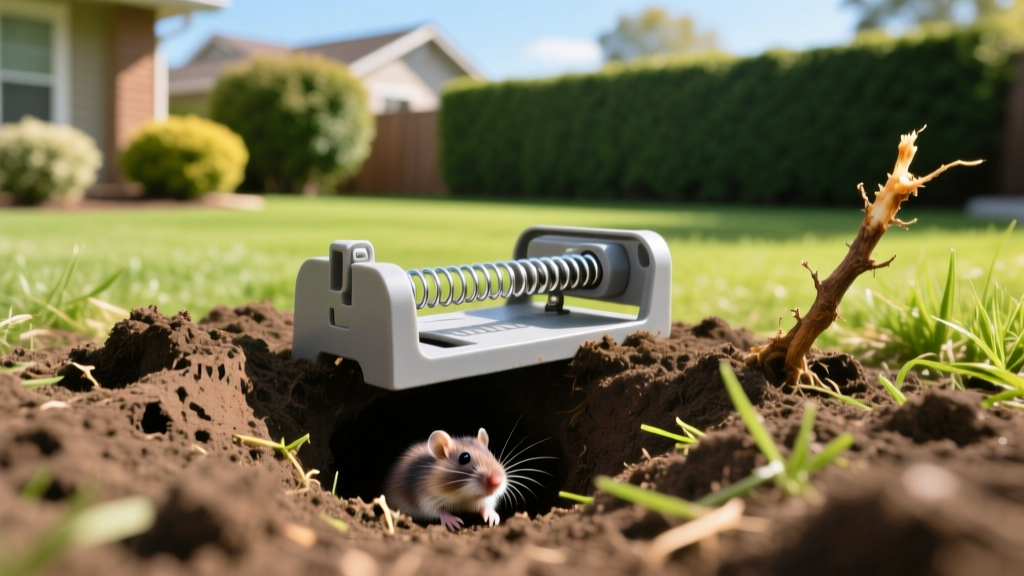
How to Get Rid of a Gopher: Proven Traps, Baits & Gas
Identifying the Culprit: Gopher vs. Mole vs. Vole
Before deploying lethal controls, you must confirm the pest. Pocket gophers (Thomomys species) are frequently misidentified as moles or voles, leading to ineffective treatment strategies. According to the University of California Integrated Pest Management (UC IPM) program, misidentification is the leading cause of failed eradication attempts. Gophers feed on plant roots, pulling entire vegetables and ornamentals underground, while moles primarily eat soil-dwelling insects and grubs.
| Feature | Pocket Gopher | Mole | Vole |
|---|---|---|---|
| Mound Shape | Crescent or horseshoe-shaped | Star-shaped or symmetrical volcano | No mounds; small surface holes |
| Soil Plug | Distinct dirt plug offset from center | Clod of dirt in the center | None |
| Tunnel Depth | 12 to 18 inches deep (main runway) | 3 to 12 inches deep | Surface runways under snow/mulch |
| Diet | Roots, tubers, bulbs | Earthworms, grubs, insects | Grass blades, bark, seeds |
The Anatomy of a Gopher Burrow System
To successfully trap or bait, you must understand the burrow architecture. A single gopher maintains a complex system spanning 200 to 2,000 square feet. The system consists of shallow lateral tunnels (used for foraging and pushing dirt to the surface) and a deeper main runway (the primary transit artery, typically 12 to 18 inches below the surface). Traps placed in lateral tunnels fail 80% of the time because the gopher will simply bypass them or plug the tunnel with dirt from below.
Step-by-Step: Locating the Main Runway
- Locate a fresh mound: Look for dark, moist soil indicating recent digging. Identify the dirt plug on the edge of the crescent.
- Insert the probe: Use a 3/8-inch or 1/2-inch solid steel soil probe. Insert it into the ground 6 to 8 inches away from the plug, angling slightly toward the center of the mound.
- Feel for the drop: Push the probe down slowly. When the probe suddenly drops 2 to 3 inches with minimal resistance, you have pierced a tunnel.
- Verify the main runway: If the tunnel is only 4 to 6 inches deep, it is a lateral. Move your probe 12 to 18 inches further away from the mound and probe deeper until you hit a tunnel at the 12+ inch mark. This is your main runway.
Pro Tip for Hard Soil: If you are working in compacted clay during late summer, pour a gallon of water over the suspected runway area and wait 30 minutes. Moist soil makes probing significantly easier and prevents the tunnel ceiling from collapsing when the probe breaches it.
Method 1: Mechanical Trapping (Highest Success Rate)
Trapping is the most environmentally sound and immediately verifiable method for gopher control. It requires zero chemical application and provides instant confirmation of a kill. However, it demands precision placement and strict adherence to the 'draft rule'.
Top Trap Models for 2026
- Macabee Box Trap ($16 - $22 per pair): The traditional standard. It requires pinching the spring arms and setting a trigger plate. Highly effective but has a steeper learning curve for setting without premature firing.
- Gophinator Choker Trap ($25 - $30 per pair): Features a pincer-style design that catches the gopher by the neck and chest. Studies show it has a 20% higher kill rate than the Macabee because it is less likely to be bypassed by larger Botta's pocket gophers.
- Blackhole Trap ($22 - $28 per pair): A cylindrical tube trap that mimics the natural tunnel shape. Easiest for beginners to set, but slightly bulkier to carry in the field.
CRITICAL WARNING: The Draft Rule
Gophers are hyper-sensitive to changes in air pressure and light. If you leave the trap hole open to the sun, the gopher will detect the draft, push dirt from a side branch, and bury your trap without triggering it. Always set two traps facing opposite directions in the main runway, and completely cover the access hole with a piece of plywood, a heavy bucket, or tightly packed sod. Secure traps with a wire flag so you can relocate them if buried.
Gophers are hyper-sensitive to changes in air pressure and light. If you leave the trap hole open to the sun, the gopher will detect the draft, push dirt from a side branch, and bury your trap without triggering it. Always set two traps facing opposite directions in the main runway, and completely cover the access hole with a piece of plywood, a heavy bucket, or tightly packed sod. Secure traps with a wire flag so you can relocate them if buried.
Method 2: Carbon Monoxide Fumigation
For severe infestations or when dealing with rocky soil where probing is impossible, carbon monoxide (CO) fumigation is highly effective. Unlike smoke bombs (which gophers easily wall off), CO is an odorless, colorless gas that displaces oxygen in the burrow system.
Consumer-grade exhaust hose kits (routing exhaust from a running vehicle) are largely ineffective due to the low concentration of CO in modern catalytic-converted engines and the heat differential that causes the gas to rise and escape. Instead, professional-grade pressurized CO machines like the PERC (Pocket Gopher Extractor Rodent Control) unit or the Gopher X machine deliver 93% pure carbon monoxide directly into the burrow. These machines cost between $450 and $650, making them ideal for landscaping companies or shared neighborhood purchases rather than single-use homeowners.
Method 3: Toxic Baits
When trapping fails, toxic baits offer a scalable solution. The most common active ingredients are 0.5% Strychnine alkaloid and Zinc Phosphide applied to oat, milo, or alfalfa pellets.
'Bait must be placed directly into the main runway using a specialized bait probe. Dropping bait into lateral tunnels or surface mounds results in the gopher ignoring the grain or plugging the tunnel, effectively burying the toxin.' - University of Nebraska-Lincoln Extension Wildlife Damage Management
Secondary Poisoning Risk: Strychnine and anticoagulant baits pose a severe risk to non-target wildlife. Raptors (owls, hawks) and domestic pets can suffer fatal secondary poisoning if they consume a gopher that has ingested the bait but not yet died. Always use baits as a last resort and strictly follow label instructions regarding depth and hole coverage.
The 'Deterrent' Myth: What Doesn't Work
The lawn care market is flooded with gimmick deterrents that lack empirical backing. Save your money and avoid the following:
- Ultrasonic Solar Spikes: Gophers quickly habituate to the high-frequency vibrations. Field trials show zero long-term reduction in burrowing activity.
- Castor Oil Sprays: While castor oil can temporarily irritate a gopher's digestive tract if ingested, spraying it on the lawn surface does not penetrate 18 inches into the main runway where the gopher lives.
- Gopher Spurge (Euphorbia lathyris): Often sold as a 'gopher repellent plant,' university studies confirm that gophers will simply tunnel around the root system or even eat the roots of the plant itself.
Cost and ROI Breakdown
Choosing the right method depends on your budget, soil type, and the scale of the infestation. Below is a comparative cost analysis for treating a standard 5,000 sq. ft. residential lawn with an active 2-gopher infestation.
| Method | Initial Equipment Cost | Consumables / Bait | Success Rate | Best Use Case |
|---|---|---|---|---|
| Macabee / Gophinator Traps | $25 - $50 | $0 | 75% - 90% | Small infestations, eco-sensitive areas |
| Strychnine / Zinc Phosphide Bait | $15 (Bait Probe) | $10 - $20 | 60% - 80% | Large properties, agricultural borders |
| CO Fumigation Machine | $450 - $650 | $40 (CO Cylinder) | 85% - 95% | Heavy clay/rocky soil, severe infestations |
| Smoke / Gas Cartridges | $5 - $10 | $5 per cartridge | 20% - 40% | Not recommended (easily blocked by gophers) |
Eradicating pocket gophers requires patience and precise execution. By correctly identifying the main runway, selecting the appropriate mechanical or chemical tool, and strictly managing light and air drafts, you can reclaim your lawn from subterranean destruction without relying on ineffective commercial gimmicks.

