
Pest Control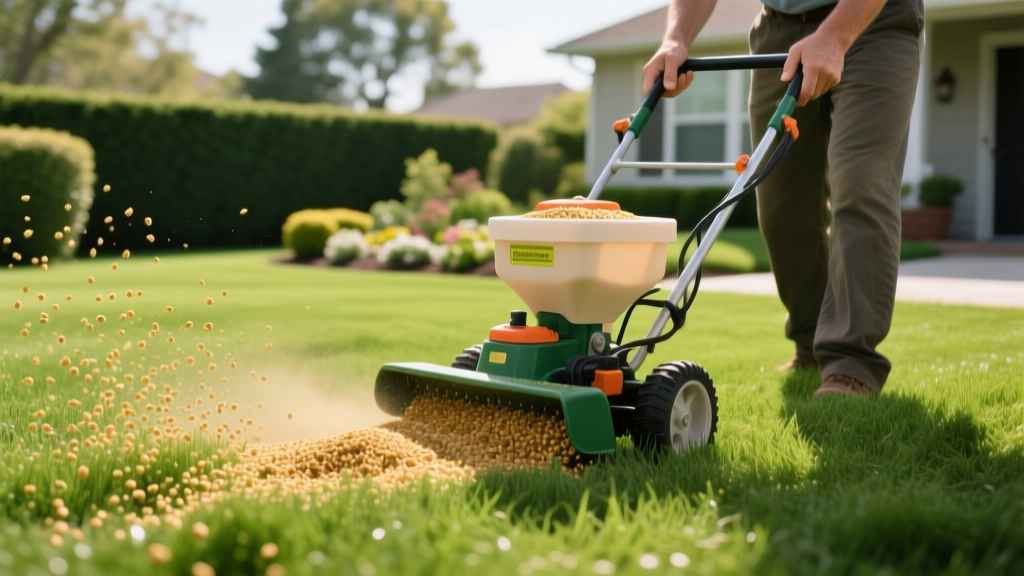
When to Apply Granular Herbicide With Lawn Fertilizer
The Intersection of Weed Control and Soil Nutrition
Managing lawn pests and weeds is rarely just about applying chemicals; it is fundamentally an exercise in soil ecology and agronomic timing. When integrating a granular herbicide into your lawn care regimen, you must view it through the lens of soil nutrition. Weeds are often opportunistic invaders that exploit thin turf, compacted soil, or imbalanced pH levels. While granular herbicides provide a critical chemical barrier or targeted knockout, their efficacy is deeply intertwined with how and when you apply your nitrogen, phosphorus, and potassium (NPK) fertilizers.
According to Purdue University's Turfgrass Science program, the physical and chemical properties of the soil matrix directly dictate how herbicide active ingredients bind, degrade, and interact with turfgrass roots. Misaligning your granular weed control with your fertilizer schedule can result in wasted product, nutrient lockout, or severe turf stress. This guide breaks down the exact timing, soil temperature triggers, and nutritional interactions required to synchronize granular herbicides with your feeding program.
Agronomic Warning: The commercial 'Weed and Feed' concept is fundamentally flawed from a soil nutrition perspective. Pre-emergent herbicides require immediate watering to reach the soil surface, while post-emergent herbicides require dry foliage to absorb the chemical. Fertilizer prills also need water to dissolve. Combining them into a single granular application forces a compromise that reduces the efficacy of both the nutrient delivery and the pest control.
Pre-Emergent Granular Herbicides: Soil Temperature Triggers
Pre-emergent herbicides, such as prodiamine (Barricade) and dithiopyr (Dimension), work by creating a chemical barrier in the top half-inch of the soil profile. This barrier inhibits cell division in germinating weed seeds, primarily targeting crabgrass, goosegrass, and annual bluegrass. The timing of this application is dictated entirely by soil temperature, not the calendar.
Crabgrass germination initiates when soil temperatures at a 2-inch depth reach 53°F to 55°F for consecutive days. Applying your granular pre-emergent too early risks the active ingredient degrading via UV exposure and microbial breakdown before the weed seeds sprout. Applying it too late allows the taproot to establish past the vulnerable seedling stage.
The Nitrogen Timing Conflict
Many homeowners mistakenly apply a high-nitrogen spring fertilizer (e.g., a 24-0-6 quick-release blend) simultaneously with their pre-emergent. This is a critical error in soil nutrition management. Pushing heavy nitrogen in early spring forces the turfgrass to prioritize rapid vertical leaf growth at the expense of deep root development. This shallow root system makes the grass highly susceptible to summer drought stress, ultimately thinning the canopy and allowing late-germinating weeds to breach the turf.
The Correct Protocol: Apply your granular pre-emergent when soil temps hit 50°F. Use a low-nitrogen, high-potassium starter fertilizer (like a 5-10-10 NPK) or rely entirely on residual soil nutrients from your late-fall feeding. Wait until the turf has been mowed twice in the spring—indicating active root expansion—before applying your primary spring nitrogen meal (typically 0.75 to 1.0 lb of N per 1,000 sq ft using a slow-release methylene urea source).
Post-Emergent Granular Options and Nutrient Competition
While liquid post-emergents are generally preferred for broadleaf weed control due to superior foliar absorption, granular post-emergents (often containing 2,4-D, MCPP, and Dicamba) remain popular for spot treatments and convenience. However, their interaction with soil nutrition requires careful management.
Granular post-emergents rely on the chemical sticking to the moist surface of the weed's leaf. This means they must be applied when the grass is wet with morning dew or immediately after a light irrigation. If you apply a granular post-emergent and then water it in deeply to activate your granular fertilizer, you will wash the herbicide off the weed foliage and into the soil, where it is largely ineffective against established broadleaf weeds and may harm soil biology.
Decision Matrix: Herbicide vs. Fertilizer Requirements
| Product Type | Active Ingredient Examples | Moisture Requirement | Fertilizer Interaction |
|---|---|---|---|
| Granular Pre-Emergent | Prodiamine, Dithiopyr | Must be watered in (0.25 - 0.5 inches) | Apply before heavy nitrogen; do not mix with fast-release N |
| Granular Post-Emergent | 2,4-D, Dicamba, MCPP | Requires wet foliage; do NOT water in immediately | Delay fertilizer watering for 48 hours after application |
| Granular Soil Insecticide | Imidacloprid, Chlorantraniliprole | Must be watered deeply into root zone | Can be applied simultaneously with spring root-feeding fertilizers |
Soil Biology Considerations: Herbicide Impact on Microbes
A core tenet of modern soil nutrition is maintaining a robust soil food web. Mycorrhizal fungi and nitrogen-fixing bacteria are essential for breaking down organic matter and making nutrients bioavailable to turfgrass roots. According to research highlighted by the University of Missouri Integrated Pest Management center, certain herbicide carriers and active ingredients can temporarily suppress microbial activity.
Granular herbicides are often bound to inert carriers like clay, limestone, or even fertilizer prills. Limestone carriers can subtly alter the pH of your soil surface over time. If your soil test indicates a pH above 6.8, using a limestone-carried granular herbicide may push the pH into alkaline territory, causing iron chlorosis (yellowing) in your turf and locking up phosphorus.
Mitigating Soil Stress Post-Application
To buffer the soil microbiome against the stress of granular chemical applications, integrate the following nutritional amendments into your program:
- Humic Acid (Granular): Apply at 3 lbs per 1,000 sq ft. Humic substances increase the soil's Cation Exchange Capacity (CEC), helping to buffer chemical shocks and improve nutrient retention.
- Kelp Extract (Liquid or Granular): Rich in cytokinins and auxins, kelp promotes root recovery and helps the turfgrass metabolize stress following a heavy herbicide application.
- Compost Tea or Molasses: Feeds the indigenous bacteria, accelerating the breakdown of herbicide residues once their effective lifecycle has concluded.
Budgeting and Product Selection for 2026
As of 2026, the economics of professional-grade granular herbicides have shifted, making precise calibration more important than ever to avoid wasting expensive materials. A 50-pound bag of 0.17% Dithiopyr (Dimension) typically retails between $45 and $60, covering approximately 10,000 square feet. In contrast, a 5-ounce bottle of 65% Prodiamine WDG (water-dispersible granule) costs around $55 and covers the same area, though it requires mixing in a sprayer rather than using a rotary spreader.
For homeowners strictly using granular spreader applications, the 0.17% Dithiopyr on a fertilizer carrier is the most efficient choice. However, you must adjust your spreader settings carefully. For a standard Scotts EdgeGuard rotary spreader, a setting of 3.5 is typically required to achieve the correct 1/8 inch per square foot distribution rate. Always calibrate your spreader over a concrete driveway to ensure the prills are flowing evenly before engaging the turf.
Troubleshooting Common Application Failures
Even with perfect timing, environmental factors and soil conditions can cause granular herbicide programs to fail. Use this diagnostic framework to identify and correct issues in your lawn:
- Failure Mode: Crabgrass breaking through the pre-emergent barrier.
Cause: High soil organic matter (OM) or core aeration post-application.
Fix: Herbicides bind tightly to organic matter. If your soil test reveals an OM content above 5%, you must increase the application rate by 20-30% to achieve the same barrier concentration. Never core aerate after applying a pre-emergent, as the tines physically break the chemical seal. - Failure Mode: Broadleaf weeds (dandelions, clover) surviving granular post-emergent.
Cause: Application on dry foliage or mowing too soon.
Fix: Granular post-emergents require moisture to dissolve and penetrate the leaf cuticle. Apply in the early morning when dew is heavy. Do not mow for at least 48 hours to allow maximum translocation of the chemical down to the weed's root system. - Failure Mode: Turfgrass phytotoxicity (burning or stunting) after application.
Cause: Overlapping spreader passes or applying during heat stress.
Fix: Always use a spreader with an edge guard when working near landscape beds. Avoid applying granular herbicides containing dicamba when ambient temperatures exceed 85°F, as the chemical can vaporize and drift, causing severe twisting and cupping of desirable turf leaves.
For comprehensive regulatory guidelines on handling and applying these chemicals safely around your home and local watersheds, always consult the EPA's Safe Pest Control resources before purchasing or mixing any active ingredients. By aligning your granular herbicide applications with your soil's nutritional needs and biological rhythms, you can achieve a dense, resilient lawn that naturally suppresses weeds while minimizing chemical inputs.

