
Pest Control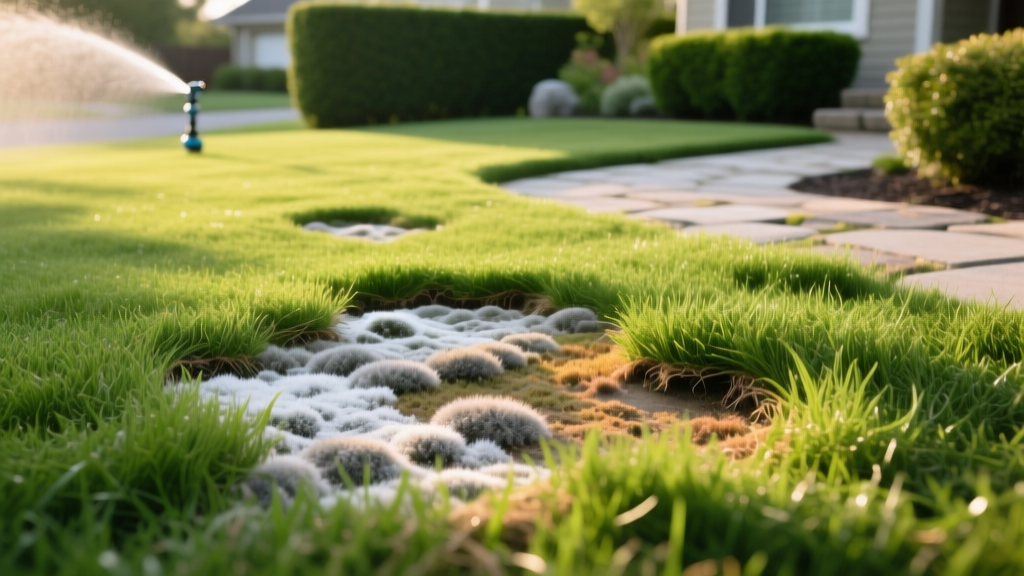
Common Grass Fungus Types: Symptom Diagnosis and Rescue Fixes
Applying the wrong fungicide to your lawn is an expensive mistake. Misdiagnosing common grass fungus types costs homeowners an average of $150 to $300 in wasted chemicals, not to mention the irreversible damage to the turf's root system. Fungal pathogens thrive in specific microclimates, and a treatment that eradicates Pythium blight will do absolutely nothing for Dollar Spot. To save your lawn, you must first accurately identify the pathogen based on visual symptoms, weather conditions, and grass species, then deploy targeted chemical and cultural rescue fixes.
The Diagnostic Framework: Reading Your Lawn's Distress Signals
Before reaching for a broad-spectrum chemical, evaluate the environmental triggers. Fungal outbreaks are rarely random; they are the result of a specific intersection of temperature, moisture, and turf stress. Use this diagnostic matrix to narrow down the suspect:
- Time of Day: Check the lawn at dawn. Mycelium (the fuzzy, cobweb-like fungal growth) is only visible when dew is present. By 10:00 AM, it usually dries up and disappears.
- Temperature Thresholds: Brown Patch and Pythium Blight require high heat (above 80°F) and humidity, while Snow Mold and Fairy Ring often activate in cooler, transitional seasons (50°F–65°F).
- Lesion vs. Patch: Look closely at individual grass blades. Are there distinct hourglass-shaped lesions with dark borders (Dollar Spot), or are the entire blades water-soaked and matted (Pythium)?
Top 5 Destructive Grass Fungus Types and Rescue Protocols
1. Brown Patch (Rhizoctonia solani)
The Symptoms: Brown Patch manifests as irregular, circular patches ranging from 6 inches to several feet in diameter. On closely mowed turf, you will often see a distinct "smoke ring"—a dark, water-soaked border at the edge of the dying grass. Individual tall fescue or ryegrass blades will show tan lesions with dark brown margins.
The Rescue Fix: Brown Patch is highly aggressive in humid conditions above 65°F. For immediate curative action, apply a liquid Azoxystrobin formulation (such as Syngenta Heritage SC) at a rate of 0.4 oz per 1,000 square feet. If using a consumer-grade granular like Scotts DiseaseEx (active ingredient: Azoxystrobin), apply at 2.2 lbs per 1,000 sq ft and water it in immediately with 1/8 inch of irrigation to move the active ingredient into the thatch layer where the fungus lives.
2. Dollar Spot (Clarireedia jacksonii)
The Symptoms: True to its name, this fungus creates small, silver-dollar-sized bleached spots that can merge into large, irregular dead zones. It heavily targets nitrogen-starved turf. At dawn, you will see fine, white, cobweb-like mycelium. The diagnostic hallmark is the hourglass-shaped lesion on individual grass blades with a purplish-brown border.
The Rescue Fix: Dollar Spot exploits low-fertility lawns. Your first rescue step is a quick-release nitrogen application (like Urea 46-0-0) at 0.5 lbs of actual nitrogen per 1,000 sq ft to push the grass to grow through the damage. Follow this with a fungicide containing Fluxapyroxad or Thiophanate-methyl (e.g., Cleary's 3336F at 2.0 oz per 1,000 sq ft). According to NC State University TurfFiles, rotating chemical classes (FRAC codes) is critical here, as Dollar Spot rapidly develops resistance to single-mode-of-action fungicides.
3. Pythium Blight (Pythium spp.)
The Symptoms: Often called "cottony blight," Pythium is the most destructive and fast-moving of all grass fungus types. It strikes when nighttime temperatures stay above 70°F and foliage remains wet for 12+ hours. The grass initially looks water-soaked and greasy, turning dark brown and matting down in irregular, streaking patterns that often follow water drainage paths or mower tracks.
The Rescue Fix: Standard fungicides will fail against Pythium because it is an oomycete (water mold), not a true fungus. You must use a specific oomycete-targeting chemical like Metalaxyl (Subdue MAXX) or Fosetyl-Al (Signature Xtra). Apply Metalaxyl at 0.5 oz per 1,000 sq ft. Crucially, you must halt evening irrigation immediately and improve surface drainage; Pythium will return within 48 hours if the canopy remains wet overnight.
4. Fairy Ring (Basidiomycetes)
The Symptoms: Fairy rings appear as expanding dark green circles of rapidly growing grass, often accompanied by a ring of dead, brown turf just inside or outside the green band. In late summer, mushrooms may fruit along the perimeter. The underlying cause is a massive network of fungal mycelium in the soil that repels water (hydrophobic soil), starving the grass roots of moisture.
The Rescue Fix: Fungicides are largely ineffective for Type II (dead zone) Fairy Rings because the pathogen is deep in the soil profile. The rescue fix is physical and cultural: use a deep-tine aerator to punch holes 6 to 8 inches deep through the ring, then apply a soil wetting agent (surfactant) like Cascade Plus at 3 oz per 1,000 sq ft to break the hydrophobic barrier. Hand-water the specific ring daily for two weeks to rehydrate the soil profile.
5. Snow Mold (Typhula incarnata / Microdochium nivale)
The Symptoms: Gray Snow Mold (Typhula) and Pink Snow Mold (Microdochium) reveal themselves only after the winter snow melts. You will see circular, matted patches of straw-colored grass. Gray snow mold is identified by tiny, hard, mustard-seed-sized sclerotia embedded in the dead leaves, while Pink snow mold often shows a faint pinkish halo at the patch margins.
The Rescue Fix: Once the snow melts and the damage is visible, curative fungicides are a waste of money; the fungus is already going dormant as temperatures rise. The rescue fix is mechanical: gently rake the matted patches with a flexible leaf rake to break up the crust, allowing sunlight and air to reach the crown. Overseed bare spots with a matching turf blend at 2 lbs per 1,000 sq ft. To prevent next year's outbreak, apply a preventive PCNB or Iprodione application in late November just before the first permanent snowfall.
Fungicide Active Ingredient Matrix
Selecting the correct chemical is paramount. Below is a comparison of professional-grade active ingredients, their target fungi, and current 2026 market pricing for residential-scale applications.
| Active Ingredient | Brand Example | Target Fungi | Curative Rate (per 1k sq ft) | Est. Cost (per 1k sq ft) |
|---|---|---|---|---|
| Azoxystrobin (FRAC 11) | Syngenta Heritage SC | Brown Patch, Dollar Spot | 0.4 oz | $0.45 |
| Fluxapyroxad (FRAC 7) | BASF Xzemplar | Dollar Spot, Fairy Ring | 0.18 oz | $0.60 |
| Metalaxyl (FRAC 4) | Syngenta Subdue MAXX | Pythium Blight | 0.5 oz | $0.35 |
| Thiophanate-methyl (FRAC 1) | Cleary's 3336F | Dollar Spot, Snow Mold | 2.0 oz | $0.28 |
Note: Always rotate fungicides with different FRAC (Fungicide Resistance Action Committee) codes to prevent pathogen resistance. Applying the same chemical class consecutively will render the treatment useless within a single season.
⚠️ Heat Stress Warning: Never apply liquid fungicides when daytime temperatures exceed 85°F. The combination of chemical surfactants and high heat will cause severe phytotoxicity (chemical burn), turning your lawn black within hours. If you must treat an outbreak during a heatwave, apply the product at dusk and syringe the lawn with a light mist of water immediately after to cool the canopy.
Cultural Rescue Tactics: Fixing the Microclimate
Chemicals only suppress grass fungus types; they do not cure the underlying environmental flaw. According to research from Penn State Extension, integrating the following cultural practices reduces fungal severity by up to 60% without additional chemical inputs.
- Transition to Deep, Infrequent Watering: Fungi require 12 to 14 hours of continuous leaf wetness to infect. Watering for 15 minutes every evening guarantees an outbreak. Switch to applying 1 to 1.5 inches of water per week, split into two early-morning sessions (between 4:00 AM and 6:00 AM). This allows the grass canopy to dry rapidly once the sun rises.
- Manage the Thatch Layer: A thatch layer thicker than 0.5 inches acts as a sponge, holding moisture against the grass crown and harboring fungal spores. Rent a vertical mower (dethatcher) in early fall to physically rip out the dead organic matter, followed by core aeration to introduce soil microbes that naturally decompose thatch.
- Adjust Mowing Heights: Scalping your lawn stresses the root system and opens wounds for pathogens to enter. Raise your mower deck to 3.0 or 3.5 inches during the peak summer months. Taller grass shades the soil, reducing soil temperature and slowing the evaporation that creates localized humidity at the crown level.
- Balance Potassium Levels: While nitrogen pushes top growth, potassium (Potash) thickens the grass cell walls, making it physically harder for fungal hyphae to penetrate the leaf tissue. Conduct a soil test and apply Sulfate of Potash (0-0-50) at 1 lb per 1,000 sq ft in late spring to build cellular resistance.
Accurate diagnosis is the cornerstone of turf pathology. By matching the specific visual symptoms and weather triggers to the correct grass fungus types, you can deploy precise chemical and cultural rescue fixes that save your lawn and your budget. For localized outbreaks that do not respond to these protocols, submit a 2x2 foot sod sample (including the margin of healthy and dead grass) to your state university's plant diagnostic lab for definitive microscopic identification.

