
Pest Control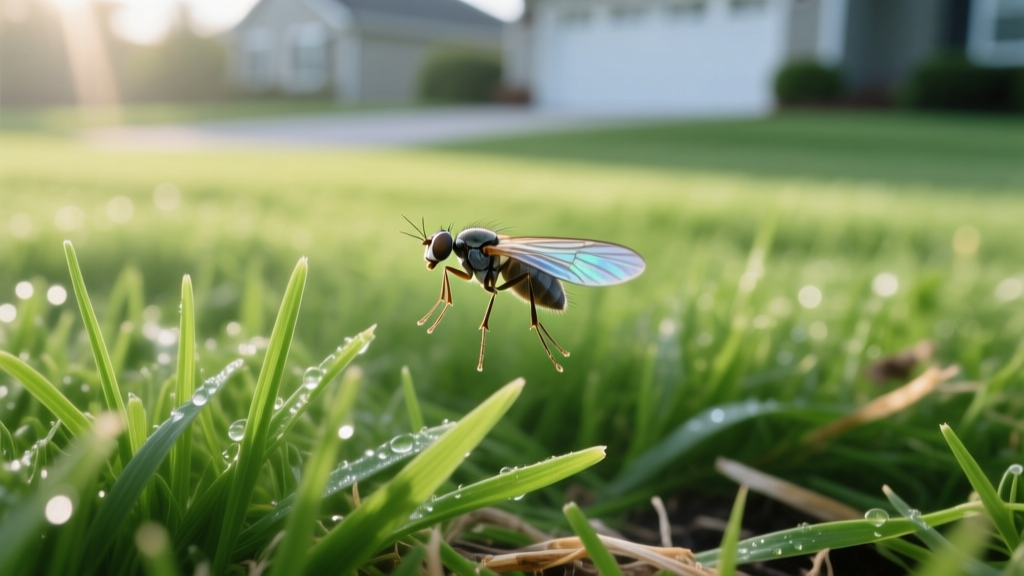
How to Identify and Eradicate Grass Gnats in Your Yard
The 'Grass Gnat' Misnomer: Identifying Your Turf Invaders
When homeowners complain about 'grass gnats,' they are typically observing one of two distinct pests that thrive in over-irrigated turf: fungus gnats (Bradysia spp.) or non-biting lawn midges (family Chironomidae). While both manifest as annoying swarms hovering just above the grass canopy at dusk, their breeding habitats and eradication protocols differ significantly. Misidentifying the culprit often leads to wasted money on ineffective broad-spectrum insecticides that fail to penetrate the specific micro-habitats where these larvae develop.
| Feature | Fungus Gnats (Bradysia spp.) | Lawn Midges (Chironomidae) |
|---|---|---|
| Adult Size & Color | 1/8 inch; dark brown to black; long legs | 1/4 to 1/2 inch; pale green or brown; mosquito-like |
| Swarming Behavior | Weak, erratic fliers; hover near soil surface and thatch | Strong fliers; form dense, vertical mating swarms at dusk |
| Larval Habitat | Damp thatch layer, decaying organic matter, fungal hyphae | Saturated soil, muddy depressions, edges of irrigation runoff |
| Turf Damage | Larvae chew fine root hairs, causing localized yellowing | Negligible direct damage; primarily a severe nuisance pest |
Why Your Lawn is a Breeding Ground
Grass gnats do not invade healthy, dry turf. They are opportunistic indicators of poor soil hydrology and excessive organic buildup. The primary catalyst for an infestation is a thatch layer exceeding 0.5 inches combined with chronic overwatering. When turfgrass is irrigated too frequently, the top inch of soil remains perpetually saturated, creating anaerobic conditions that promote the growth of soil fungi and algae—the exact food source fungus gnat larvae require to mature.
The Screwdriver Test for Soil Moisture: Before treating for gnats, assess your soil hydration. Push a standard 6-inch flathead screwdriver into the lawn. If it penetrates the soil effortlessly with zero resistance, your soil is dangerously oversaturated. Allow the top 1 to 2 inches of soil to dry out completely between watering cycles to naturally desiccate gnat eggs and early-instar larvae.
The 3-Step Biological Eradication Protocol
Relying on contact aerosols provides only temporary relief from adult swarms. To achieve permanent yard defense, you must target the larval stage in the soil using highly specific biological agents. According to the Centers for Disease Control and Prevention (CDC), biological larvicides are highly effective and pose virtually no risk to non-target organisms, pets, or humans.
Step 1: Deploying Bti (Bacillus thuringiensis israelensis)
Bti is a naturally occurring soil bacterium that produces crystalline proteins (specifically Cry4 and Cry11) during sporulation. When grass gnat larvae ingest Bti-treated soil or thatch, these proteins bind to alkaline receptors in their midgut, causing cellular lysis and death within 48 hours. Bti is entirely harmless to earthworms, bees, and mammals.
- Recommended Product: Summit Mosquito Bits or Monterey B.t.i. Granular.
- Cost: Approximately $15 to $20 for a 30 oz shaker bottle (covers up to 5,000 square feet).
- Application Rate: Apply 1 cup per 5,000 square feet directly to the damp thatch layer.
- Activation: Water the granules in immediately with 0.25 inches of irrigation to wash the Bti spores down into the larval feeding zone.
Step 2: Introducing Steinernema feltiae Nematodes
For severe, entrenched infestations where Bti alone is insufficient, introduce Steinernema feltiae, a species of entomopathogenic beneficial nematode. These microscopic roundworms actively hunt gnat larvae in the soil pores. Upon entering the host, they release Xenorhabdus bacteria, which rapidly consumes the larva from the inside out, turning it into a nutrient-rich breeding ground for more nematodes.
- Recommended Product: Arbico Organics NemaShield or BioLogic Scan-Mask.
- Cost: $30 to $45 for 5 million nematodes (covers roughly 1,500 square feet).
- Temperature Constraints: Soil temperatures must be strictly between 60°F and 85°F. Applying nematodes to cold or scorching soil will result in 100% mortality before they can infect the gnats.
- Application Protocol: Mix the nematode powder with water and apply using a hose-end sprayer with the filter screen removed. Apply at dusk to avoid UV degradation, and keep the soil moist for 14 consecutive days to allow the nematodes to complete their reproductive cycle.
Chemical Knockdown for Severe Adult Swarms
While biological controls manage the larval population, they do not kill adult midges or fungus gnats currently swarming your patio. If adult populations are unbearable, a targeted synthetic pyrethroid barrier spray can provide immediate knockdown. Bifenthrin is the industry standard for turf perimeter defense.
WARNING: Pollinator Toxicity. Bifenthrin is highly toxic to bees and aquatic invertebrates. Never apply bifenthrin to blooming weeds (like clover or dandelions) in your lawn. Apply strictly at night when pollinators are inactive, and prevent runoff into storm drains or water features. For detailed safety protocols, consult the Environmental Protection Agency (EPA) guidelines on safe pest control.
- Recommended Product: Talstar P Professional Insecticide (7.9% Bifenthrin).
- Cost: $45 to $55 for a 3/4 quart bottle (yields over 40 gallons of finished spray).
- Mixing Ratio: 1 fluid ounce per gallon of water per 1,000 square feet.
- Target Areas: Spray the perimeter of your home, the lower 3 feet of exterior walls, and the immediate turf edges where midges rest during the day. Do not broadcast spray the entire lawn, as this will decimate beneficial predatory beetles that naturally regulate pest populations.
Long-Term Yard Defense Matrix
Eradication is only half the battle. Preventing grass gnats from returning requires a shift in your lawn care agronomy. The Texas A&M AgriLife Extension emphasizes that modifying the physical environment is the only sustainable long-term defense against moisture-loving turf pests.
| Season | Action Item | Target Metric / Goal |
|---|---|---|
| Early Spring | Core Aeration | Extract 3-inch plugs on 3-inch centers to relieve soil compaction and improve drainage. |
| Late Spring | Dethatching (Power Raking) | Reduce thatch layer to strictly under 0.5 inches to eliminate fungal food sources. |
| Summer | Cycle and Soak Irrigation | Water deeply 1-2 times per week rather than daily. Allow the top 1 inch of soil to dry. |
| Fall | Topdressing with Compost | Apply 1/4 inch of screened compost to introduce competitive microbes that outcompete gnat food sources. |
By combining precise biological larvicides like Bti and Steinernema feltiae with rigorous moisture management, you can dismantle the grass gnat life cycle at its source. Stop treating the symptoms with foggers and start engineering a lawn environment that is inherently hostile to moisture-dependent pests.

