
Pest Control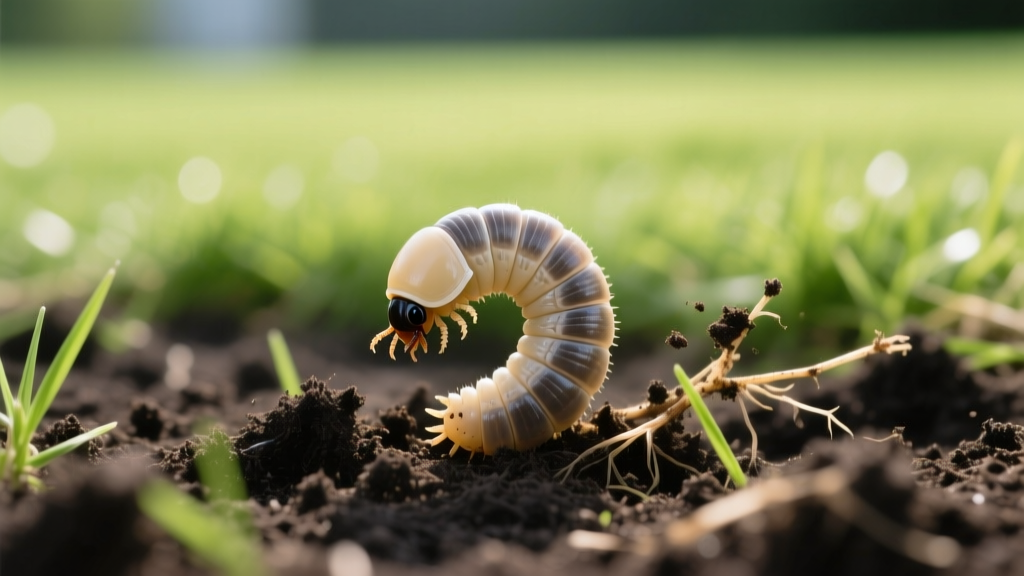
Proven Grass Grub Control: How to Identify and Eliminate Lawn Grubs
Grass grubs—the larval stage of various scarab beetles, including the Japanese beetle, June bug, and the New Zealand grass grub (Costelytra zealandica)—are among the most destructive turf pests. They feed aggressively on grassroots, severing the plant's connection to water and nutrients. Left unchecked, a severe infestation can destroy an entire lawn in a single season. Effective grass grub control requires precise timing, accurate identification, and a strategic mix of biological and chemical interventions.
The Biology of Grass Grubs: Know Your Enemy
To implement successful grass grub control, you must understand their lifecycle. Grubs undergo complete metamorphosis: egg, larva (grub), pupa, and adult beetle. The larval stage is divided into three growth phases, known as instars.
Warning: The 3rd Instar Danger Zone
First and second instar grubs cause minimal damage. However, the 3rd instar larvae—which emerge in late summer and early fall—are large, voracious, and responsible for up to 80% of total root destruction. Curative treatments must target this specific stage before soil temperatures drop and they burrow deep for winter diapause.
Early Detection: Spotting Damage Before It Spreads
Surface symptoms often mimic drought stress or fungal diseases. Look for irregular brown patches that fail to respond to irrigation. You may also notice increased activity from secondary predators like crows, starlings, skunks, or moles digging up the turf to feed on the protein-rich larvae.
The Tug Test and Soil Sampling
Do not rely on visual symptoms alone. Perform a physical inspection to confirm grub presence and determine if the population exceeds the treatment threshold.
- The Tug Test: Grab a handful of brown or spongy grass and pull upward. If the turf rolls up easily like a loose carpet, the roots have been severed by grubs.
- Soil Sampling: Using a flat spade, cut three sides of a 12x12-inch square of turf and peel it back. Examine the top 2 to 3 inches of soil.
- Count the Larvae: According to UC Davis IPM guidelines, a healthy lawn can tolerate a few grubs. Treatment is only economically justified if you find 5 to 10 or more grubs per square foot.
Biological Grass Grub Control: Beneficial Nematodes
For homeowners seeking organic grass grub control, entomopathogenic nematodes are the gold standard. These microscopic, unsegmented roundworms actively seek out grubs, enter their bodies, and release symbiotic bacteria that kill the host within 48 hours.
Selecting the Right Nematode Strain
Not all nematodes target grubs. You must purchase Heterorhabditis bacteriophora (Hb). Avoid Steinernema feltiae, which is better suited for fungus gnats and flea larvae.
- Application Rate: 1 billion nematodes per 2,500 to 3,000 square feet.
- Cost: Expect to pay between $45 and $65 per 10-million count package (covers roughly 3,000 sq ft).
- Soil Temperature Requirement: Soil must be consistently between 60°F and 85°F at a 2-inch depth.
Pro Tip: UV Protection is Mandatory
Nematodes are highly susceptible to ultraviolet light desiccation. Always apply them in the late afternoon or on a heavily overcast day. Immediately water the lawn with at least 0.25 inches of irrigation to wash the nematodes off the thatch layer and deep into the soil profile where the grubs reside.
Chemical Interventions: Preventatives vs. Curatives
When biological controls are insufficient or an infestation is severe, synthetic insecticides provide reliable grass grub control. Chemicals are strictly categorized into preventatives (applied before eggs hatch) and curatives (applied to kill active grubs). Mis-timing these products is the number one cause of treatment failure.
| Active Ingredient | Type | Application Window | Avg. Cost per 5,000 sq ft |
|---|---|---|---|
| Chlorantraniliprole | Preventative | April to Early June | $25 - $35 |
| Imidacloprid | Preventative | May to Mid-July | $15 - $22 |
| Trichlorfon | Curative | August to September | $20 - $30 |
Preventative Strategy: Products containing Chlorantraniliprole (e.g., Scotts GrubEx1) take 60 to 90 days to fully translocate through the soil and grass roots. They must be applied in spring before eggs are laid. According to Penn State Extension, preventatives are highly effective but offer zero control for grubs already present in the soil.
Curative Strategy: If you miss the preventative window and discover active 3rd instar grubs in late summer, Trichlorfon (e.g., Dylox) is required. It acts as a rapid-contact stomach poison, killing active grubs within 24 to 48 hours. Note that Trichlorfon breaks down quickly in alkaline soils (pH > 7.5), requiring immediate watering and potentially a follow-up application.
Cultural Defense Tactics: Starving the Grubs
Chemical and biological treatments are most effective when paired with cultural practices that make your lawn an inhospitable environment for egg-laying female beetles.
Strategic Irrigation
Adult beetles lay eggs in moist, shallow soil. Watering your lawn deeply but infrequently (1 to 1.5 inches per week, applied in a single session) forces grassroots to grow deep while allowing the top inch of soil to dry out between waterings. This dry surface layer significantly reduces egg viability and early-instar survival rates.
Mowing Height and Thatch Management
Maintain cool-season turfgrasses at a height of 3 to 4 inches. Taller grass shades the soil, deterring egg-laying females and promoting deeper root systems that can tolerate minor grub feeding. Furthermore, keep the thatch layer below 0.5 inches. Excessive thatch acts as a physical barrier, preventing both nematodes and chemical insecticides from reaching the soil interface.
"A dense, biologically active soil microbiome naturally suppresses grub populations. Fungi like Metarhizium anisopliae occur naturally in undisturbed soils and act as a passive biological control agent against scarab larvae."
Troubleshooting Common Grub Control Failures
If your grass grub control efforts yield poor results, evaluate these common failure points:
- Thatch Interference: Applying granular insecticides or nematodes over a thatch layer thicker than 0.5 inches traps the active ingredients above the root zone. Fix: Core aerate or use a power dethatcher before applying any soil-targeted treatment.
- Watering Errors: Failing to water in granular curatives (like Trichlorfon) leaves the chemical on the grass blades, where it degrades in sunlight without ever reaching the grubs. Fix: Always apply 0.5 inches of irrigation immediately after spreading curative granules.
- Wrong Pest Identification: Chinch bugs, sod webworms, and billbugs cause similar brown patching but require entirely different chemical classes. Fix: Always perform the physical soil sample and tug test to confirm the presence of C-shaped white larvae before purchasing treatments.

