
Pest Control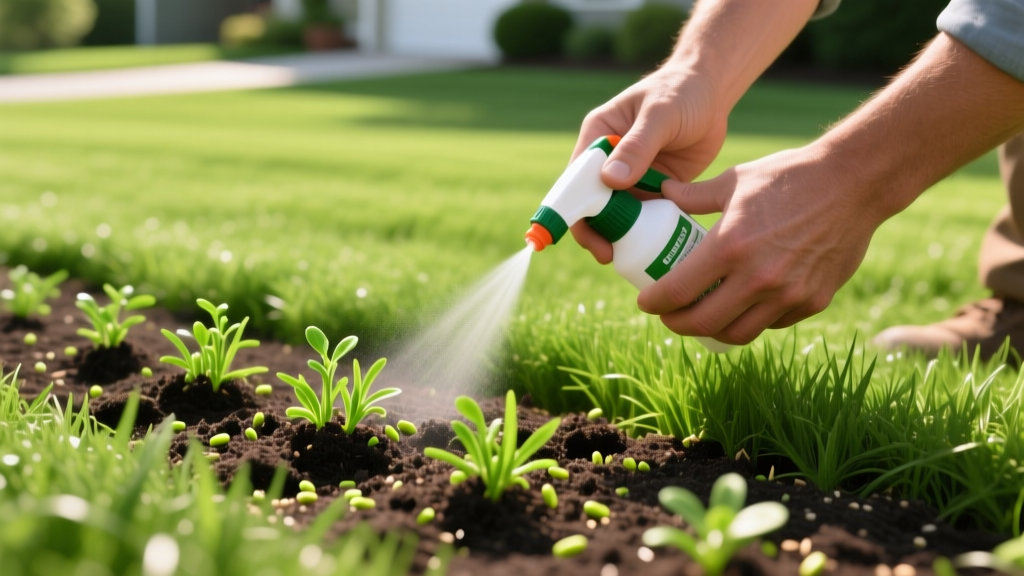
Grass Seed with Weed Killer: Spot-Treating Weeds During Overseeding
The phrase grass seed with weed killer is one of the most misunderstood concepts in modern lawn care. Homeowners often purchase these combination products assuming the integrated herbicide will eradicate existing mature weeds while simultaneously growing new grass. In reality, the active ingredients in these products—primarily mesotrione—are designed to prevent weed seeds from germinating, not to kill established dandelions, crabgrass, or nutsedge.
If you apply standard post-emergent weed killers (like 2,4-D or glyphosate) at the same time as your grass seed, you will instantly kill your newly germinated turf. Successfully renovating a lawn requires a phased approach: spot-treating existing weeds first, applying your grass seed with weed killer for pre-emergent protection, and then executing targeted post-emergent spot treatments only after the new grass has matured.
The Chemistry: Why Standard Weed Killers and Seed Do Not Mix
To understand the protocol, you must understand the chemistry. Most 'weed and feed' products for established lawns contain synthetic auxins (2,4-D, Dicamba, MCPP) that cause broadleaf weeds to grow uncontrollably until they die. These chemicals are highly toxic to grass seedlings. Similarly, non-selective herbicides like glyphosate will obliterate both weeds and your expensive Kentucky Bluegrass or Fescue seed.
The Mesotrione Advantage: Products marketed as grass seed with weed killer rely on mesotrione (often branded as Tenacity). Mesotrione inhibits the HPPD enzyme (4-hydroxyphenylpyruvate dioxygenase) in plants. This blocks chlorophyll production in susceptible weeds like crabgrass, causing them to bleach white and die. Cool-season grasses (Fescue, Ryegrass, Bluegrass) naturally metabolize mesotrione rapidly, allowing them to germinate safely while weeds are suppressed.
However, mesotrione is primarily a pre-emergent and early post-emergent herbicide. It will not kill a mature, deep-rooted dandelion. Therefore, a strict spot-treatment timeline is required.
Phase 1: Spot-Treating Existing Weeds Before Seeding
Before you drop a single seed, you must eliminate the mature weeds competing for soil nutrients and sunlight. This phase relies on non-selective or targeted spot treatments using products that break down quickly in the soil.
- Identify and Isolate: Map out mature weeds. For broadleaf weeds (dandelions, clover) in a largely intact lawn, use a targeted broadleaf killer like Triclopyr. For patchy, weed-infested areas you plan to completely reseed, use a non-selective herbicide.
- Apply Glyphosate or Glufosinate: For bare spots dominated by crabgrass or mixed weeds, spot-spray with a ready-to-use glyphosate solution (approx. $15 per 1-gallon sprayer). Apply only to the weed foliage, avoiding surrounding healthy turf.
- Observe the 14-Day Rule: This is the most critical step. You must wait a minimum of 14 days after applying glyphosate before seeding. According to the Penn State Extension Turfgrass Program, applying seed too soon can result in poor germination rates due to residual soil interaction and incomplete weed die-back.
⚠️ Warning: The Pre-Emergent Trap
Never apply a standard pre-emergent (like Prodiamine or Dithiopyr) before seeding. These chemicals create a soil barrier that stops cell division in all seeds, meaning your grass seed will fail to germinate. Only use mesotrione-based products when seeding.
Never apply a standard pre-emergent (like Prodiamine or Dithiopyr) before seeding. These chemicals create a soil barrier that stops cell division in all seeds, meaning your grass seed will fail to germinate. Only use mesotrione-based products when seeding.
Phase 2: Applying Grass Seed with Weed Killer
Once the 14-day waiting period has passed and the spot-treated weeds are brown and dead, it is time to seed. As of 2026, the market for combination seed-and-herbicide products has consolidated around a few highly effective formulations.
| Product | Active Herbicide | Coverage & Cost (Approx.) | Best Use Case |
|---|---|---|---|
| Scotts Turf Builder Triple Action Built for Seeding | Mesotrione (0.08%) | 4,000 sq ft / $65.00 | Fall overseeding cool-season lawns; prevents crabgrass. |
| Jonathan Green Organic Weed Preventer plus Lawn Food | Corn Gluten Meal | 5,000 sq ft / $45.00 | Organic lawns; mild pre-emergent suppression only. |
| DIY Approach: Premium Seed + Liquid Tenacity | Mesotrione (Liquid spray) | Varies / $75.00 (for 8oz bottle) | Large renovations; precise dosage control. |
When using a product like the Scotts Triple Action Built for Seeding, apply it on the same day as your grass seed. The mesotrione will immediately begin inhibiting weed seed germination while the starter fertilizer (usually high in phosphorus, like a 24-25-4 NPK ratio) fuels root development in your new grass.
Phase 3: Post-Germination Spot-Treatment Protocols
Even with mesotrione, some stubborn perennial weeds or late-germinating summer annuals may push through. You cannot immediately spray these with standard herbicides. The University of Minnesota Extension emphasizes that new grass seedlings are highly susceptible to chemical burn and hormonal disruption until their root systems are fully established.
The 'Three-Mow' Rule
You must wait until your newly germinated grass has been mowed at least three times before applying any post-emergent broadleaf or grassy weed killers. This typically takes 4 to 6 weeks after germination. Once this threshold is met, you can begin targeted spot treatments.
- For Broadleaf Weeds (Dandelion, Clover): Use a selective herbicide containing 2,4-D or Triclopyr. Spot-spray only the weed, minimizing drift onto the new turf.
- For Grassy Weeds (Crabgrass, Foxtail): Use Quinclorac (often sold as Drive XLR8 or in consumer brands like Bayer Advanced All-In-One). Quinclorac is safe on most mature cool-season grasses but should still be used cautiously on very young Fescue.
Weed Species Spot-Treatment Decision Matrix
Different weeds require different strategies when integrated into a seeding schedule. Use this matrix to determine your exact protocol based on the dominant weed species in your lawn.
1. Crabgrass (Digitaria sanguinalis)
- Pre-Seed Action: Spot treat mature summer crabgrass with glyphosate 14 days before seeding.
- Seeding Action: Apply grass seed with weed killer (mesotrione). Mesotrione is highly effective at bleaching and killing crabgrass seedlings as they attempt to germinate alongside your turf.
- Post-Seed Action: Rarely needed if mesotrione is applied correctly. If breakout occurs after the 3-mow rule, spot treat with Quinclorac.
2. Dandelion (Taraxacum officinale)
- Pre-Seed Action: Dig out taproots manually or spot treat with a broadleaf killer 2 weeks prior. Mesotrione does not control mature dandelions.
- Seeding Action: Standard grass seed with weed killer application.
- Post-Seed Action: After the 3-mow rule, spot treat any surviving or newly sprouted dandelions with a 2,4-D based product.
3. Yellow Nutsedge (Cyperus esculentus)
- Pre-Seed Action: Spot treat with Halosulfuron-methyl (SedgeHammer). Wait 14 days before seeding.
- Seeding Action: Mesotrione offers only partial suppression of nutsedge. It will not prevent it entirely.
- Post-Seed Action: Wait until the 3-mow rule, then spot treat actively growing nutsedge with Sulfentrazone or Halosulfuron-methyl. Do not pull nutsedge manually, as this leaves the nutlets in the soil to resprout.
Frequently Asked Questions
Can I mix liquid Tenacity (mesotrione) directly into my grass seed spreader?
No. Liquid Tenacity must be mixed with water and sprayed onto the soil surface. It requires even distribution and a surfactant to be effective. If you want a granular application, you must purchase a pre-mixed commercial product like the Scotts Triple Action Built for Seeding, where the mesotrione is already coated onto the fertilizer granules.
Will grass seed with weed killer harm my existing mature lawn during overseeding?
No. Mesotrione is safe for established Kentucky Bluegrass, Perennial Ryegrass, and Tall Fescue. However, it can cause temporary whitening (bleaching) of established Fine Fescue and Bermudagrass. If you are overseeding a Fine Fescue lawn, avoid mesotrione and rely on mechanical weed removal instead.
How much does a professional spot-treatment and seeding service cost compared to DIY?
As of 2026, professional lawn care companies typically charge between $0.15 and $0.25 per square foot for aeration, mesotrione-treated seeding, and targeted weed control. For a 5,000 sq ft lawn, this equates to $750–$1,250. A DIY approach using premium seed ($40), a rental aerator ($80), and a granular seed-and-herbicide combo ($75) will cost roughly $195, offering significant savings if you are willing to do the physical labor.
For more detailed regional guidelines on turfgrass establishment and herbicide timing, consult the Michigan State University Extension Home Lawns database, which provides localized planting windows and chemical safety charts.

