
Pest Control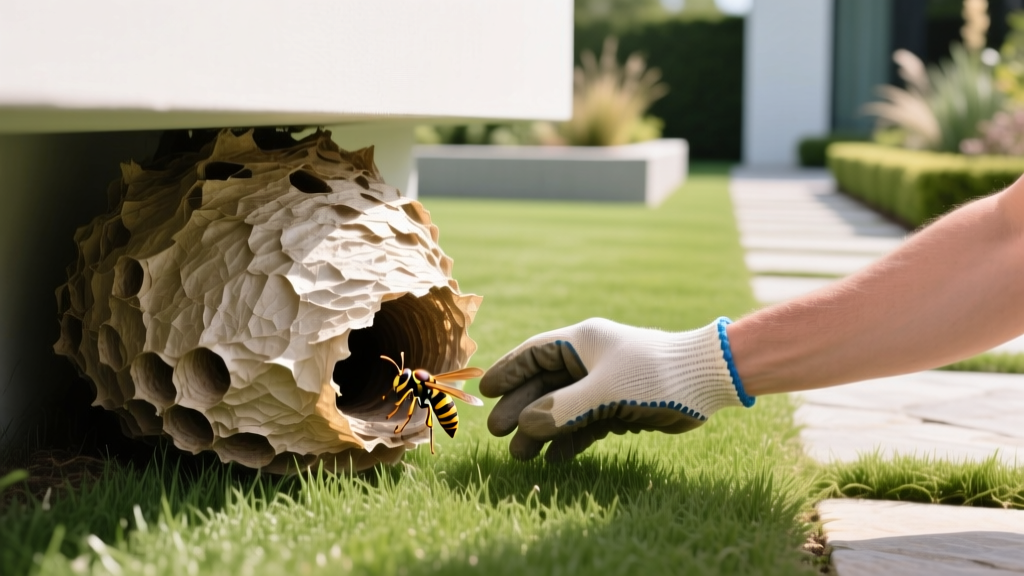
How to Identify and Safely Remove a Ground Hornet Nest in Your Yard
The Entomology Reality: True Hornets Do Not Nest in the Ground
Before purchasing a single can of wasp spray, we must address a critical entomological misconception. If you are searching for a 'ground hornet nest,' you are likely dealing with a case of mistaken identity. True hornets (genus Vespa, such as the European hornet or Bald-faced hornet) exclusively build large, papery, aerial nests in trees, shrubs, or under the eaves of structures. They do not burrow underground.
When homeowners encounter aggressive, stinging insects entering and exiting holes in the lawn, they are almost always looking at one of two distinct insects: ground-nesting yellowjackets (genus Vespula) or cicada killer wasps (Sphecius speciosus). Misidentifying these two species is the leading cause of failed eradication attempts and unnecessary chemical use. Yellowjackets are highly defensive, colony-dwelling predators that will swarm and sting repeatedly. Cicada killers are solitary, generally docile hunters that only sting if physically crushed or trapped.
| Feature | Ground Yellowjackets | Cicada Killers | True Hornets (Aerial) |
|---|---|---|---|
| Nest Location | Underground burrows, abandoned rodent holes | Shallow, individual dirt burrows in sparse lawn areas | Trees, eaves, shrubs (never underground) |
| Entrance Size | 1 to 1.5 inches (mouse-hole size) | 1.5 to 2 inches (quarter-sized) with loose soil fan | N/A (Aerial papery envelopes) |
| Colony Size | 500 to 5,000+ workers | Solitary (one female per burrow) | 100 to 700 workers |
| Aggression Level | Extreme; will swarm and pursue threats | Low; females rarely sting unless handled | Moderate to High near nest |
| Diet | Sugars, proteins, other insects, human food | Exclusively cicadas (to provision larvae) | Other insects, tree sap |
Step-by-Step Ground Nest Identification
To determine which insect has colonized your yard, observe the nest entrance during peak daylight hours (between 1:00 PM and 3:00 PM) from a safe distance of at least 15 feet. Use binoculars if necessary.
Traffic Pattern Analysis
- The Yellowjacket Highway: If you see a steady, continuous stream of insects flying directly in and out of a small, inconspicuous hole with no loose soil around the perimeter, you have a yellowjacket colony. According to Penn State Extension, a mature late-summer yellowjacket nest can see hundreds of foraging trips per hour.
- The Solitary Cicada Killer: If you observe large (1.5 to 2-inch), heavy-bodied wasps dragging paralyzed cicadas into individual, widely spaced holes surrounded by a distinct fan-shaped mound of freshly excavated loose soil, these are cicada killers. The University of Kentucky Entomology Department notes that these wasps prefer well-drained, sandy soils with sparse grass coverage.
⚠️ CRITICAL SAFETY WARNING: Never plug a ground yellowjacket hole with dirt, rocks, or steel wool during the day. Trapping foragers inside will cause them to chew through alternative exit routes, often leading them up through hollow patio blocks, foundation weep holes, or directly into your home's interior wall voids.
When to Treat vs. When to Tolerate
Not every ground nest requires immediate chemical intervention. Your response should be dictated by the species identified and the nest's proximity to high-traffic zones.
Tolerance Protocol: Cicada Killers
If the insects are cicada killers, and the burrows are located in the back perimeter of your yard away from play areas, the best course of action is tolerance. Cicada killers are vital native predators that naturally control cicada populations. They die off naturally by late September. To prevent them from returning next year, focus on lawn renovation: these wasps only dig in bare, compacted, or sandy patches. Overseeding with a dense turfgrass blend like Kentucky Bluegrass or Tall Fescue and maintaining a 3-inch mowing height will naturally deter future burrowing.
Eradication Protocol: Yellowjackets
Ground yellowjackets pose a severe anaphylactic risk to humans and pets, especially from August through October when colonies reach peak population and foragers become highly defensive over depleting food sources. If the nest is within 20 feet of a doorway, patio, or play structure, eradication is mandatory.
The Eradication Protocol: Products, Timing, and Safety
Eliminating a subterranean yellowjacket colony requires a fundamentally different approach than spraying an aerial wasp nest. Liquid sprays will not penetrate deep into the soil chambers, which can extend up to three feet underground and house thousands of workers.
Step 1: Timing and Preparation
Treatment must occur strictly between 9:00 PM and midnight, or just before dawn. At these times, all foraging workers have returned to the nest, and their metabolism is slowed by cooler temperatures, making them sluggish. You will need:
- PPE: A full bee suit with an attached veil, heavy leather gloves, and closed-toe boots. Tuck pant legs into socks.
- Illumination: A flashlight fitted with a red cellophane filter. Yellowjackets cannot perceive red light wavelengths, allowing you to illuminate the nest entrance without triggering a defensive swarm response.
Step 2: Selecting the Right Chemistry
For deep ground nests, insecticidal dust is vastly superior to aerosol foams or liquid sprays. Dust clings to the insects' bodies as they walk through the treated entrance, and they carry the lethal payload deep into the nest, distributing it to the queen and brood via trophallaxis (food sharing).
| Product Type | Active Ingredient | Estimated Cost (2026) | Best Use Case |
|---|---|---|---|
| DeltaDust | Deltamethrin (0.05%) | $35 - $45 | Deep underground nests; moisture-resistant; tracks deep into voids. |
| Drione Dust | Pyrethrins + Silica Gel | $40 - $55 | Dry, shallow nests; rapid knockdown via desiccation. |
| Wasp-Freeze Aerosol | Prallethrin | $12 - $18 | Shallow surface nests only; provides a 15-foot knockdown safety buffer. |
Step 3: Application Technique
- Approach the nest slowly using your red-filtered light.
- Using a hand duster (like the JT Eaton Duster), apply a generous 2-ounce cloud of DeltaDust directly over and slightly into the entrance hole. Do not jam the duster nozzle deep into the hole, as this may agitate the guard wasps.
- Create a light dusting barrier in a 12-inch radius around the entrance.
- Back away slowly. Do not plug the hole. The foragers exiting the next morning must walk through the dust to carry it to the queen.
- Wait 48 to 72 hours. You should see a 90% reduction in traffic by day two. If activity persists on day four, apply a second dusting at dusk.
Professional vs. DIY Cost Analysis: Hiring a licensed pest control professional to treat a ground yellowjacket nest typically costs between $150 and $300 in 2026, depending on regional labor rates and nest accessibility. A DIY approach using commercial-grade DeltaDust and a quality hand duster will cost approximately $50 upfront, but the dust remains effective for up to 8 months and can be used for future perimeter pest defense.
Post-Treatment Lawn Recovery
Once you have confirmed zero insect activity for five consecutive days, the nest can be safely filled. Use a mixture of topsoil and compost to fill the void, tamping it down firmly with a hand tamper to prevent future rodent occupation. If the surrounding turf was damaged by the excavation or the treatment process, overseed the patch immediately. Apply a starter fertilizer (such as Scotts Turf Builder Starter Food for New Grass, roughly $25 for a 5,000 sq ft bag) and keep the soil consistently moist for 14 days to ensure seed germination.
Frequently Asked Questions
Can I flood a ground hornet nest with a garden hose?
No. Flooding a yellowjacket nest with water is highly dangerous and ineffective. Yellowjacket nests are lined with a water-resistant papery envelope. Adding water will likely just agitate the colony, causing them to swarm out of the entrance and attack, or force them to chew new exit holes closer to your home's foundation.
Will vinegar or boiling water kill ground yellowjackets?
While boiling water can kill insects it directly contacts, it will not penetrate deep enough into the soil galleries to reach the queen, which is often located 18 to 36 inches underground. Furthermore, pouring boiling water onto your lawn will sterilize the soil, destroy beneficial microbes, and kill the surrounding grass roots, leaving you with a dead patch that invites weed invasion. Stick to targeted insecticidal dusts.
Are ground-nesting bees the same as yellowjackets?
No. Ground-nesting bees (like mining bees or sweat bees) are solitary, highly beneficial pollinators that are incredibly docile. They create small, pencil-sized holes in the spring and are active for only a few weeks. They do not scavenge human food, do not swarm, and should never be treated with pesticides. If the insect is fuzzy and resembles a small honeybee, leave it alone.

