
Pest Control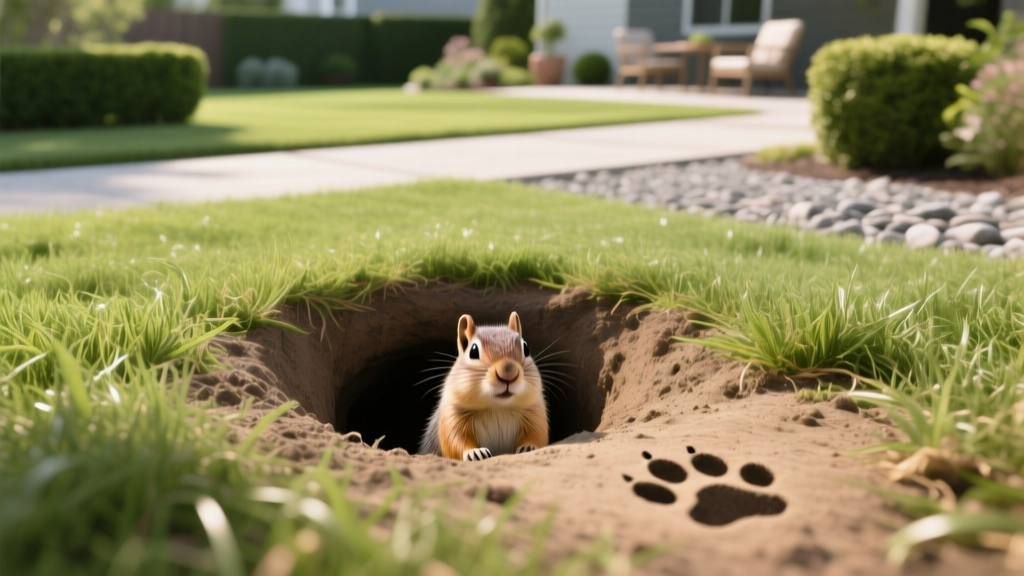
Ground Squirrel Holes: How to Identify, Fill, and Prevent Them
The Anatomy of a Ground Squirrel Burrow System
Finding a single hole in your lawn rarely indicates a solitary animal. Ground squirrels (Otospermophilus and Urocitellus species) are highly social, colonial rodents. What appears as an isolated ground squirrel hole is typically one of several entrances to a massive, interconnected subterranean network. According to the Internet Center for Wildlife Damage Management (ICWDM), a mature colony's burrow system can cover 1,500 to 2,000 square feet, with lateral foraging tunnels extending up to 35 feet from the central nesting chamber.
The nesting chambers themselves are usually located 2 to 3 feet below the surface, safely beneath the frost line and protected from surface predators. The entrance holes typically measure 2 to 3 inches in diameter. Unlike some rodents that plug their holes, ground squirrels generally leave their active entrances open during daylight hours, creating a distinct, fan-shaped mound of excavated soil radiating outward from the opening.
Identifying the Culprit: Ground Squirrel Holes vs. Other Rodents
Misidentifying the burrow owner leads to ineffective treatment. Pocket gophers, voles, and moles all create surface disturbances, but their hole geometry and soil displacement patterns differ drastically from ground squirrel holes. Use the comparison matrix below to verify the species before attempting exclusion or filling.
| Rodent Species | Hole Diameter | Dirt Mound Shape | Surface Signs | Primary Damage Type |
|---|---|---|---|---|
| Ground Squirrel | 2 to 3 inches | Fan-shaped, radiating outward | Open holes, well-worn surface trails, chewed irrigation lines | Foundation undermining, root girdling, trip hazards |
| Pocket Gopher | 2 to 3.5 inches (usually plugged) | Crescent or horseshoe-shaped | Plugged holes, no visible surface trails | Severe root consumption, destroyed taproots |
| Vole | 1 to 1.5 inches | No mound, soil scattered lightly | Surface runways through grass, clipped grass blades | Bark girdling at tree bases, lawn runway scarring |
| Mole | N/A (tunnels only) | Volcano-shaped, symmetrical | Raised surface ridges, spongy soil underfoot | Tunneling damage, uprooted shallow plants |
Step-by-Step Guide to Safely Filling Ground Squirrel Holes
Simply shoveling topsoil into a ground squirrel hole is a temporary fix. Ground squirrels are prolific diggers and will easily re-excavate loose fill within 48 hours. To permanently collapse the tunnel and deter re-digging, you must use a structural fill mixture and verify the burrow is abandoned.
Step 1: The Activity Test
Before filling, confirm the burrow is inactive to avoid trapping animals inside, which causes them to dig secondary emergency exits under your foundation or patio. Crumple a piece of newspaper and loosely stuff it into the hole entrance in the late evening. Check it the following afternoon. If the paper is pushed out or pulled in, the burrow is active. Repeat this test for three consecutive days to ensure the colony has relocated or been professionally removed.
Step 2: Excavate the Entrance
Use a narrow trenching shovel or digging bar to excavate the first 12 to 18 inches of the tunnel entrance. This removes the loose, easily navigable "porch" area of the burrow and exposes the harder-packed native soil walls.
Step 3: Prepare and Apply the Deterrent Fill Mix
Mix a deterrent backfill consisting of 60% native clay-heavy soil and 40% 3/8-inch minus crushed angular gravel. The sharp edges of the crushed gravel deter digging, while the fine particles of the "minus" gravel lock the mixture into a concrete-like density when tamped.
- Pour the mixture into the excavated shaft in 4-inch lifts (layers).
- Use a 2x4 post or a manual hand tamper to aggressively compact each layer.
- Continue until the fill is level with the surrounding grade.
Step 4: Cap and Restore
Cap the final 2 inches with high-quality topsoil and sow with a region-appropriate, deep-rooted grass seed (such as tall fescue or bermudagrass). Water heavily to settle the soil and activate the seed.
⚠️ Legal & Safety Warning: Before filling, fumigating, or trapping, consult your state's wildlife regulations. According to UC Agriculture and Natural Resources (UC ANR), while ground squirrels are often classified as nongame mammals allowing year-round control on private property, specific municipal ordinances or HOA rules may restrict lethal control methods or require permits for chemical fumigants.
Long-Term Deterrence and Exclusion Strategies
Filling holes addresses the symptom; exclusion addresses the colony's desire to inhabit your property. Ground squirrels prefer areas with tall grass for predator cover and loose, well-draining soil for easy excavation.
Habitat Modification
Maintain your lawn at a height of 2 to 3 inches. Remove brush piles, stacked lumber, and dense groundcover near fence lines, as these provide the overhead canopy ground squirrels require to feel secure from hawks and coyotes. If you have a compost bin, ensure it is fully enclosed; exposed food waste will draw foraging scouts.
Physical Exclusion Fencing
For high-value areas like vegetable gardens or vulnerable foundation perimeters, install a subterranean exclusion barrier.
- Dig a trench 18 inches deep and 2 inches wide around the perimeter.
- Install 19-gauge, 1/2-inch galvanized hardware cloth.
- Bend the bottom 6 inches of the wire outward at a 90-degree angle (forming an "L" shape pointing away from the protected area).
- Backfill the trench. When squirrels dig down and hit the wire, they will attempt to dig under it, but the outward-facing "L" apron will block their path.
Chemical and Sensory Repellents
While no repellent offers 100% eradication, capsaicin-based liquid repellents (containing at least 0.5% capsaicinoids) applied to the perimeter of garden beds can deter foraging. Methyl anthranilate, a grape-flavoring compound, is also effective as a taste aversion agent when sprayed on ornamental plants. Reapply every 14 days or immediately after heavy irrigation.
When to Call Professional Wildlife Control
If your property features more than five active ground squirrel holes, or if burrows are located within 10 feet of your home's foundation, concrete patio, or retaining wall, DIY filling is insufficient. The structural undermining poses a severe collapse and water-intrusion risk.
Professional wildlife control operators in 2026 typically utilize restricted-use fumigants like aluminum phosphide or pressurized exhaust (carbon monoxide) systems to eliminate deep nesting chambers that traps cannot reach. Expect to pay between $175 and $350 for an initial fumigation or pressurized exhaust treatment on a standard suburban lot (under 1/4 acre). Follow-up exclusion trenching and hardware cloth installation generally run $12 to $18 per linear foot. Always request a comprehensive site inspection that includes a thermal or fiber-optic camera scope of the main tunnels to map the full extent of the colony before signing a service contract.

