
Pest Control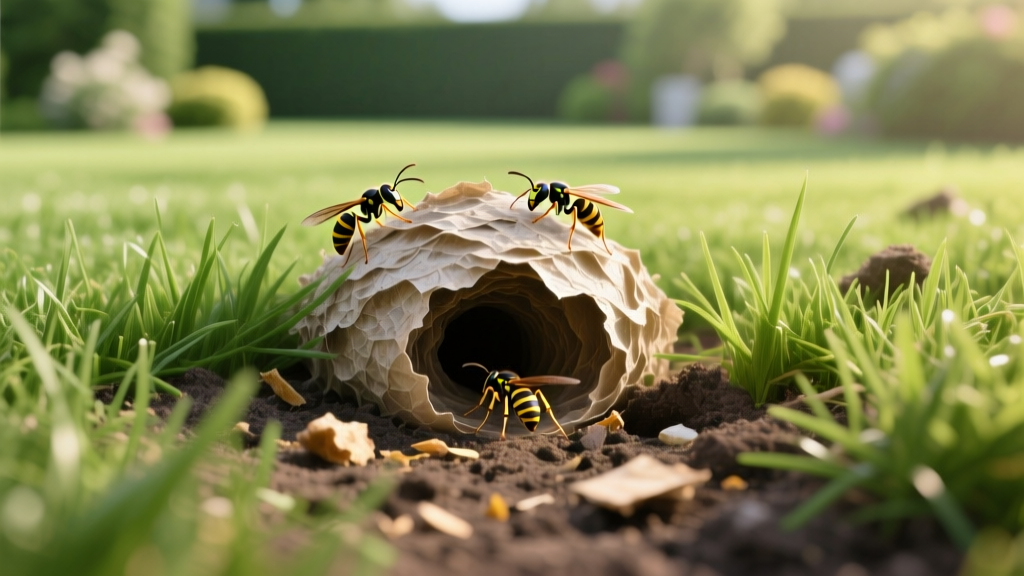
Wasps in My Lawn: How to Identify and Eliminate Ground Nests
Finding a swarm of insects hovering over your grass or discovering mysterious dirt mounds near your patio can trigger immediate alarm. When homeowners search for solutions to wasps in my lawn, the initial instinct is often to reach for a can of aerosol bug spray. However, not all ground-nesting wasps are aggressive, and indiscriminate spraying can harm beneficial pollinators while failing to address the root cause of the infestation.
Effective yard defense requires precise identification. Ground-nesting insects range from harmless, solitary pollinators to highly defensive, colonial predators. This guide provides a professional framework for identifying the species in your turf, altering your soil conditions to deter future nesting, and executing targeted eradication protocols when human safety is at risk.
The Ground Wasp Decision Matrix: Friend or Foe?
Before purchasing any pest control products, you must identify the insect. Misidentifying a solitary cicada killer as a yellowjacket colony leads to unnecessary chemical use and wasted money. Use the matrix below to determine your threat level.
| Species | Appearance & Size | Nest Mound Characteristics | Aggression Level | Action Required |
|---|---|---|---|---|
| Cicada Killer (Sphecius speciosus) | 1.5 to 2 inches; black with yellow banding; reddish-brown wings. | Loose, fan-shaped dirt piles (2-3 inches wide) on bare soil. | Very Low. Males cannot sting; females only sting if physically crushed. | None. Tolerate or use cultural lawn changes. |
| Eastern Yellowjacket (Vespula maculifrons) | 0.5 inches; bright yellow and black bands; hairless body. | Single, central hole (nickel-sized); often hidden in grass or old rodent burrows. No loose dirt fan. | Extreme. Highly defensive of the colony; will swarm and sting repeatedly. | Immediate targeted chemical treatment at dusk. |
| Digger / Sand Wasps (Bicyrtes quadrifasciatus) | 0.75 inches; black with pale yellow markings; silver facial hairs. | Small, scattered holes in sandy, well-draining soil with minimal turf cover. | Low. Solitary and non-aggressive unless handled. | Tolerate. Improve turf density to deter. |
Expert Insight: Male cicada killers are notorious for aggressive "dive-bombing" behavior, flying directly at faces to defend their territory. Despite this terrifying display, male wasps of all species lack a stinger. If the wasps hovering over your lawn are entirely male, they pose zero physical threat. According to Penn State Extension, these males are simply competing for mating rights and will ignore you if you remain calm.
Why Your Lawn is Attracting Ground-Nesting Wasps
Wasps do not choose nesting sites randomly. Solitary ground wasps (like cicada killers and sand wasps) specifically seek out bare, well-drained, sandy, or compacted soils. They avoid dense, healthy root systems because digging through thick thatch and matted roots is energetically costly.
Yellowjackets, conversely, often hijack existing subterranean voids. If you have a history of vole damage, mole tunnels, or decaying tree roots in your yard, yellowjacket queens will claim these hollow cavities in the spring to build massive colonies that can house up to 4,000 workers by late summer.
⚠️ Soil Compaction Warning: If your soil is heavily compacted clay, water pools on the surface, deterring most ground wasps. However, if you have sandy loam soil that drains instantly, your yard is a prime real estate target for solitary diggers. You must alter the soil profile to stop them.
Cultural Defense: Making Your Turf Uninhabitable
The most permanent solution to wasps in your lawn is ecological displacement. By creating an environment that is physically difficult for wasps to excavate, you force them to relocate to less managed areas.
1. Optimize Mowing Heights and Thatch
Maintain your turf at a minimum height of 3.5 to 4 inches. Taller grass shades the soil surface, keeping it cooler and slightly more humid—conditions that ground-nesting wasps actively avoid. Furthermore, allow a moderate thatch layer (up to 0.5 inches) to build; this dense root-and-stem mat acts as a physical barrier that solitary wasps cannot easily penetrate.
2. Strategic Overseeding
Eliminate bare patches where wasps initiate their burrows. For cool-season lawns, apply a Tall Fescue blend at a rate of 5 to 6 lbs per 1,000 square feet during early fall. Tall Fescue develops a remarkably deep, dense root system that physically blocks subterranean excavation. For warm-season lawns, plug bare spots with Zoysia or Bermudagrass sprigs to rapidly close canopy gaps.
3. Alter Soil Moisture Profiles
Ground wasps require dry, friable soil to construct their tunnel walls without them collapsing. Implementing a heavy, deep irrigation schedule during their peak nesting months (July and August for cicada killers) will collapse their tunnels and drown larvae. Apply 1.5 inches of water per week in two deep sessions rather than daily light sprinklings.
Targeted Eradication Protocols for Aggressive Species
If you have confirmed the presence of an aggressive yellowjacket colony, or if a massive cicada killer infestation is rendering your yard unusable, chemical intervention is necessary. Do not use standard flying insect aerosols; they only kill on contact and will not penetrate the subterranean nest.
Recommended Products and Pricing (2026 Market Rates)
- Bayer Delta Dust (Deltamethrin 0.05%): ~$28 for 1 lb. A waterproof insecticidal dust that clings to the wasps' bodies as they enter the tunnel, transferring the poison to the colony deep underground.
- Syngenta Tempo SC Ultra (Cyfluthrin): ~$45 for 240 ml. A liquid concentrate mixed at 8 ml per gallon of water, ideal for drenching large, hidden yellowjacket voids.
- Raid Wasp & Hornet Foaming Spray: ~$8 per can. Only use this for small, accessible, above-ground satellite nests, not deep lawn burrows.
Step-by-Step Nighttime Application
As noted by the University of Minnesota Extension, yellowjackets are most docile at night when all foragers have returned to the nest and temperatures drop below 60°F.
- Locate the entrance during the day: Watch the flight paths from a safe distance (at least 20 feet away). Mark the nest entrance with a small landscaping flag or a stone placed 3 feet away. Do not approach the hole.
- Prepare your gear at dusk: Wear thick clothing, tuck pants into socks, and use a red-filtered flashlight (wasps cannot see red light well, preventing them from targeting the beam).
- Apply Delta Dust: Using a handheld bulb duster (like the JT Eaton Duster), puff 2 to 3 grams of dust directly into the entrance hole. Do not overfill the hole; you want the wasps to walk through the dust, not plug the entrance.
- Execute a perimeter drench (For Yellowjackets): If dealing with a massive yellowjacket colony in a rodent burrow, mix Tempo SC Ultra and slowly pour 1 to 2 gallons of the solution directly into the void to flood the lower chambers.
- Retreat immediately: Leave the area and do not return until the following afternoon.
🛑 CRITICAL SAFETY WARNING: Never plug, cover, or step on the nest entrance after applying treatment. If you seal the hole, the trapped wasps will simply dig a secondary exit tunnel, often emerging directly under the grass a few feet away in a hyper-aggressive state. Leave the hole open so foragers can enter, contact the pesticide, and spread it to the queen.
When to Call a Professional Exterminator
While DIY treatments cost between $30 and $50, professional pest control services typically charge $150 to $300 per nest removal. You should bypass DIY methods and hire a licensed professional if:
- The nest is located within 10 feet of a high-traffic doorway, playset, or patio.
- You or a family member has a known anaphylactic allergy to Hymenoptera stings.
- The colony is nesting inside a structural void (e.g., under a concrete slab, inside a retaining wall, or within a hollow fence post) where liquid and dust applications cannot reach the core comb.
Managing wasps in your lawn is ultimately an exercise in turf health. By maintaining a dense, deeply rooted, and adequately irrigated lawn, you naturally eliminate the environmental triggers that invite ground-nesting insects, keeping your yard safe and visually pristine without relying on heavy chemical interventions.

