
Pest Control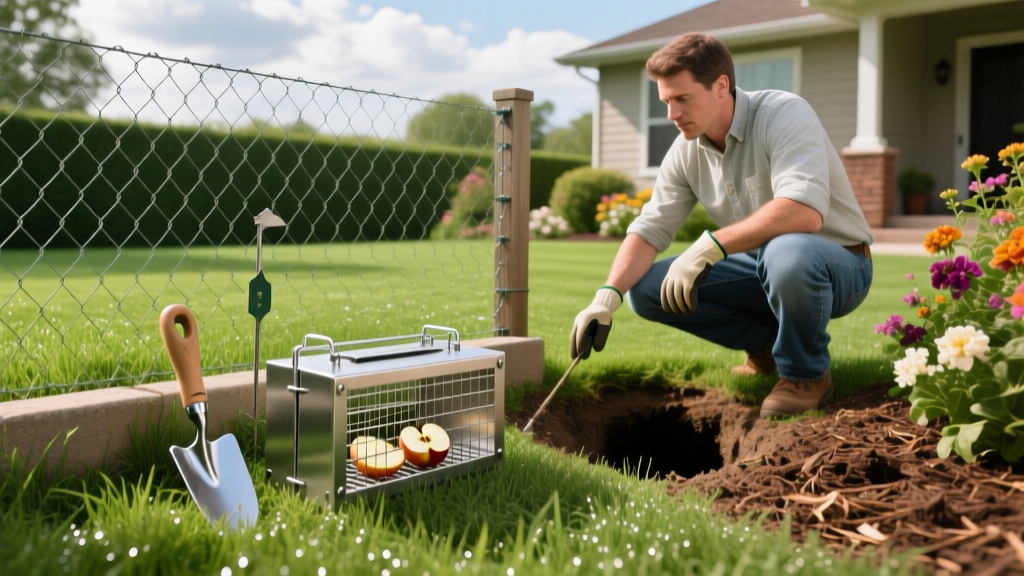
How to Get Rid of Groundhogs From Your Yard: Fencing & Traps
The Biology of a Garden Destroyer
Groundhogs (Marmota monax), commonly known as woodchucks, are formidable adversaries for any homeowner trying to maintain a pristine lawn or productive vegetable garden. A single adult groundhog can consume up to 1.5 pounds of vegetation daily, and their extensive burrowing networks can undermine sheds, patios, and home foundations. Understanding how to get rid of groundhogs from your yard requires a multi-tiered strategy that addresses their digging capabilities, foraging habits, and seasonal hibernation cycles. Surface-level deterrents like plastic owls or ultrasonic stakes are universally ineffective against these determined rodents. Success requires physical exclusion, targeted trapping, and strategic habitat modification.
Identifying the Intruder: Groundhog vs. Other Diggers
Before deploying expensive exclusion methods, confirm that groundhogs are the actual culprits. Misidentifying the pest leads to wasted resources and continued damage. Groundhog burrows are distinctly larger than those of other common lawn pests.
| Feature | Groundhog (Woodchuck) | Vole | Skunk / Raccoon |
|---|---|---|---|
| Burrow Entrance Size | 10 to 12 inches wide | 1 to 2 inches wide | 3 to 4 inches wide |
| Soil Mounding | Large, distinct crescent mound | No surface mound | Shallow, scattered digging |
| Vegetation Damage | Stems cut cleanly at a 45° angle | Bark gnawed at base of trees | Grubs dug up, sod rolled back |
| Activity Pattern | Diurnal (active during daylight) | Day and night | Nocturnal |
The Exclusion Framework: Building an L-Footer Fence
If you want a permanent solution for how to get rid of groundhogs from your yard, physical exclusion is the only guaranteed method. Standard chicken wire buried a few inches into the soil will fail; groundhogs possess powerful forelimbs capable of moving massive amounts of earth. You must construct an "L-footer" fence.
Materials Required
- Wire Mesh: 19-gauge, 1-inch or 1/2-inch galvanized hardware cloth. Do not use chicken wire; groundhogs can easily chew through or bend it.
- Wooden Posts: 4x4 treated timber or heavy-duty steel T-posts spaced every 6 to 8 feet.
- Fasteners: Heavy-duty galvanized fencing staples (u-nails) and zip ties.
Step-by-Step Installation
- Dig the Trench: Excavate a trench 12 inches deep and 12 inches wide along the perimeter of the area you wish to protect.
- Bend the Mesh: Take your hardware cloth (which should be 4 to 5 feet tall) and bend the bottom 12 inches at a strict 90-degree angle outward, facing away from the garden.
- Set the L-Footer: Place the bent portion into the trench so it rests flat against the bottom, pointing away from the protected zone. This prevents the groundhog from digging directly at the fence line; when they dig, they hit the wire mesh and lack the cognitive ability to back up 12 inches and dig underneath.
- Secure the Vertical: Attach the vertical portion to your posts, ensuring the fence stands at least 3 feet above ground. Groundhogs are surprisingly adept climbers, so a 3-foot minimum is mandatory.
- Add a Top Deterrent: Leave the top 12 inches of the fence unattached to the posts. This floppy top will swing outward if a groundhog attempts to climb over, making it impossible to scale.
Chemical and Sensory Deterrents: Efficacy and Application
While fencing is the gold standard, repellents can serve as a temporary bridge or a supplementary layer of defense for larger properties where fencing is cost-prohibitive. According to Penn State Extension, repellents must be applied before damage becomes severe and reapplied after heavy rainfall.
Pro Tip: Groundhogs have highly sensitive olfactory and gustatory systems. Rotating between taste-based and odor-based repellents prevents them from habituating to a single active ingredient.
Active Ingredients That Work
- Capsaicin (2.5% concentration): Products like Miller Hot Sauce Animal Repellent cost approximately $25 to $30 per gallon. This creates an intense burning sensation in the mouth. Apply directly to the foliage of target plants. Warning: Do not apply to plants that are ready for immediate human harvest.
- Castor Oil: Castor oil-based granular repellents (e.g., Bonide Mole & Vole Repellent) disrupt the digestive tract of burrowing mammals. Broadcast at a rate of 2 lbs per 1,000 square feet and water heavily to push the active ingredient into the top 3 inches of soil.
- Predator Urine: Coyote or fox urine (e.g., Shake-Away) can trigger a flight response, but its efficacy drops significantly in suburban environments where groundhogs have already habituated to the scent of neighborhood dogs.
Live Trapping Protocols: Bait, Placement, and Relocation Laws
Trapping is highly effective when performed between mid-June and late August. During this window, juvenile groundhogs are mobile, and adults are actively foraging to build fat reserves for hibernation. Avoid trapping in early spring when mothers have immobile young in the burrow, which will result in orphaned and dying kits.
Trap Selection and Baiting
Use a single-door live trap measuring at least 10" x 12" x 32", such as the Havahart 1081 (retailing for $55 to $65). Place the trap directly in the groundhog's primary runway, which you can identify by the worn, matted grass path leading to the burrow entrance.
The Trail-Baiting Technique: Do not just put bait inside the trap. Place small pieces of bait (cantaloupe, sweet corn, or string beans) leading up to the trap entrance, a small amount just inside the door, and a large pile at the very back of the trap behind the trigger pan. Cover the wire floor of the trap with a thin layer of soil or grass to mask the human scent and unnatural wire texture.
Legal Warning on Relocation: Before relocating a trapped groundhog, consult your local Department of Natural Resources. According to the Humane Society of the United States, relocating wildlife is illegal in many states (including New York and Pennsylvania) without a special permit. Furthermore, relocated groundhogs face a mortality rate exceeding 70% due to territorial disputes, starvation, and exposure in unfamiliar environments. Euthanasia or hiring a licensed Nuisance Wildlife Control Operator (NWCO) is often the legally and ethically mandated path.
Burrow Fumigation: When and How to Use Gas Cartridges
If trapping fails and exclusion is not immediately viable, burrow fumigation using carbon monoxide gas cartridges (such as Giant Destroyer, approx. $12 for a 3-pack) is a lethal but effective alternative. This method is only viable when the groundhog is actively residing in the burrow.
Safety and Application Protocol
- Identify all connected burrow entrances. Groundhog networks can have up to five distinct exits.
- Seal all but one or two main entrances using damp soil and rocks.
- Light the fuse on the gas cartridge and allow it to burn for 15 seconds until it produces thick smoke.
- Place the cartridge deep into the open burrow entrance and immediately seal the hole with a piece of sod or heavy, wet clay soil to prevent the gas from escaping.
- Monitor the sealed entrances for 24 hours. If smoke is seen leaking from a previously unknown exit, seal it immediately.
CRITICAL SAFETY HAZARD: Never use gas cartridges in burrows located under homes, attached sheds, porches, or near concrete foundations. Carbon monoxide can seep through soil fissures and foundation cracks, posing a lethal risk to humans and pets inside the structure.
Frequently Asked Questions
What time of day are groundhogs most active?
Groundhogs are diurnal. Their peak foraging hours occur in the early morning (6:00 AM to 9:00 AM) and late afternoon (4:00 PM to 7:00 PM). Schedule your trap checks and visual inspections during these windows.
Will filling the burrow with gravel keep them away?
No. Simply filling a vacated burrow with gravel or topsoil is ineffective. If the territory remains attractive (i.e., abundant food and water), a new groundhog will quickly excavate the loose fill. You must remove the food source or install an L-footer fence to prevent re-colonization.
Do groundhogs carry rabies?
While any mammal can theoretically contract rabies, groundhogs are rarely carriers. However, they can harbor ticks, fleas, and transmit tularemia. Always wear heavy leather gauntlet gloves when handling traps or working near active burrows.

