
Pest Control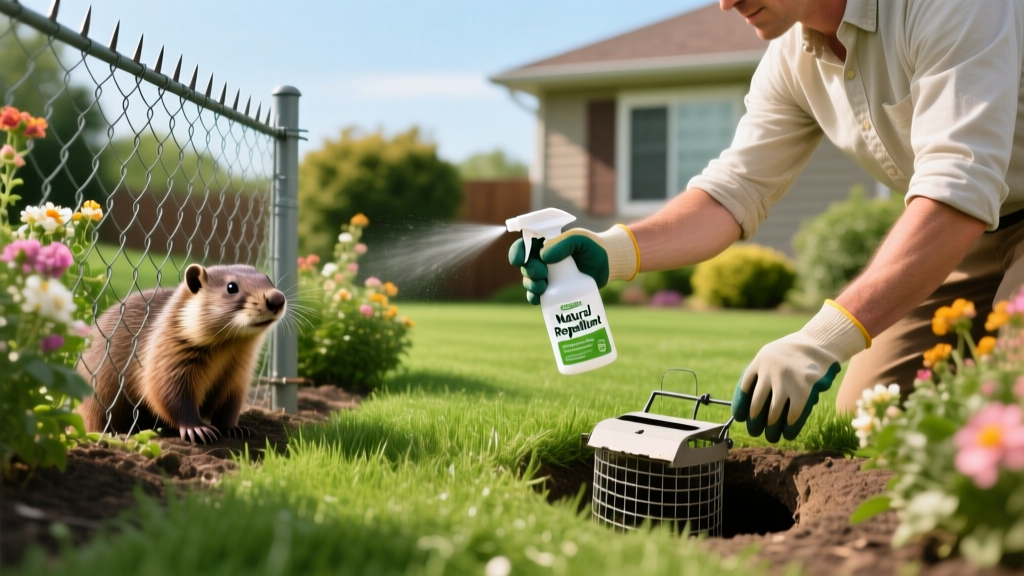
Effective Groundhog Repellent Tactics: Sprays, Fences, and Traps
The True Cost of Groundhog Damage
Groundhogs (Marmota monax), frequently called woodchucks, are formidable landscape adversaries. A single adult groundhog consumes up to 1.5 pounds of vegetation daily, decimating hostas, brassicas, and legumes in hours. Beyond dietary destruction, their excavations pose severe structural threats. According to the Internet Center for Wildlife Damage Management, a mature groundhog burrow system can span 60 feet in length and plunge 5 feet deep, frequently undermining patios, shed foundations, and retaining walls. Selecting the right groundhog repellent requires moving beyond generic garden center sprays and implementing a layered defense strategy based on the specific pressure your property faces.
Understanding Groundhog Behavior: Why Basic Repellents Fail
Groundhogs are highly adaptable foragers with a keen sense of smell and neophobia (fear of new objects) that quickly fades when hunger overrides caution. Many homeowners rely on predator urine or basic sonic spikes, only to find the animals returning within days. Groundhogs quickly habituate to static sensory deterrents. If a coyote urine granule does not physically harm them, they will simply step over it to reach a ripe cantaloupe. Effective deterrence requires combining olfactory, physical, and behavioral disruptions.
Chemical and Natural Groundhog Repellent Sprays
Repellent sprays are best utilized as a frontline defense for young transplants and early-season garden beds before groundhogs establish a daily foraging route.
Putrescent Egg and Capsaicin Formulations
Products utilizing putrescent whole egg solids (such as Liquid Fence, which contains 5.0% active egg solids) trigger a predator-prey olfactory response. Groundhogs associate the scent of decaying protein with danger and avoid the area. Capsaicin-based sprays (like Miller Hot Sauce, containing 2.5% capsaicin) rely on taste aversion. However, capsaicin requires the groundhog to take a bite of the treated plant before the deterrent activates, meaning some initial crop damage is inevitable.
Application Protocol: Apply putrescent egg formulations to dry foliage. The spray requires a strict 24-hour drying window to bind to the plant cuticle. Once cured, it can withstand up to 1 inch of rainfall. Reapply immediately after heavy rain or every 30 days during active growing seasons. Never apply capsaicin sprays to the edible portions of crops within 7 days of harvest.
Castor Oil-Based Deterrents for Burrow Perimeters
Castor oil derivatives (such as Bonide MoleMax) do not repel groundhogs through scent; they alter the soil environment. When drenched into the soil around active burrow entrances, castor oil coats the root systems and soil particles, disrupting the groundhog's digging mechanics and causing mild gastrointestinal distress if they ingest treated roots while foraging. This is highly effective for pushing groundhogs out of established tunnel networks beneath sheds.
Physical Exclusion: The Only 100% Effective Repellent
When chemical repellents wash away or habituation occurs, physical exclusion remains the only permanent groundhog repellent. According to Penn State Extension, standard chicken wire is insufficient; groundhogs can easily crush and burrow beneath lightweight poultry netting. You must use heavy-gauge welded wire.
Fencing Material Comparison Matrix
| Material Type | Specifications | Cost (Per Linear Ft) | Effectiveness | Best Use Case |
|---|---|---|---|---|
| Poultry Netting (Chicken Wire) | 20-gauge, 1-inch hex mesh | $0.50 - $0.80 | Low | Temporary poultry enclosures only |
| Galvanized Welded Wire | 16-gauge, 1x1 inch square mesh | $2.50 - $4.00 | High | Permanent garden perimeter fencing |
| Hardware Cloth | 19-gauge, 1/2x1/2 inch mesh | $3.00 - $5.50 | Very High | Under-deck skirting and shed barriers |
The L-Shaped Trenching Technique
To prevent subterranean bypassing, dig a trench 12 inches deep and 6 inches wide along the fence line. Place the bottom 12 inches of the welded wire into the trench, but bend the lowest 6 inches outward at a 90-degree angle (forming an 'L' shape pointing away from the garden). When a groundhog attempts to dig at the base of the fence, it encounters the horizontal wire barrier and lacks the cognitive ability to back up and dig behind it. The above-ground portion should be at least 3 feet high, with the top 12 inches left unattached to wooden posts so it flops outward, preventing climbers from gaining leverage.
Sensory Deterrents: Motion Sprinklers and Scent Barriers
For properties where fencing is visually or financially impractical, active sensory deterrents can disrupt foraging patterns.
- Motion-Activated Sprinklers: The Orbit Yard Enforcer (Model 621000) utilizes an infrared sensor to detect heat and motion up to 40 feet away, delivering a sharp, 5-second burst of water. The sudden noise and physical impact trigger a flight response without causing harm. Position the unit to cover the primary approach vector to your garden, and move it every 3 days to prevent habituation.
- Epsom Salt Barriers: Sprinkling Epsom salt (magnesium sulfate) on the leaves of hostas and beans creates a bitter taste barrier. While cheap and non-toxic, it must be reapplied after every single dew cycle or rain event, making it labor-intensive for large properties.
- Ultrasonic Spikes: Avoid these. Independent field tests consistently show that subterranean and surface-dwelling mammals quickly ignore high-frequency sound waves, especially when the sound must travel through dense foliage or soil.
When Repellents Fail: Humane Trapping Protocols
If a groundhog has established a primary burrow directly beneath a critical structure, repellents will not evict them. Live trapping becomes necessary. The industry standard is the Havahart Two-Door Live Trap (Model 1085, measuring 32 x 12 x 12 inches). Smaller traps will result in tail-catches, which can injure the animal and cause trap-shyness.
Legal Warning: Groundhogs are classified as rabies vector species in many jurisdictions. The Humane Society of the United States notes that relocating wildlife across county lines or releasing them on public lands is strictly illegal in most states without a specific nuisance wildlife permit. Always check local Department of Natural Resources regulations before setting a trap.
Baiting and Placement Tactics
Groundhogs are highly suspicious of enclosed spaces. To acclimate them, wire the trap doors open for three days and place bait inside. Use high-sugar, high-moisture baits like cantaloupe chunks or sweet corn on the cob—never use peanut butter, which is better suited for rodents. Once the groundhog is feeding confidently inside the trap, set the trigger pan. Place the trap on perfectly level ground; if the trap tilts, the gravity-based trigger mechanism will fail. Cover the top of the trap with a burlap sack to reduce visual stress once captured, and check the trap every 4 hours to prevent heat exhaustion.
Expert Decision Framework: Matching the Repellent to Your Scenario
Use this matrix to determine the most cost-effective and reliable groundhog repellent strategy for your specific property layout.
| Property Scenario | Primary Strategy | Secondary Backup | Estimated Budget |
|---|---|---|---|
| Small raised vegetable beds (Under 200 sq ft) | 16-gauge welded wire L-trench fencing | Putrescent egg spray on outer perimeter | $150 - $250 |
| Large open ornamental gardens (1/4 acre+) | Orbit Yard Enforcer motion sprinklers | Capsaicin sprays on high-value hostas | $80 - $120 |
| Burrow located directly under shed/deck | Castor oil soil drench + Hardware cloth skirting | Humane live trapping (Model 1085) | $100 - $180 |
Successful groundhog management relies on persistence and adaptation. By combining the immediate olfactory disruption of putrescent egg sprays with the permanent physical barrier of an L-trenched welded wire fence, you eliminate both the incentive and the access, ensuring your landscape remains intact through the peak summer foraging season.

