
Pest Control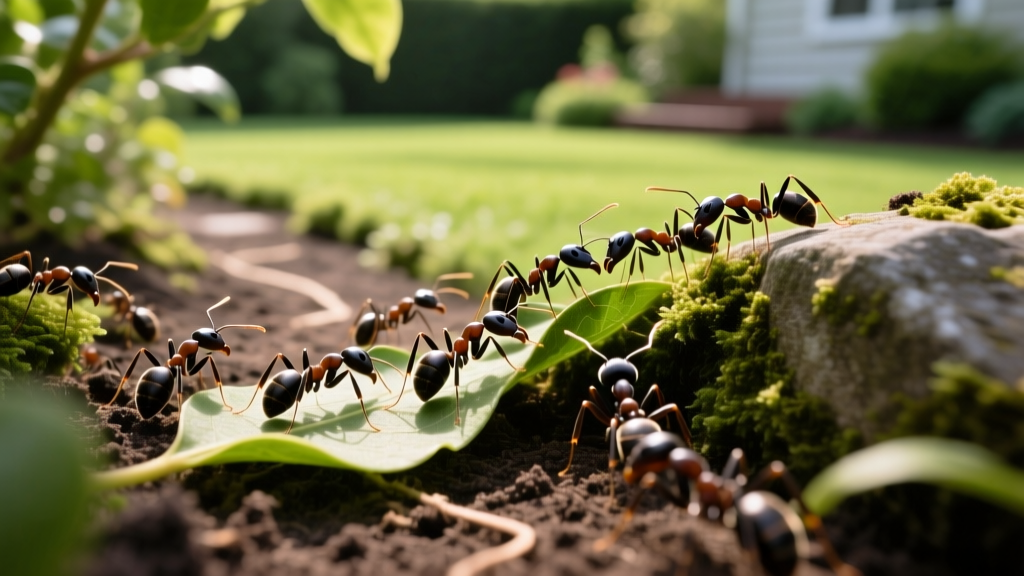
What a Group of Ants is Called: Colony Structure & Yard Defense
The Biology Behind the Terminology
While trivia enthusiasts might search for what a group of ants is called (the scientific and common terms are a colony, an army, or a swarm, depending on the context and species), homeowners dealing with turf destruction need to look past the vocabulary and understand the biological machinery at work. A group of ants is not a random gathering; it is a highly organized, subterranean superorganism. Eradicating them from your yard requires targeting the colony's caste system, not just the visible foragers.
According to the University of California Agriculture and Natural Resources (UC ANR), treating the ants you see on the surface is a fundamental mistake in lawn care. The visible foragers represent less than 10% of the total population. The remaining 90%—including the queen, brood (eggs and larvae), and nest maintenance workers—are hidden deep within the soil profile or structural voids.
⚠️ The Repellent Spray Trap (Ant Budding)
Applying fast-acting, repellent contact sprays (like standard permethrin or bifenthrin aerosols) directly to an ant mound triggers a survival mechanism known as budding. When the colony senses a toxic threat, it fractures into multiple satellite colonies, each potentially developing a new egg-laying queen. This turns a single localized mound into a widespread yard infestation, multiplying your eradication costs and effort.
Identifying the Threat: Common Lawn-Damaging Colonies
Different species build different architectures. Knowing what a group of ants is called in your specific region helps dictate the treatment protocol. Below is a diagnostic matrix for the most destructive yard-invading species.
| Species | Colony Size | Nesting Location | Primary Lawn Damage | Optimal Active Ingredient |
|---|---|---|---|---|
| Red Imported Fire Ant | 100,000 - 500,000 | Deep soil mounds (up to 18 inches) | Root severing, aggressive stinging, equipment damage | Indoxacarb (Bait) + Fipronil (Barrier) |
| Carpenter Ant | 2,000 - 50,000 | Moist, decaying wood, tree stumps | Structural wood hollowing, frass expulsion | Fipronil (Non-repellent transfer) |
| Argentine Ant | Supercolonies (Millions) | Shallow soil, mulch, irrigation lines | Honeydew farming (sooty mold), rapid budding | Imidacloprid (Slow-acting liquid bait) |
| Pavement Ant | 3,000 - 10,000 | Under concrete slabs, driveway edges | Soil excavation causing concrete settling | Thiamethoxam (Granular bait) |
Tactical Yard Defense: The "Trojan Horse" Eradication Protocol
To destroy the colony, you must weaponize the foragers. The goal is to trick the 10% into carrying a slow-acting toxicant back to the brood and the queen. This requires a phased approach utilizing specific professional-grade formulations.
Phase 1: Nutritional Baiting (Days 1-7)
Ant colonies cycle their dietary preferences based on the brood's developmental stage. Purdue University Entomology notes that colonies require carbohydrates in the spring for worker energy, and proteins/lipids in the summer to feed developing larvae.
- Carbohydrate/Sugar Bait: Use Maxforce Quantum (Active ingredient: Imidacloprid 0.03%). Cost: ~$45 for a 10oz bottle. Apply 10-15 dime-sized drops along active foraging trails near the base of trees or irrigation heads. The HVL (Hygroscopic Viscous Liquid) formulation keeps the bait moist in dry yard conditions for up to 14 days.
- Protein/Lipid Bait: Use Advion Ant Bait Gel (Active ingredient: Indoxacarb 0.05%). Cost: ~$25 for a 4-tube pack. Indoxacarb requires enzymatic activation inside the ant's gut, meaning it won't kill the forager immediately. This 48-to-72-hour delay is critical for trophallaxis (the sharing of food via regurgitation) to distribute the poison throughout the colony.
Phase 2: Non-Repellent Perimeter Trenching (Days 8-14)
Once the baiting has suppressed the internal population, establish an undetectable chemical barrier to prevent reinvasion from neighboring properties.
- Select a Non-Repellent: Termidor SC (Fipronil 9.1%) is the industry standard. Cost: ~$60 for a 20oz bottle. Unlike bifenthrin, Fipronil does not repel ants; they walk through it unknowingly.
- Mixing Ratio: Mix exactly 0.8 fluid ounces of Termidor SC per 1 gallon of water.
- Application: Dig a shallow trench 6 inches wide and 6 inches deep directly against the home's foundation. Apply 1 gallon of the mixed solution per 10 linear feet of trench. Backfill with soil. The Fipronil will bind to the soil organic matter, creating a lethal transfer zone that remains active for up to 6 months.
When a Group of Ants is Called a "Swarm": Managing Alates
When a group of ants is called a swarm, it specifically refers to the reproductive alates (winged males and unmated queens) emerging from the nest to mate and establish new colonies. Swarming typically occurs 24 to 48 hours after a heavy spring or summer rain.
💡 Diagnostic Tip: Flying Ants vs. Termites
Homeowners frequently confuse ant swarms with termite swarms. Look at the anatomy: Ant alates have elbowed (bent) antennae, a pinched wasp-like waist, and two pairs of wings where the front wings are visibly longer than the hind wings. Termites have straight, beaded antennae, a broad uniform waist, and four wings of equal length that easily detach.
Swarming indicates a mature, highly successful colony in your yard. While the flying ants themselves are a nuisance and generally harmless to turf, their presence dictates that a massive subterranean colony is operating nearby. Do not spray the swarm with aerosol bug spray; it only kills the reproductive caste temporarily. Instead, trace the flight path back to the emergence hole (usually a cracked driveway, a rotting stump, or a large soil mound) and apply the Phase 1 and Phase 2 protocols outlined above.
Phase 3: Granular Broadcast for Broad-Spectrum Suppression
For large properties (over 0.5 acres) where individual mound treatments are impractical, broadcast granular baits are necessary.
- Product: Extinguish Plus (Methoprene 0.25% + Hydramethylnon 0.36%).
- Application Rate: Apply exactly 1.5 lbs per acre using a calibrated rotary spreader.
- Timing: Apply in the late evening when UV degradation is minimized and foraging activity peaks. Do not apply if rainfall is expected within 24 hours, as moisture will ruin the lipid coating on the granules, rendering them unpalatable to the colony.
Environmental Modifications: Starving the Colony
Chemical treatments will fail if your yard provides an endless buffet. Ant colonies farm aphids and scale insects for their sugar-rich honeydew excretions. Implementing an integrated pest management (IPM) strategy requires breaking this symbiotic relationship.
- Horticultural Oil Sprays: Apply a 2% solution of neem or dormant horticultural oil to ornamental shrubs and tree canopies in early spring to smother aphid eggs before they hatch, cutting off the colony's primary carbohydrate source.
- Irrigation Audits: Leaking sprinkler heads create localized zones of high soil moisture, which are highly attractive to Carpenter and Argentine ants. Audit your irrigation system monthly and replace degraded polyurethane seals on spray heads.
- Mulch Management: Maintain a strict 12-inch gap between organic wood mulch and your home's foundation. Mulch retains moisture and provides thermal insulation, creating the perfect incubator for satellite colonies.
Frequently Asked Questions
Why do ants suddenly appear in my kitchen after I treat the yard?
This is often a result of using repellent sprays outdoors. The outdoor foragers are killed or deterred, prompting the indoor scouts to establish new trails to interior food sources. Always use slow-acting, non-repellent baits and transfer-effect liquids to ensure the poison reaches the nest rather than just displacing the population.
Can I use boiling water to destroy an ant mound?
While pouring 2 to 3 gallons of boiling water directly into the center of a fire ant mound will kill the ants it touches, it rarely penetrates deep enough to reach the queen, who resides in the cooler, lower chambers of the nest. It also severely damages the surrounding turfgrass roots, leaving a dead patch that invites weed invasion.
How long does it take for a colony to collapse after baiting?
Depending on the colony size and the active ingredient used, total collapse typically takes between 7 and 21 days. Indoxacarb (Advion) generally yields visible reduction in foraging within 48 hours, while Fipronil barrier treatments take 30 to 90 days to achieve maximum transfer saturation across the entire colony network.

