
Pest Control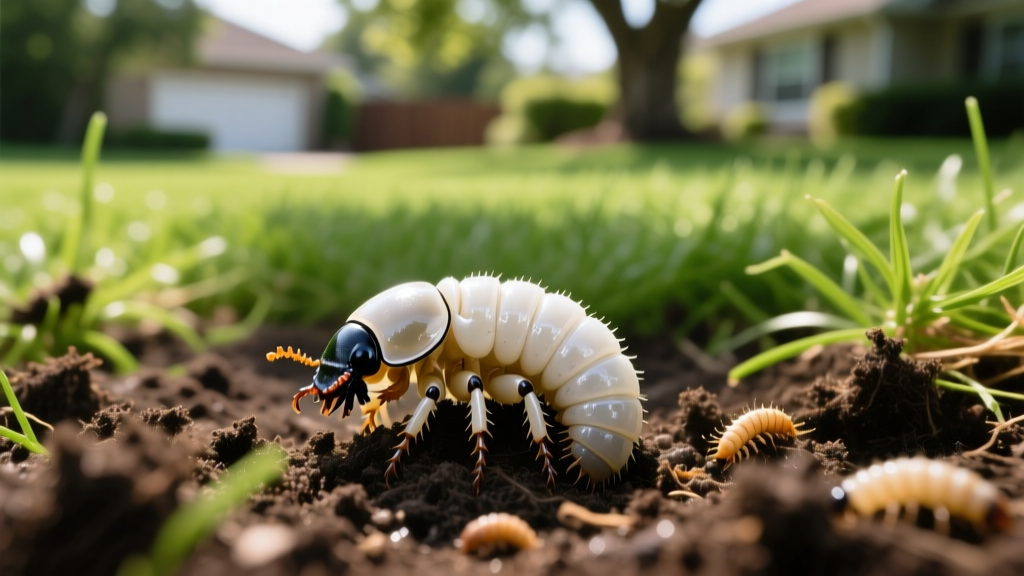
Grub Bugs in Lawns: Identification, Treatment, and Mole Defense
Grub bugs represent one of the most destructive dual-threats in residential lawn care. As the larval stage of scarab beetles, these C-shaped, white grubs feed aggressively on turfgrass roots, severing the plant's ability to uptake water and nutrients. However, the primary visible destruction in many yards is not caused by the insects themselves, but by the secondary wave of wildlife they attract. A severe grub infestation acts as a beacon for moles, skunks, raccoons, and crows, turning a pristine lawn into a torn-up battlefield of soil mounds and peeled-back sod.
Effective yard defense requires a two-pronged approach: eradicating the root-feeding larvae below the soil surface and deterring the foraging mammals above it. This guide details exact species identification, chemical and organic treatment matrices, and structural lawn defenses to secure your turf.
The Grub-Rodent Connection: Why Your Lawn is Being Torn Up
Homeowners often mistake mole tunnels and skunk diggings for the primary pest problem, applying rodent repellents while ignoring the underlying food source. According to Penn State Extension, wildlife foraging causes more structural damage to turf than the actual root feeding. Skunks and raccoons will peel back sections of sod like a carpet to access grubs located in the top two inches of soil. Moles, while primarily earthworm predators, will actively tunnel through root zones to hunt grubs, creating raised ridges that dry out and kill the grass above.
Yard Defense Insight: If you observe localized, 3-to-4-inch deep cone-shaped holes or shredded turf patches, you are likely dealing with skunk or raccoon foraging. If you see raised, meandering soil ridges that feel spongy underfoot, you are dealing with moles. Eliminating the grub population is the only permanent way to evict these foragers.
Identifying Grub Bugs: Species and Damage Thresholds
Not all white grubs are created equal. Treatment timing and turf tolerance vary significantly depending on the specific scarab beetle species. Identification relies on examining the 'raster pattern'—the arrangement of hairs and spines on the underside of the grub's tail end (rump). You will need a 10x hand lens to see this clearly.
| Species | Raster Pattern (Tail) | Turf Damage Threshold | Active Season |
|---|---|---|---|
| Japanese Beetle (Popillia japonica) |
V-shaped anal slit with short, scattered hairs. | 8–10 grubs per sq. ft. | Late July – October |
| European Chafer (Rhizotrogus majalis) |
Y-shaped anal slit, no distinct hair pattern. | 5–7 grubs per sq. ft. (Highly destructive) | September – May |
| June Beetle (Phyllophaga spp.) |
Zipper-like row of fine hairs down the center. | 4–5 grubs per sq. ft. | Multi-year life cycle (feeds continuously) |
To determine your grub density, use a flat spade to cut three sides of a 12x12-inch square of turf, about 3 inches deep. Peel it back like a hinge and count the grubs in the soil and root zone. Repeat this in three different areas of the lawn. If your average count exceeds the thresholds listed above, treatment is mandatory to prevent wildlife excavation.
The Grub Treatment Matrix: Preventative vs. Curative
Selecting the wrong product at the wrong time is the most common failure point in grub management. Preventative insecticides target newly hatched, first-instar grubs and must be applied before eggs hatch. Curative insecticides contact-feed on larger, actively eating grubs in late summer or early spring. Research from University of Kentucky Entomology emphasizes that chemical efficacy drops to near zero if applied to dormant grubs deep in the soil profile during winter.
| Active Ingredient | Common Brand Names | Type | Application Window | Est. Cost (per 5k sq ft) |
|---|---|---|---|---|
| Chlorantraniliprole | Acelepryn, Scotts GrubEx1 | Preventative | April – June | $15 - $28 |
| Imidacloprid | Bayer Advanced 24h Grub Killer | Preventative | June – July | $18 - $25 |
| Trichlorfon | Bayer Advanced 24h (Dylox) | Curative | August – October | $35 - $45 |
| Carbaryl | Sevin Granular | Curative | August – October | $20 - $30 |
| Heterorhabditis bacteriophora | NemaSeek Hb, GrubGone G | Biological (Curative) | Late Summer (Soil >60°F) | $40 - $60 |
Milky Spore Warning: Milky Spore (Paenibacillus popilliae) is heavily marketed but only effective against Japanese beetle grubs. It does not control European chafers or June beetles. Furthermore, it requires 2 to 3 years of continuous application to build up in the soil to effective levels. Do not rely on Milky Spore as an immediate curative defense.
Step-by-Step Yard Defense Protocol
Integrating chemical controls with physical yard defense creates a hostile environment for both the insects and the mammals that hunt them.
- Execute the Sod-Square Audit: Perform the 12x12-inch peel test in late August. If you find 6 or more grubs per square, proceed immediately to a curative Trichlorfon (Dylox) application.
- Hydrate the Target Zone: Curative granular treatments fail if the soil is hydrophobic. Apply 0.25 inches of irrigation 24 hours before applying Trichlorfon to draw the grubs closer to the surface.
- Apply and Water-In: Spread the curative granules using a rotary spreader. Within 30 minutes of application, water the lawn with 0.5 inches of irrigation to wash the active ingredient off the grass blades and into the top 2 inches of soil where grubs are feeding.
- Deploy Beneficial Nematodes (Organic Alternative): If avoiding synthetics, apply Heterorhabditis bacteriophora (Hb) nematodes in the late evening. Hb nematodes actively seek out and infect grubs, releasing bacteria that kill the host within 48 hours. Soil temperature must be between 60°F and 85°F for nematode survival.
- Install Physical Rodent Deterrents: While the grub treatment takes 48-72 hours to halt feeding activity, protect high-traffic zones by laying 1/2-inch galvanized hardware cloth over prized garden beds, or use motion-activated sprinklers (e.g., Orbit Yard Enforcer) set to trigger at dusk to startle foraging skunks and raccoons.
Recovery: Repairing Mole Tunnels and Grub-Damaged Turf
Once the grub population is neutralized and wildlife foraging ceases, the lawn requires structural repair. Mole tunnels leave air pockets beneath the sod, causing roots to dry out and die. Walk the lawn and systematically step on raised ridges to collapse the tunnels, re-establishing soil-to-root contact.
For areas where skunks have completely peeled back the turf, roll the sod back into place, press down firmly, and stake it with landscape pins if necessary. Water these repaired zones heavily for 14 days to encourage root reattachment. If the roots were entirely consumed by grubs, the turf will not recover. Remove the dead mat, amend the soil with 1/4 inch of topdressing compost, and overseed with deep-rooted, endophyte-enhanced Tall Fescue. Tall Fescue's extensive root system tolerates minor insect feeding far better than shallow-rooted Kentucky Bluegrass, providing long-term biological resilience.
Frequently Asked Questions
Will applying grub killer in the spring fix my mole problem?
No. In early spring, grubs are large, mature, and deep in the soil profile, preparing to pupate into adult beetles. Most spring-applied preventatives (like Imidacloprid) will not kill these mature grubs. Furthermore, moles are primarily eating earthworms in the spring. To stop moles, you must target their primary food source using castor-oil-based mole repellents or harpoon traps, not grub insecticides.
How long does it take for Dylox (Trichlorfon) to stop animal digging?
Trichlorfon has a rapid knockdown effect, typically killing active grubs within 24 to 48 hours. However, skunks and raccoons rely on scent and memory to forage. It may take 5 to 7 days for the wildlife to realize the food source is gone and move on. Continue using motion-activated deterrents during this transition window.
Can I apply a preventative and a curative treatment in the same year?
Yes, and this is the standard protocol for heavily infested lawns. Apply a preventative like Chlorantraniliprole (GrubEx) in May to protect against the summer hatch. If you still experience an outbreak or wildlife damage in September due to a missed application window or heavy beetle flights from neighboring properties, you can safely apply a curative Trichlorfon treatment in the fall to salvage the turf.

