
Pest Control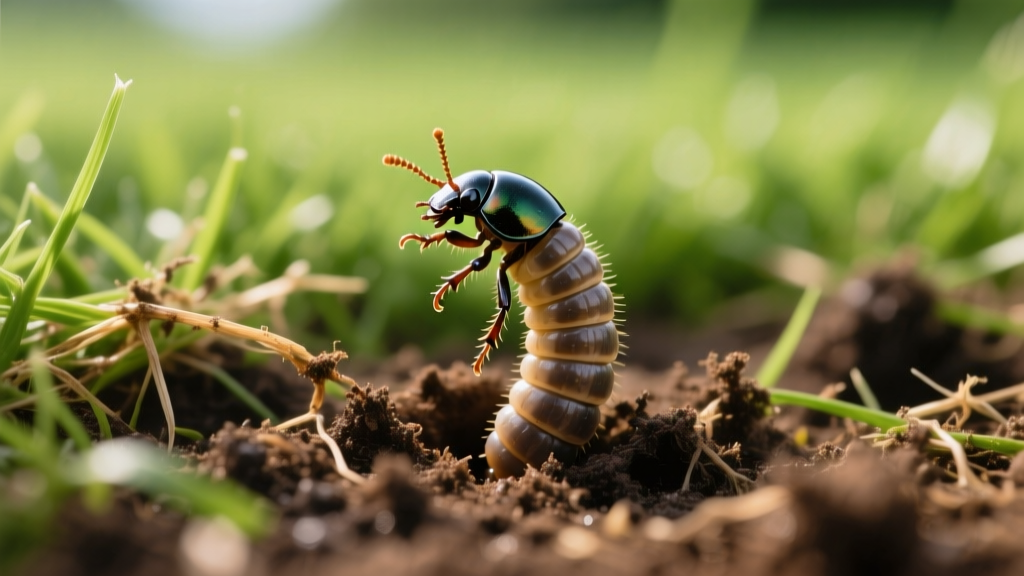
Grub Insect Defense: Identification and Treatment Guide for Lawns
The Anatomy of a Grub Insect Infestation
The term "grub insect" refers to the larval stage of scarab beetles, most notably the Japanese beetle, European chafer, and June bug. These pests live entirely underground, feeding aggressively on the root systems of turfgrass. Because the damage occurs below the soil surface, homeowners often mistake a grub insect infestation for drought stress, fungal disease, or dog urine burn until the turf completely detaches from the soil matrix.
⚠️ Critical Climate Shift Note: As of 2026, shifting hardiness zones and warmer early-summer soil temperatures have accelerated the Japanese beetle flight season in many northern regions. Eggs are now hatching up to three weeks earlier than historical averages, requiring homeowners to shift preventative chemical applications from late July to mid-June.
Understanding the lifecycle is mandatory for effective eradication. Most destructive species follow a one-year lifecycle (like the European chafer), emerging as adults in early summer, mating, and laying eggs in your turf by July. These eggs hatch into first-instar grub insects in August, which immediately begin voracious root feeding. By late autumn, they burrow deep below the frost line to overwinter, returning to the root zone in spring for a secondary, smaller feeding window before pupating.
Diagnostic Framework: Is the Grub Insect Destroying Your Lawn?
Surface-level symptoms like irregular brown patches and wilting grass are insufficient for diagnosis. You must verify the presence of the grub insect and quantify the population density. According to Penn State Extension, treating a lawn without verifying threshold populations leads to unnecessary chemical use and wasted capital.
The 12-Inch Sod Peel Test
Do not rely on "soap flushes" to find grubs. While soap flushes work for surface-dwelling caterpillars like sod webworms, the grub insect resides deep in the soil profile and will not surface in response to irritants. Instead, use the sod peel method:
- Locate the margin where green, healthy grass meets brown, damaged turf.
- Use a flat spade to cut a 12-inch by 12-inch square into the soil, approximately 3 inches deep.
- Peel the sod back like a carpet. Healthy roots will resist; grub-damaged roots will snap and lift effortlessly.
- Count the number of C-shaped, white grub insects in the exposed soil and on the underside of the sod.
- Replace the sod and water immediately to prevent desiccation.
✔️ The Treatment Threshold: If you count 5 to 7 grub insects per square foot in a healthy, irrigated lawn, treatment is required. If your lawn is already stressed by shade, drought, or compaction, the threshold drops to 3 to 5 grubs per square foot. Populations below these numbers rarely cause visible damage and can be managed by natural predators.
Treatment Matrix: Chemical vs. Biological Controls
Selecting the correct product depends entirely on the time of year and the developmental stage of the grub insect. Preventative chemicals target eggs and early-instar larvae, while curative controls are designed to kill large, active grubs in late summer or early spring. The University of Massachusetts Amherst emphasizes that applying a preventative product in September to kill mature grubs is a complete failure of lawn care logic.
| Active Ingredient / Product | Control Type | Target Window | Est. Cost per 1,000 sq ft |
|---|---|---|---|
| Chlorantraniliprole (e.g., Scotts GrubEx1) | Preventative | May – Mid-June | $5.00 |
| Trichlorfon (e.g., BioAdvanced 24-Hour Grub Killer) | Curative | August – October | $8.50 |
| Heterorhabditis bacteriophora (Beneficial Nematodes) | Biological / Curative | Late August – September | $14.00 |
| Paenibacillus popilliae (Milky Spore) | Biological / Preventative | Spring or Fall | $18.00 |
The Milky Spore Misconception
Milky Spore is a highly marketed biological control, but it comes with a massive caveat: it is only effective against Japanese beetle grubs. If your lawn is being destroyed by European chafers or June bugs, Milky Spore will provide zero protection. Furthermore, it takes 2 to 3 years to establish in the soil profile to reach effective spore counts, making it useless for an active, immediate infestation.
Application Mechanics: The Water-In Rule
The most common point of failure with synthetic grub insect treatments is improper watering. Products containing Chlorantraniliprole or Trichlorfon must be watered into the soil immediately after application. You must apply at least 0.5 inches of irrigation to move the active ingredient past the thatch layer. If the chemical remains trapped in the thatch, UV radiation will degrade it, and the grub insect feeding 2 inches below will never ingest a lethal dose.
The Rodent Connection: Secondary Pest Invasions
"Homeowners often call us to fix their lawn, blaming a disease. When we arrive, the sod is literally rolled back like a carpet. The grub insect didn't do that—the raccoons and skunks did, hunting the grubs for a high-protein meal."
— Turf Management Field Diagnostician
A secondary invasion by mammals is a hallmark of a severe grub insect infestation. Skunks, raccoons, armadillos, and crows will tear up large sections of your lawn to access the larvae. This secondary damage is often more expensive to repair than the root loss caused by the grubs themselves.
While treating the grub insect population is the ultimate cure, you must simultaneously deploy deterrents to protect the turf while the curative chemicals take effect (which can take up to 14 days for complete mortality in large grubs). Apply a heavy application of castor oil-based repellents or utilize physical bird-netting pinned over the most damaged zones to physically block foraging mammals.
Post-Treatment Lawn Recovery Protocol
Once the grub insect population has been eliminated, the dead patches will not recover on their own. The root systems are gone, and the existing grass is dead. Follow this exact sequence to restore the turf:
- Step 1: Debris Removal. Rake out all dead grass, loose thatch, and mammal-torn sod fragments down to bare soil.
- Step 2: Core Aeration. Rent a walk-behind core aerator. Pull 3-inch plugs across the entire affected area to relieve compaction and create seed-to-soil contact zones.
- Step 3: Slice Seeding. Use a slice seeder to plant a turf-type tall fescue blend (which is highly drought-tolerant and recovers well from pest stress). Apply seed at a rate of 6 to 8 lbs per 1,000 square feet.
- Step 4: Starter Fertilizer. Apply a high-phosphorus starter fertilizer (e.g., 18-24-12) to promote rapid root development in the new seedlings.
- Step 5: Moisture Management. Water lightly 2 to 3 times daily for 14 days to keep the top inch of soil perpetually moist until germination is complete.
Frequently Asked Questions
Can I apply grub insect preventatives and grass seed at the same time?
Yes, but you must read the active ingredient label carefully. Products containing Chlorantraniliprole (like GrubEx1) are safe to use during seeding and will not inhibit grass germination. However, avoid using combination products that contain pre-emergent herbicides (like Tenax or Prodiamine) alongside your grub control, as these will prevent your new grass seed from sprouting.
Why are grubs returning every year despite my treatments?
Recurring annual infestations usually indicate a failure in application timing or irrigation. If you apply a preventative in August, the grub insect is already in its second or third instar and possesses a thick cuticle that repels preventative chemicals. You must switch to a curative product like Trichlorfon in late summer, or apply your preventative much earlier in June. Additionally, thick thatch layers (over 0.5 inches) will bind the chemicals before they reach the soil.
Do beneficial nematodes really work against grubs?
Yes, but only if you purchase the correct species and handle them properly. Heterorhabditis bacteriophora is the specific nematode species that actively hunts white grubs. They must be kept refrigerated until application, applied in the late evening to avoid UV degradation, and watered in immediately. They are highly effective but require more precise handling than synthetic granular products.

