
Pest Control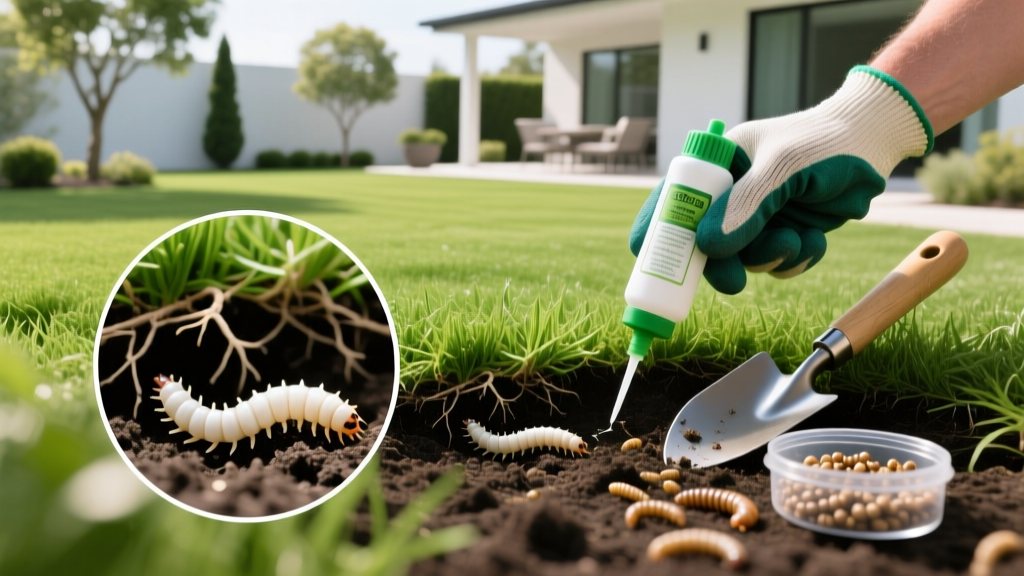
Defeating Grub Larvae: A Complete Yard Defense Strategy
The Hidden Threat: Understanding Grub Larvae in Your Yard
Grub larvae are the destructive, subterranean immature stages of scarab beetles, most notably the Japanese beetle (Popillia japonica), European chafer (Rhizotrogus majalis), and June beetle (Phyllophaga spp.). These C-shaped, cream-colored pests feed aggressively on the root systems of turfgrass, severing the plant's ability to uptake water and nutrients. The damage often mimics drought stress, leading homeowners to overwater, which ironically creates the moist soil conditions that favor further grub development and fungal diseases.
Effective yard defense requires moving beyond reactive spot-treatments. A strategic approach integrates precise identification, timed biological or chemical interventions, and secondary pest management to protect both the turf and the soil microbiome.
Diagnostic Framework: Is Your Lawn Suffering from Grub Larvae?
Before deploying treatments, you must confirm the presence of grubs and quantify the infestation. According to Penn State Extension, treating a lawn without verifying grub thresholds wastes money and harms beneficial soil organisms.
The Tug Test
Walk across the damaged areas of your lawn and grasp the grass blades near the soil line. Pull gently. If the turf lifts like a loose carpet with little to no resistance and no roots attached, grub larvae have likely severed the root zone. If the grass resists and pulls up with intact roots, suspect drought stress, fungal pathogens, or soil compaction instead.
The Sod Square Foot Method
For precise quantification, use a flat-headed spade to cut three sides of a 12-by-12-inch square of turf, about 2 inches deep. Peel back the sod flap and inspect the top 2 inches of the soil profile and the underside of the grass roots. Count the number of grubs present.
Treatment Thresholds:
- Kentucky Bluegrass / Bermudagrass: Treat if you find 5 to 10 grub larvae per square foot.
- Tall Fescue / Zoysia: These deep-rooted, resilient grasses can tolerate higher pressure. Treat only if counts exceed 10 to 15 per square foot.
Biological vs. Chemical Yard Defense Strategies
Modern pest management offers highly targeted solutions. The choice between biological controls and synthetic chemicals depends on your timeline, environmental priorities, and the current lifecycle stage of the grubs. The University of California IPM program emphasizes prioritizing reduced-risk options whenever possible.
| Method | Active Agent | Best Timing | Cost per 1,000 sq ft | Profile |
|---|---|---|---|---|
| Preventative Chemical | Chlorantraniliprole (e.g., Scotts GrubEx1, Acelepryn) | Mid-April to Early June | $4.00 - $6.00 | Bee-safe, long residual (3-4 months), targets young instars. |
| Curative Chemical | Trichlorfon (e.g., BioAdvanced 24 Hour Grub Killer, Dylox) | Late August to October | $9.00 - $12.00 | Fast-acting (24 hours), short residual, kills large active grubs. |
| Biological Nematodes | Heterorhabditis bacteriophora (Hb strain) | Late Summer / Early Fall | $10.00 - $15.00 | Organic, requires moist soil, highly effective against 3rd instar larvae. |
| Biological Bacteria | Milky Spore (Paenibacillus popilliae) | Anytime ground is unfrozen | $8.00 - $10.00 | Only kills Japanese beetle grubs; takes 3-5 years to establish in soil. |
Tactical Application: Timing Your Grub Larvae Treatment
Applying the right product at the wrong time is the most common failure mode in yard defense. Grub lifecycle stages dictate chemical efficacy.
Preventative Strategy (Spring/Early Summer)
If your lawn suffered grub damage last year, or if your neighbors are currently battling them, apply a chlorantraniliprole-based preventative in late spring. This chemical must be ingested by the grubs, meaning it needs to be watered into the root zone (about 0.5 inches of irrigation) immediately after application. It remains active in the soil profile, killing the newly hatched 1st and 2nd instar larvae as they begin feeding in mid-summer.
Curative Strategy (Late Summer/Fall)
If you missed the preventative window and notice brown, rolling patches of turf in September, the grubs are likely in their 3rd instar (large, highly destructive, and preparing to burrow deep for winter). Chlorantraniliprole will not kill them quickly enough to save the grass. You must switch to a fast-acting carbamate or organophosphate alternative like Trichlorfon (Dylox). Ohio State University Extension notes that Trichlorfon degrades rapidly in high-pH soils, so verify your soil pH is below 7.0 before application for optimal results.
Pro Tip: Soil Temperature Triggers
Do not rely on calendar dates alone. Use a digital soil probe thermometer. Grub eggs hatch when the soil temperature at a 2-inch depth consistently reaches 65°F to 70°F. Apply preventatives just before this threshold is crossed in your specific microclimate.
Do not rely on calendar dates alone. Use a digital soil probe thermometer. Grub eggs hatch when the soil temperature at a 2-inch depth consistently reaches 65°F to 70°F. Apply preventatives just before this threshold is crossed in your specific microclimate.
Secondary Pest Defense: Deterring the Foragers
Often, the most visible damage to a lawn is not caused by the grub larvae themselves, but by the mammals and birds that dig them up. Skunks dig small, precise 3-inch conical holes. Raccoons will peel back large, 12-inch flaps of sod like a carpet. Crows and starlings will aggressively peck and pull at the turf.
The Mole Misconception
Many homeowners apply grub control specifically to eliminate moles. This is a flawed strategy. While moles do eat grubs, their primary food source is earthworms. If you eradicate all grubs in your yard, moles will simply shift their diet to earthworms and remain in your tunnel network. To defend against moles, use targeted castor oil-based repellents (like Nature's Mole Control) or physical underground barriers, rather than relying solely on grub eradication.
Protecting the Turf from Foragers
To stop raccoons and skunks from tearing up your lawn while waiting for your grub treatment to take effect, deploy motion-activated sprinklers (such as the Orbit 62100 Yard Enforcer). These devices detect infrared body heat and blast a sudden jet of water, providing a harmless but highly effective psychological deterrent for nocturnal foragers.
Post-Treatment Lawn Recovery Protocol
Once the grub larvae are eliminated, the severed root systems will not magically reconnect. The damaged turf must be replaced.
- Core Aeration: Rent a walk-behind core aerator to pull 3-inch soil plugs. This relieves compaction caused by heavy foot traffic during the diagnosis and treatment phases, and opens pathways for new seed-to-soil contact.
- Slice Seeding: Use a slice seeder to plant a drought-resistant, endophyte-enhanced grass blend. Tall fescue cultivars like 'Titan Ultra' or 'Rhizomatous Tall Fescue (RTF)' contain natural endophytes that make the grass blades bitter and toxic to surface-feeding insects, adding a secondary layer of yard defense.
- Starter Fertilizer: Apply a high-phosphorus starter fertilizer (e.g., 18-24-12 NPK ratio) immediately after seeding to stimulate rapid root development in the new grass.
Frequently Asked Questions
Will applying more fertilizer kill grub larvae?
No. Fertilizer only promotes top-growth in the grass. If the roots are severed by grubs, the grass cannot absorb the nutrients, and the excess nitrogen will simply leach into the groundwater or trigger fungal outbreaks like brown patch.
Are chemical grub treatments safe for pets?
Products containing Chlorantraniliprole (GrubEx1) have very low mammalian toxicity and are generally considered safe for pets once the granules have been watered into the soil and the grass blades are dry. However, Trichlorfon (Dylox) carries a higher toxicity profile; keep pets off the lawn until the treatment is fully watered in and the surface is completely dry.
Can I use Milky Spore instead of chemicals?
Milky Spore is a highly specific biological control that only infects Japanese beetle grubs. If your lawn is being destroyed by European chafers or June bugs, Milky Spore will be entirely ineffective. Furthermore, it requires 3 to 5 years of annual applications to build up sufficient spore counts in the soil to provide meaningful control.

