
Pest Control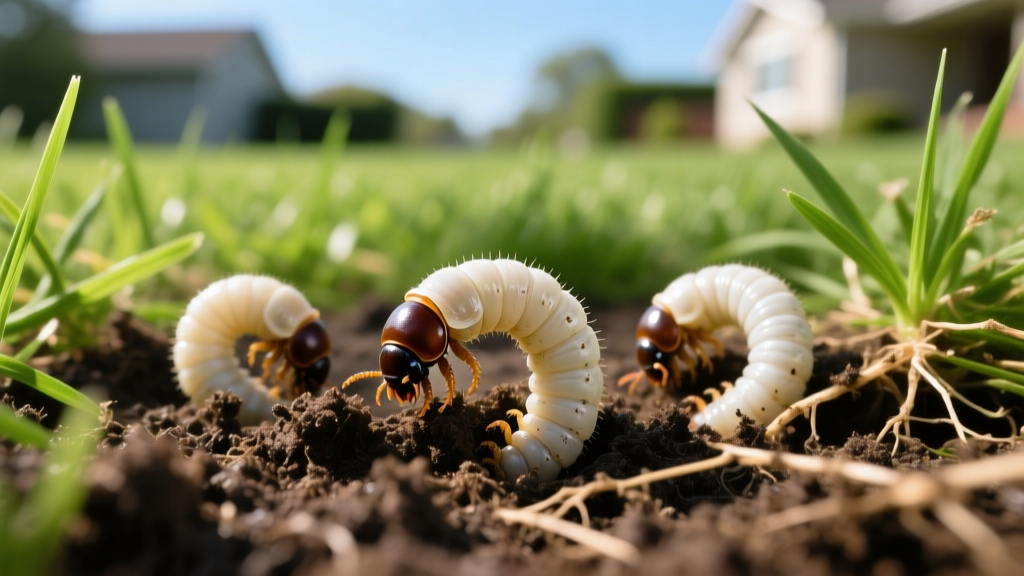
Grub Worms in Grass: Identification, Treatment, and Defense
The Hidden Threat Beneath Your Turf
When brown, irregular patches begin to appear in an otherwise healthy lawn, homeowners often blame drought, fungus, or dog urine. However, the most destructive culprit is frequently hiding just two inches below the soil surface. Grub worms in grass are the larval stage of scarab beetles—including Japanese beetles, European chafers, and June bugs. These C-shaped, cream-colored insects feast aggressively on turfgrass roots, severing the plant's ability to absorb water and nutrients. If left unchecked, a severe infestation can destroy an entire lawn in a matter of weeks, while simultaneously attracting secondary yard invaders like skunks, raccoons, and crows that will tear up your topsoil to feast on the larvae.
The 10-Second Diagnostic: Confirming an Infestation
Before investing in treatment, you must confirm that grub worms in grass are actually the problem. Surface damage can be misleading. Perform the standard 'peel-back test' to assess the population density.
The Peel-Back Threshold Framework:
- Step 1: Choose a patch of declining grass at the border of a brown and green area.
- Step 2: Use a flat-edged spade to cut a 12-inch by 12-inch square, about 3 inches deep.
- Step 3: Peel the turf back like a carpet and count the grubs in the exposed soil and root zone.
- Step 4: Evaluate the data. 0-4 grubs: No treatment needed. 5-9 grubs: Treatment optional, but recommended if the lawn is already stressed. 10+ grubs: Immediate curative action is mandatory to save the turf.
Species Identification Matrix
Not all grubs are created equal. Identifying the exact species dictates your treatment timing and biological defense options. Entomologists identify grubs by examining the 'raster pattern'—the arrangement of microscopic bristles on the underside of the grub's abdomen, just above the spiracles.
| Species | Adult Form | Peak Root Feeding | Raster Pattern (Abdomen) |
|---|---|---|---|
| Japanese Beetle | Copper/Brown Beetle | August - September | V-shaped / Zipper line |
| European Chafer | Tan/Brown Beetle | August - October | Y-shaped / Meridian line |
| Oriental Beetle | Dark Brown/Black | August - September | Straight transverse rows |
| June Bug (May Beetle) | Large Reddish-Brown | Spring & Fall (2-year cycle) | Zipper with wide bare center |
Chemical Defense Strategies: Curative vs. Preventative
Managing grub worms in grass requires a strategic approach based on the time of year and the life cycle of the pest. According to Penn State Extension, timing your active ingredients correctly is the difference between a pristine lawn and total turf failure.
Preventative Defense (Spring / Early Summer)
Preventatives are designed to kill young, first-instar grubs as they hatch and begin feeding in mid-to-late summer. They do not kill large, mature grubs.
- Active Ingredient: Chlorantraniliprole (Trade name: Acelepryn).
- Application Window: April through June. This chemical is highly stable in soil but takes 60 to 90 days to fully translocate into the root zone where grubs feed.
- Cost & Coverage: Approximately $120 for a 4 oz liquid bottle, covering up to 8,000 square feet.
- Pro Tip: Chlorantraniliprole is exceptionally safe for pollinators and earthworms compared to older neonicotinoids, making it the gold standard for eco-conscious lawn defense in 2026.
Curative Defense (Late Summer / Early Fall)
If you missed the preventative window and the peel-back test reveals 10+ grubs per square foot in August or September, you need a fast-acting contact insecticide.
- Active Ingredient: Trichlorfon (Trade name: Dylox 6.2%).
- Application Window: Mid-August through September, when grubs are actively feeding near the surface before burrowing deep for winter dormancy.
- Cost & Coverage: Roughly $45 for a 10 lb granular bag covering 4,000 square feet.
- Critical Execution: Trichlorfon degrades rapidly in high pH soils and sunlight. You must water the granules in immediately with at least 0.5 inches of irrigation to push the chemical into the thatch and upper soil layer. Expect a 24-to-48-hour kill rate.
"Applying a curative product like Dylox in May is a complete waste of money. The chemical will break down long before the eggs hatch in July. Conversely, applying a preventative like Imidacloprid in September will fail to kill the large, mature grubs that are actively destroying your root system." — Turfgrass Entomology Best Practices
Organic and Biological Yard Defense Tactics
For homeowners seeking to avoid synthetic chemicals, biological controls offer highly effective, targeted defense against grub worms in grass. However, they require strict adherence to environmental conditions.
Beneficial Nematodes (Hb Species)
The microscopic roundworm Heterorhabditis bacteriophora (Hb) is a lethal parasite to scarab beetle larvae. The nematodes enter the grub, release symbiotic bacteria that kill the host within 48 hours, and then reproduce inside the carcass.
- Application Rate: 250 million nematodes per 10,000 square feet.
- Cost: $40 to $60 per 50 million nematodes (requires refrigerated shipping).
- Execution Rules: Apply only in the late afternoon or evening to avoid UV degradation. The soil temperature must be above 60°F, and the lawn must be kept consistently moist for 10 to 14 days post-application to allow the nematodes to swim through the soil pores.
Milky Spore Disease
Milky Spore (Paenibacillus popilliae) is a naturally occurring bacterium that specifically targets Japanese beetle grubs. While highly touted, Purdue Extension notes that it can take 2 to 5 years to build up sufficient spore counts in the soil to provide economic control. It is a long-term investment, not a quick fix for an active infestation.
Defending Against Secondary Vectors: Skunks and Crows
Often, the most visible damage to a lawn is not caused by the grubs themselves, but by the predators hunting them. Skunks, raccoons, and crows will peel back large sections of turf to access the protein-rich larvae. If your lawn looks like it has been tilled by a rototiller, you have a secondary vector problem.
Immediate Mitigation: While treating the root cause (the grubs) is mandatory, you must protect the remaining turf immediately. Pin down lightweight plastic bird netting over the most damaged areas using landscape staples. This physical barrier prevents birds and mammals from tearing the loose turf further while your curative insecticide takes effect and the roots begin to re-establish.
Turf Repair and Recovery Protocol
Once the grub population has been eradicated, the severed turf will not magically reattach to the soil. Dead patches require mechanical intervention.
- Remove Dead Material: Use a heavy thatch rake to vigorously pull up the dead, rootless grass and expose the bare soil.
- Core Aeration: Aerate the affected zones to relieve soil compaction caused by predator traffic and heavy irrigation.
- Overseed: Apply a premium turf-type tall fescue or Kentucky bluegrass blend at a rate of 6 to 8 lbs per 1,000 square feet. Fescue is highly recommended for grub-prone areas due to its deep, aggressive root system, which tolerates minor root pruning better than shallow-rooted ryegrass.
- Starter Fertilizer: Apply a phosphorus-rich starter fertilizer (e.g., 18-24-12) to accelerate seedling root development.
Frequently Asked Questions
Do grub worms in grass turn into cicadas?
No. Grub worms are the larval stage of scarab beetles (like Japanese beetles and June bugs). Cicadas belong to an entirely different insect order (Hemiptera) and develop underground as nymphs, not as C-shaped grubs.
Can I use dish soap to kill grubs?
While a mixture of water and dish soap can force grubs to the surface by irritating their spiracles, it does not reliably kill them or penetrate deep enough into the soil profile to eradicate an infestation. Rely on proven active ingredients like Trichlorfon or beneficial nematodes for actual defense.
When should I stop treating for grubs?
Once soil temperatures drop below 50°F in late autumn, grubs burrow deep below the frost line (often 8 to 12 inches down) to overwinter. At this depth, surface-applied insecticides and nematodes cannot reach them. Cease all treatments by mid-October in most northern temperate zones.

