
Pest Control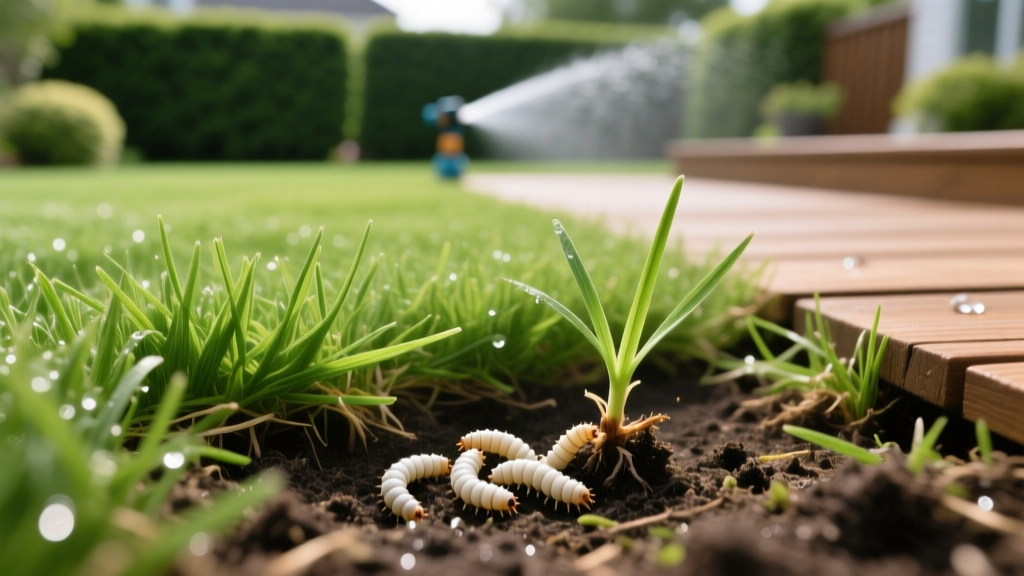
How to Eliminate Grub Worms in Yard Grass Before They Spread
The True Cost of Grub Worms in Yard Ecosystems
Finding grub worms in yard environments is rarely an isolated turfgrass issue. While the C-shaped larvae of Japanese beetles, June bugs, and European chafers sever grass roots—causing massive brown, spongy patches—their presence triggers a secondary, often more destructive cascade: the arrival of burrowing rodents and foraging mammals. A heavy grub infestation acts as an all-you-can-eat buffet beacon for skunks, raccoons, and moles, which will literally roll back your lawn like a carpet to access the protein-rich larvae beneath. Effective yard defense requires a dual-pronged approach: eradicating the primary insect threat and fortifying the perimeter against the secondary vertebrate scavengers they attract.
Expert Insight: The economic threshold for treatment is generally 5 to 10 grubs per square foot. Before purchasing any chemical or biological control, cut out a 1-foot by 1-foot square of turf, peel it back like a carpet, and manually count the grubs in the top 3 inches of soil. If you count fewer than 5, your lawn's root system can likely outgrow the damage without intervention.
Diagnostic Matrix: Grubs vs. Environmental Stress
Homeowners frequently misdiagnose drought stress or fungal pathogens as grub damage, leading to wasted money on ineffective pesticides. Use this diagnostic framework to confirm the culprit before deploying treatments.
| Symptom | Grub Worm Damage | Drought / Heat Stress | Brown Patch Fungus |
|---|---|---|---|
| Turf Pull Test | Grass pulls up effortlessly with zero root resistance. | Grass is firmly rooted; requires significant force to pull. | Roots are intact; blades break or pull from the sheath. |
| Soil Interface | Presence of 1/2-inch white, C-shaped larvae. | Soil is dry, dusty, and hydrophobic. | Soil is moist; dark fungal lesions on leaf blades. |
| Wildlife Activity | Skunks, raccoons, or crows digging shallow holes. | No specific wildlife digging activity. | No specific wildlife digging activity. |
2026 Treatment Arsenal: Preventative vs. Curative
Timing dictates the success of your grub control strategy. According to Penn State Extension, applying the wrong chemical class at the wrong time of year results in a near 100% failure rate. Here is the breakdown of the most effective active ingredients currently on the market.
Preventative Controls (The Long Game)
- Active Ingredient: Chlorantraniliprole (e.g., Scotts GrubEx1).
- Application Window: May through early June. This targets eggs before they hatch.
- Cost & Coverage: Approximately $25 for a 10,000 sq. ft. bag.
- Pros & Cons: Highly safe for pollinators and earthworms. However, it is entirely useless against grubs that have already hatched and begun feeding in late summer. It requires a 14-day activation window with consistent soil moisture.
Curative Controls (The Emergency Brake)
- Active Ingredient: Trichlorfon (e.g., Bayer Advanced 24-Hour Grub Killer / Dylox).
- Application Window: August through October, when grubs are young, actively feeding, and near the soil surface.
- Cost & Coverage: Approximately $35 for a 10,000 sq. ft. bag.
- Pros & Cons: Kills grubs within 24 hours upon contact and ingestion. The major drawback is its short residual soil life (only about 2 weeks), meaning it offers zero protection for the following spring. It is also highly toxic to aquatic environments; never apply near storm drains.
Biological & Organic Controls
- Active Agent: Heterorhabditis bacteriophora (Hb) Beneficial Nematodes.
- Application Window: Late summer when soil temperatures are strictly between 60°F and 85°F.
- Cost & Coverage: $40 to $60 for 10,000 sq. ft. (requires refrigerated shipping).
- Pros & Cons: Nematodes are microscopic worms that hunt and infect grubs with fatal bacteria. They are 100% organic and self-replicating. The failure rate is high if the soil is allowed to dry out even once during the 14-day establishment period, or if UV light degrades them during daytime application. Always apply at dusk.
Thatch Warning: If your lawn has a thatch layer thicker than 0.5 inches, both synthetic granules and biological nematodes will become trapped in the dead organic matter, never reaching the soil where the grubs live. You must perform a core aeration or aggressive dethatching before applying any grub control product.
The Secondary Threat: Rodent & Mammal Defense
Eradicating the grubs is only half the battle in comprehensive yard defense. The scent of disturbed soil and lingering larvae proteins will continue to attract vertebrate pests for weeks after treatment. Furthermore, as noted by Michigan State University Extension, moles primarily feed on earthworms, not grubs; thus, killing grubs will not necessarily evict a mole colony already established in your yard.
Deterring the Foragers (Skunks & Raccoons)
Skunks and raccoons possess an acute sense of smell and use their front claws to peel back turf. To break their foraging habit:
- Milorganite Application: Apply Milorganite organic fertilizer (made from heat-dried microbes) at a rate of 32 lbs per 2,500 sq ft. The intense, processed organic odor masks the scent of grubs and naturally repels mammalian foragers without harming the turf.
- Turf Pinning: For high-value lawn sections currently being torn up at night, use 6-inch landscape staples to pin the peeled-back turf back into place. This removes the tactile reward for the animals and forces them to relocate.
Managing the Burrowers (Moles & Voles)
If your yard defense strategy must address active tunneling, chemical grub control is insufficient. Deploy castor oil-based repellents (like Tomcat Mole & Gopher Repellent) which coat the earthworms and soil particles, causing severe gastrointestinal distress to burrowers without killing them, forcing the colony to migrate beyond your property line. Apply at a rate of 1 quart per 1,000 sq ft immediately after watering.
Step-by-Step Application Protocol for Maximum Kill Rate
To ensure your chosen curative treatment (Trichlorfon) reaches the target zone, follow this exact protocol:
- Mow the Lawn: Cut the grass to 2.5 inches to reduce chemical interception by the grass blades.
- Pre-Water: Apply 0.25 inches of water 24 hours before application. This draws the grubs closer to the surface to feed on the softened root crowns.
- Apply Granules: Use a rotary spreader calibrated to the manufacturer's exact settings. Overlap your wheel tracks by 12 inches to prevent missed strips.
- Water-In Immediately: You must apply 0.5 to 1.0 inches of water within 30 minutes of spreading. Use empty tuna cans placed around the yard to measure when you have hit the 0.5-inch mark. Without this water volume, the active ingredient will not penetrate the thatch and soil interface.
- Restrict Access: Keep pets and children off the treated lawn until the grass blades are completely dry to the touch, typically 4 to 6 hours post-watering.
By combining precise chemical timing with proactive vertebrate deterrents, you protect both the root structure of your turf and the physical integrity of your soil from the cascading damage caused by unchecked grub populations.

